
Permit (EIP-2612)

Permit (EIP-2612): Gasless Approvals

Permit functionality allows token approvals through signatures instead of transactions, enabling gasless user experiences for DeFi interactions. It’s like signing a check instead of going to the bank.

Permit (EIP-2612) is a token standard that enables gasless approvals through cryptographic signatures rather than on-chain transactions. Users can authorize token spending without paying gas fees, with the actual approval happening when tokens are used.

How Permit Works

Signature-based approvals use cryptographic signatures to authorize token spending without requiring an on-chain transaction for the approval itself.

Deadline enforcement includes expiration times in permit signatures to prevent old authorizations from being used maliciously after extended periods.

Nonce tracking prevents signature replay attacks by ensuring each permit signature can only be used once per wallet.
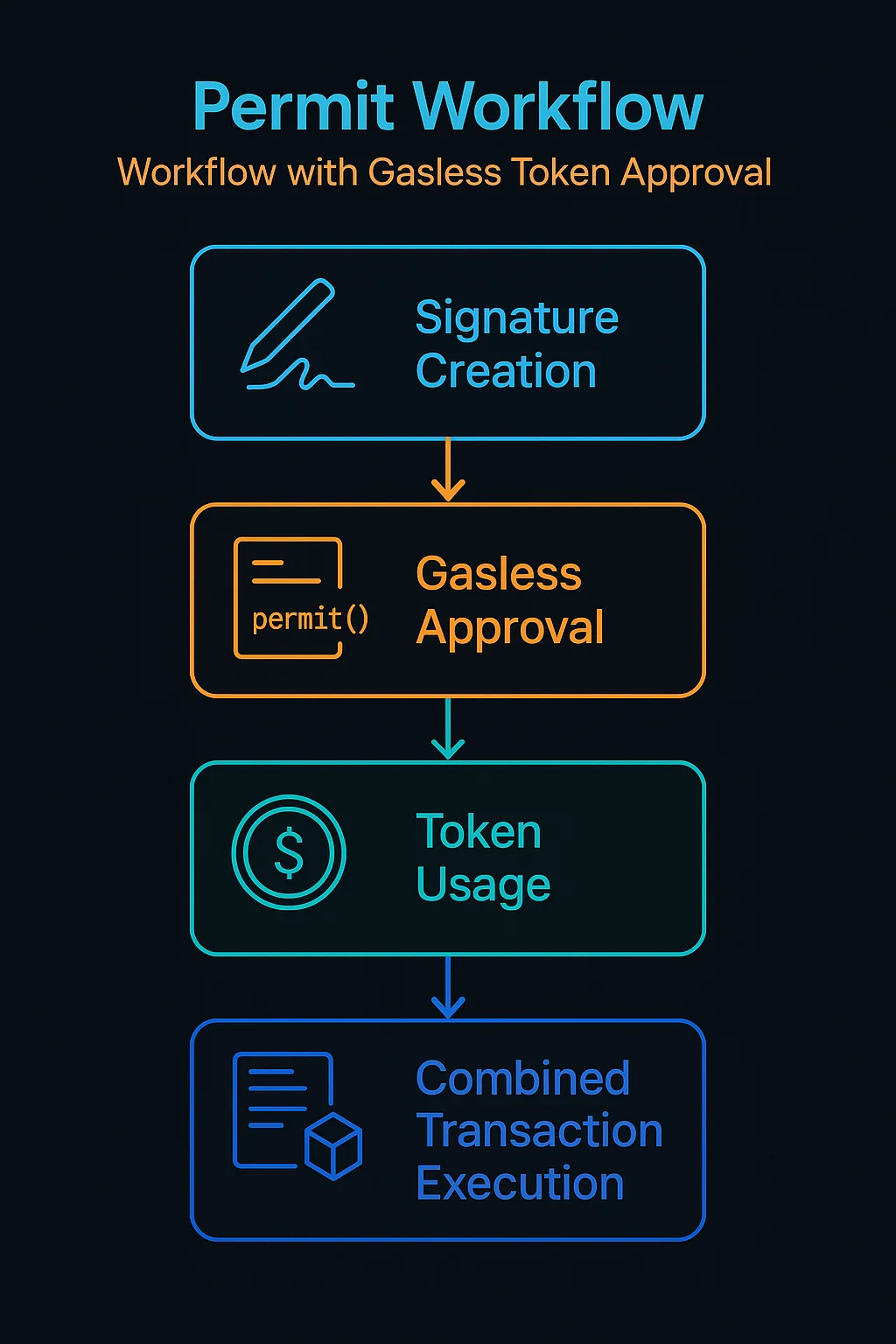
Permit workflow showing signature creation, gasless approval, token usage, and combined transaction execution

Real-World Examples

  • Uniswap V3 uses permits for gasless approval experiences in token swapping
  • 1inch implements permit functionality to reduce transaction steps and costs
  • Various DeFi protocols integrate permit to improve user onboarding and experience

Why Beginners Should Care

Better UX eliminates the two-step process of approve-then-spend that traditionally requires two separate transactions and gas payments.

Reduced costs by combining approval and usage into single transactions, cutting gas fees in half for many DeFi operations.

Security considerations require understanding permit signatures and ensuring you trust applications before signing token authorizations.

Related Terms: Token Approval, Gasless Transactions, EIP-2612

Similar Posts

  • Token Supply

    Token Supply: Digital Asset QuantityToken supply refers to the total number of cryptocurrency tokens that exist, will exist, or are available for trading. It's a fundamental factor in determining token economics and value.Token supply encompasses the total quantity of cryptocurrency tokens in existence, including circulating supply available for trading and total supply that will ever…

  • Transparency

    Transparency: Open Information AccessTransparency in cryptocurrency refers to the open, verifiable nature of blockchain data that allows anyone to inspect transactions and network operations. It's like having buildings made entirely of glass where you can see exactly what's happening inside every room.Transparency describes the property of blockchain systems that makes transaction data, network operations, and…

  • Fractional Ownership

    Fractional Ownership: Shared Asset OwnershipFractional ownership enables multiple people to own portions of expensive assets that would be difficult to purchase individually. It's like buying a slice of expensive real estate instead of the whole property.Fractional ownership refers to dividing ownership of assets into smaller portions that can be owned by multiple parties, typically enabled…

  • Collection

    Collection: Grouped NFT SeriesA collection is a group of related NFTs that share common themes, artwork, or attributes. It's like a series of trading cards or stamps that belong to the same set.A collection refers to a group of related NFTs that share common characteristics, themes, or attributes, typically created by the same artist or…

  • Privacy Coin

    Privacy Coin: Digital Cash That Actually Hides Privacy coins use advanced cryptography to hide transaction details like amounts, senders, and receivers. They’re what Bitcoin was supposed to be before everyone realized blockchain transactions are completely transparent. Privacy coins are cryptocurrencies designed to provide anonymous or untraceable transactions through advanced cryptographic techniques. Unlike Bitcoin where all…

  • Digital Signature

    Digital Signature: Cryptographic Identity ProofDigital signatures provide mathematical proof of message authenticity and sender identity using cryptographic techniques. They're like unforgeable electronic signatures that prove who sent what.A digital signature is a cryptographic mechanism that verifies the authenticity of digital messages or documents and confirms the identity of the sender. Digital signatures are fundamental to blockchain…