
Wallet Signature Spoofing

Wallet Signature Spoofing: Fake Authorization Attacks

Wallet signature spoofing tricks users into signing malicious transactions that appear legitimate but actually authorize harmful actions. It’s like signing a contract where the fine print changes after you sign.

Wallet signature spoofing involves presenting misleading information about transaction contents to trick users into signing authorizations for unintended actions. Attackers exploit user interface vulnerabilities or social engineering to gain unauthorized access.

How Signature Spoofing Works

UI manipulation displays fake transaction details while the actual signature authorizes completely different actions than what users believe they’re approving.

Contract switching presents legitimate contracts for inspection but substitutes malicious contracts at signature time before users can detect the change.

Social engineering combines technical deception with psychological manipulation to pressure users into quickly signing without careful verification.
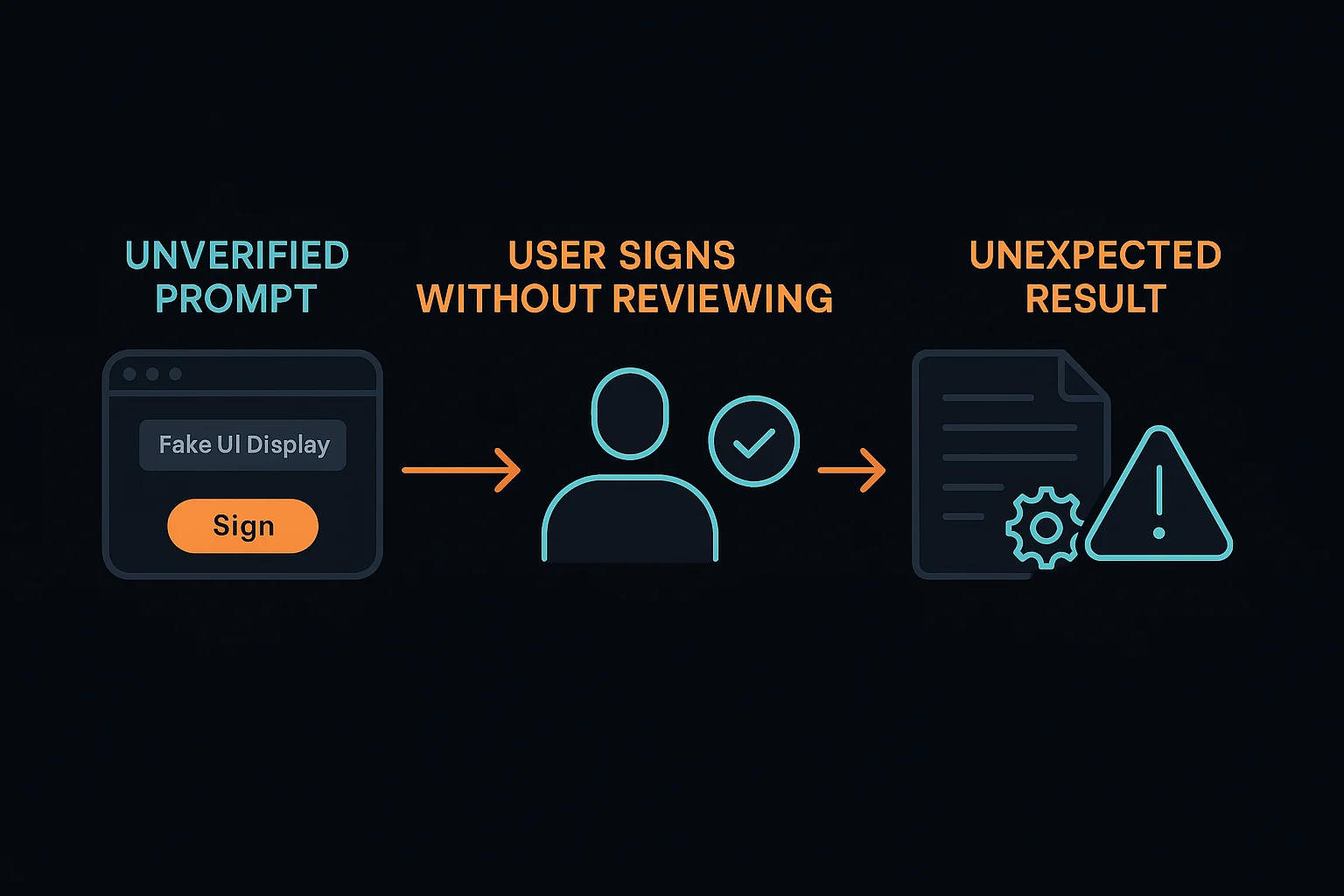
Infographic showing how an unverified prompt can lead to a user signing an unintended transaction

Real-World Examples

  • Fake NFT marketplace signatures that actually approve unlimited token spending
  • Phishing websites that spoof popular DeFi protocols to steal user authorizations
  • Malicious browser extensions that modify transaction data after users review but before signing

Why Beginners Should Care

Verification importance requires carefully checking all transaction details, contract addresses, and permissions before signing any wallet transactions.

Hardware wallet benefits provide additional verification steps that make signature spoofing attacks more difficult to execute successfully.

Recovery challenges since spoofed signatures can grant extensive permissions that enable ongoing fund theft until manually revoked.

Related Terms: Phishing Attack, Transaction Verification, Hardware Wallet

Back to Crypto Glossary

Similar Posts

  • Flashbots

    Flashbots: MEV Infrastructure Flashbots is a research and development organization that builds infrastructure to mitigate the negative externalities of MEV. They’re trying to make the blockchain economy more fair and transparent. Flashbots develops tools and infrastructure to democratize MEV extraction and reduce its harmful effects on regular users. Their products include private mempools, MEV-protected transaction…

  • Validator Set Rotation

    Validator Set Rotation: Dynamic Network Security Validator set rotation periodically changes which nodes validate transactions, preventing long-term centralization and maintaining network security through diversity. It’s like jury rotation for blockchain consensus. Validator set rotation is a mechanism that periodically changes which validators are active in securing a blockchain network. This prevents permanent centralization and ensures…

  • Storage Refund

    Storage Refund: Incentivizing Data CleanupStorage refund mechanisms return gas fees to users who clean up blockchain storage by removing unnecessary data. It's like getting a deposit back when you return empty bottles.Storage refund refers to mechanisms that provide gas fee rebates or payments to users who free up blockchain storage space by deleting data or…

  • Wallet Drainer

    Wallet Drainer: Malicious Fund Extraction Wallet drainers are malicious smart contracts or applications designed to steal all assets from connected wallets through deceptive transaction approvals. They’re digital pickpockets with smart contract superpowers. A wallet drainer is malicious software that tricks users into signing transactions that grant unlimited access to their cryptocurrency holdings. These attacks often…

  • Security Token

    Security Token: Regulated Digital AssetsSecurity tokens are cryptocurrency tokens that represent ownership in real-world assets and are subject to securities regulations. They're like digital stock certificates that comply with financial laws.Security tokens are cryptocurrency tokens that represent ownership stakes in real-world assets and are subject to securities regulations and compliance requirements. These bridge traditional finance with…

  • Ring Signatures

    Ring Signatures: Anonymous Signatures in Groups Ring signatures let any member of a group sign a message without revealing which specific member created the signature. It’s like having a family photo where you know someone took it, but can’t tell who. A ring signature is a cryptographic signature scheme where any member of a group…