
Wallet Drainer

Wallet Drainer: Malicious Fund Extraction

Wallet drainers are malicious smart contracts or applications designed to steal all assets from connected wallets through deceptive transaction approvals. They’re digital pickpockets with smart contract superpowers.

A wallet drainer is malicious software that tricks users into signing transactions that grant unlimited access to their cryptocurrency holdings. These attacks often disguise themselves as legitimate applications or NFT mints to gain user trust.

How Wallet Drainers Work

Social engineering presents fake websites, NFT mints, or airdrops that appear legitimate to trick users into connecting their wallets.

Malicious approvals request permissions that seem reasonable but actually grant unlimited access to users’ token holdings across multiple assets.

Automated extraction immediately drains approved tokens once users sign the malicious transactions, often faster than users can realize what happened.
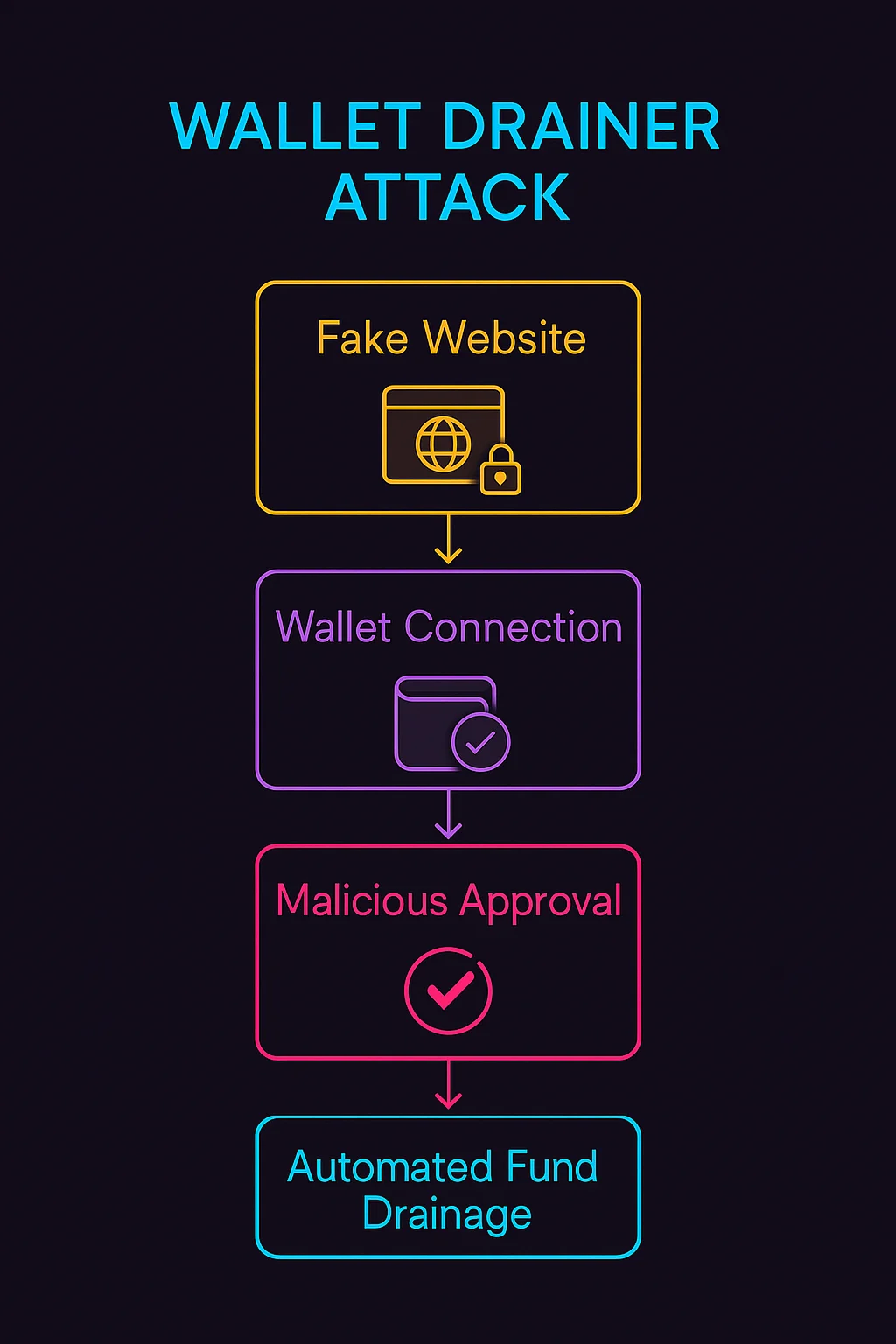
Infographic showing wallet drainer attack sequence: fake website, wallet connection, malicious approval, and automated fund drainage

Real-World Examples

  • Fake NFT mint sites that drain wallets when users attempt to mint seemingly legitimate collections
  • Phishing websites mimicking popular DeFi protocols to steal user approvals
  • Malicious browser extensions that inject drainer code into legitimate websites

Why Beginners Should Care

Irreversible losses since blockchain transactions cannot be reversed once confirmed, making wallet drainer attacks permanently damaging.

Prevention strategies include carefully verifying website URLs, understanding transaction approvals, and using hardware wallets for additional security.

Growing sophistication as drainer attacks become more convincing and harder to detect, requiring increased vigilance from all crypto users.

Related Terms: Phishing Attack, Transaction Approval, Social Engineering, Hardware Wallet

Back to Crypto Glossary

Similar Posts

  • Staking Rewards

    Staking Rewards: Earning from Network Security Staking rewards compensate users for locking up cryptocurrency to help secure proof-of-stake networks. It’s like earning interest for helping guard the bank vault. Staking rewards are cryptocurrency payments earned by users who lock up tokens to participate in proof-of-stake network consensus and security. These rewards incentivize honest participation while…

  • Consensus Layer

    Consensus Layer: Agreement Coordination SystemThe consensus layer coordinates agreement among network participants about the valid state of the blockchain. It's like having a voting system that everyone trusts to make fair decisions.The consensus layer is the component of blockchain architecture responsible for coordinating agreement among network participants about transaction validity and blockchain state. This layer ensures…

  • Rug Pull

    Rug Pull: When Projects Disappear With Your Money Rug pulls are crypto’s version of old-fashioned exit scams. Developers build hype, collect investor money, then vanish into the digital night. A rug pull is when cryptocurrency project developers abandon the project and steal investor funds. The term comes from “pulling the rug out” from under investors…

  • Sanctions

    Sanctions: Government Financial RestrictionsCryptocurrency sanctions involve government restrictions on specific addresses, entities, or services to prevent them from accessing financial systems. They're economic weapons adapted for the digital age.Sanctions refer to government-imposed restrictions that prohibit individuals, entities, or services from accessing financial systems or conducting specific activities. In crypto, this includes blocking addresses and restricting access…

  • Mining Pool

    Mining Pool: Collaborative Block Mining Mining pools combine computational power from multiple miners to increase chances of finding blocks and earning rewards. It’s like joining a lottery syndicate to improve your odds. A mining pool is a collaborative group of cryptocurrency miners who combine their computational resources to increase their chances of successfully mining blocks…

  • MetaMask

    MetaMask: Your Gateway to Web3 MetaMask is the browser extension wallet that connects you to the decentralized web. It’s like having a crypto wallet built into your browser that talks to every DeFi protocol. MetaMask is a browser extension and mobile wallet that enables interaction with Ethereum-based applications directly through web browsers. It manages private…