
Staking Rewards

Staking Rewards: Earning from Network Security

Staking rewards compensate users for locking up cryptocurrency to help secure proof-of-stake networks. It’s like earning interest for helping guard the bank vault.

Staking rewards are cryptocurrency payments earned by users who lock up tokens to participate in proof-of-stake network consensus and security. These rewards incentivize honest participation while providing passive income opportunities.

How Staking Rewards Work

Network participation involves locking tokens to help validate transactions, secure the network, and maintain consensus through economic incentives.

Reward calculation typically depends on factors like stake amount, network inflation rate, total staked supply, and validator performance.

Distribution mechanisms may provide rewards directly to stakers or require claiming through specific transactions or delegation to validator operators.
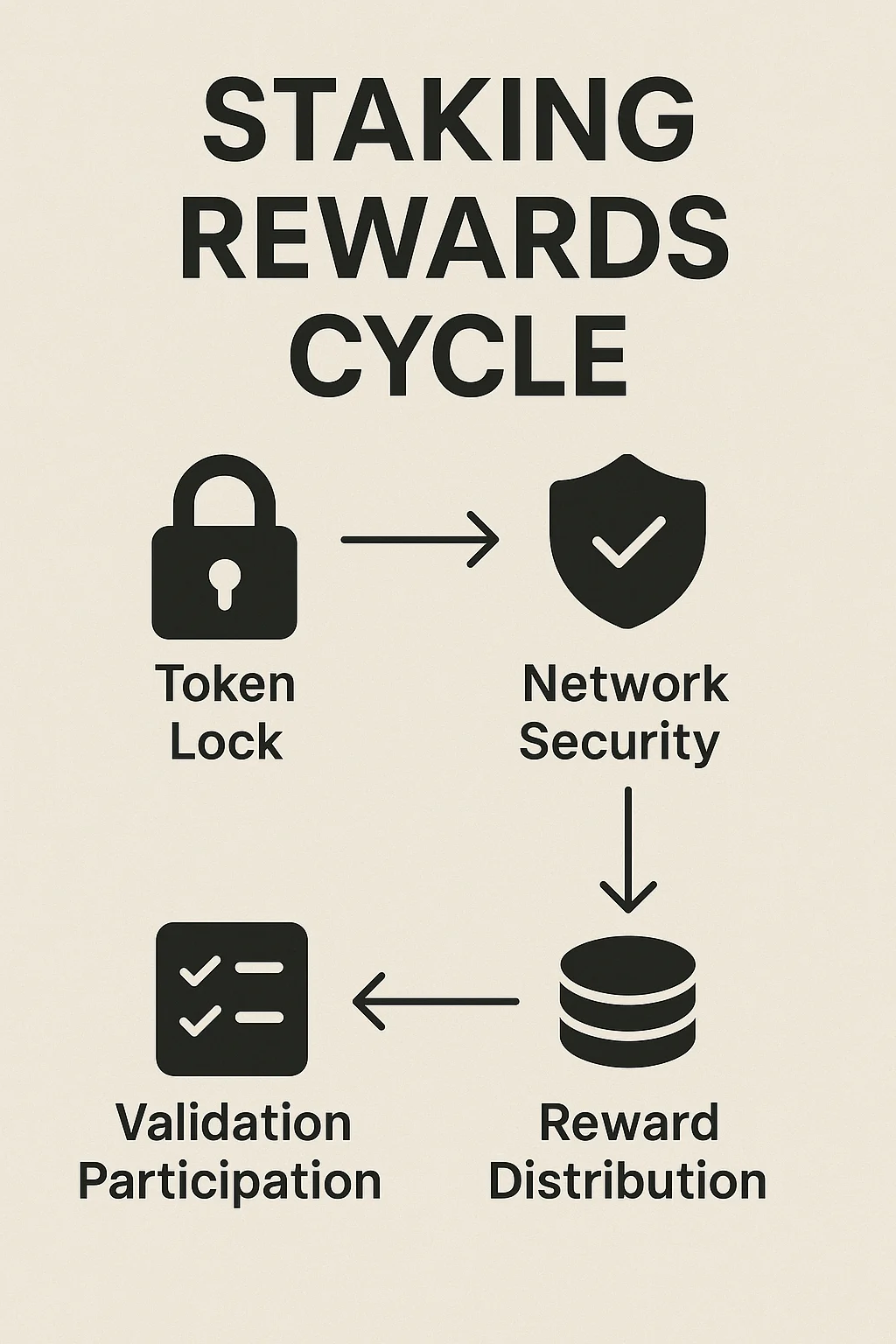
Infographic showing the staking rewards cycle with steps: token lock, network security, validation participation, and reward distribution

Real-World Examples

  • Ethereum staking provides approximately 4-6% annual returns for validators and delegators
  • Cardano (ADA) offers staking rewards through delegation pools with no lock-up periods
  • Solana staking rewards vary based on network performance and validator selection

Why Beginners Should Care

Passive income opportunities for long-term holders who want to earn returns on cryptocurrency holdings without active trading.

Network contribution as staking helps secure blockchain networks while earning rewards for productive participation.

Risk considerations including slashing penalties, lock-up periods, and validator selection that affect potential returns and fund accessibility.

Related Terms: Proof of Stake, Validator, Delegation

Back to Crypto Glossary

Similar Posts

  • Market Cap

    Market Cap: How to Value Crypto Projects Market cap tells you how much the entire crypto market values a project. It’s the most important number for comparing different cryptocurrencies. Market capitalization is the total value of all coins in circulation, calculated by multiplying the current price by the circulating supply. It shows the relative size…

  • Wallet Recovery

    Wallet Recovery: Restoring Access to Lost FundsWallet recovery enables regaining access to cryptocurrency holdings when primary access methods fail. It's like having backup keys to your digital safe when you lose the originals.Wallet recovery encompasses methods for restoring access to cryptocurrency wallets when devices are lost, passwords forgotten, or primary authentication fails. Proper recovery planning prevents…

  • Arbitrage

    Arbitrage: Risk-Free Profit from Price DifferencesArbitrage involves simultaneously buying and selling the same asset on different markets to profit from price differences. It's like buying wholesale and selling retail, but happening instantly.Arbitrage is the practice of taking advantage of price differences for the same asset across different markets or exchanges to generate risk-free profits. This activity…

  • State Channel

    State Channel: Off-Chain Interaction Highways State channels enable instant, low-cost transactions between parties by moving interactions off-chain while maintaining blockchain security. It’s like having a private highway between two cities. A state channel is a two-way communication channel between blockchain users that enables off-chain transactions with on-chain security guarantees. Participants can transact instantly and cheaply,…

  • Order Flow

    Order Flow: Transaction Request RoutingOrder flow refers to the stream of buy and sell orders flowing through trading systems and how they're routed to different execution venues. It's like watching the flow of cars through different highway lanes to see which routes get the best traffic conditions.Order flow encompasses the path that trading orders take…

  • Transaction Fees

    Transaction Fees: Network Processing CostsTransaction fees are payments made to network validators for processing and confirming cryptocurrency transactions. They're like postage stamps that you need to attach to letters, except the cost varies depending on how quickly you want your mail delivered.Transaction fees refer to payments made to miners, validators, or network operators who process…