
State Channel

State Channel: Off-Chain Interaction Highways

State channels enable instant, low-cost transactions between parties by moving interactions off-chain while maintaining blockchain security. It’s like having a private highway between two cities.

A state channel is a two-way communication channel between blockchain users that enables off-chain transactions with on-chain security guarantees. Participants can transact instantly and cheaply, settling final balances on the main blockchain.

How State Channels Work

Channel opening requires both parties to lock funds in a smart contract that enforces the rules smart contract rfor off-chain state updates.

Off-chain updates happen instantly between parties without broadcasting to the blockchain, enabling real-time interactions with minimal costs.

Dispute resolution mechanisms allow either party to challenge invalid state updates by submitting proofs to the on-chain contract.
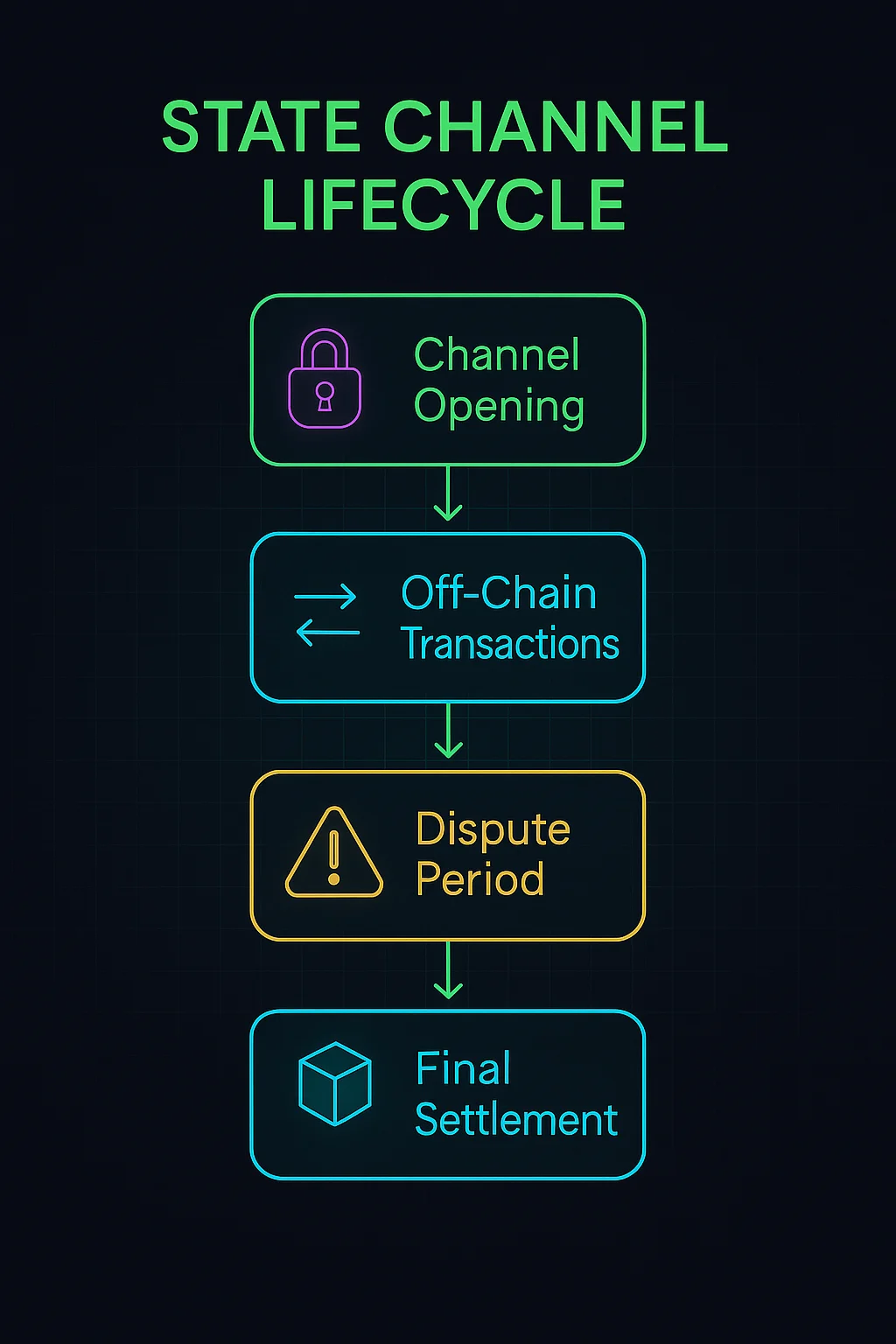
Infographic showing the state channel lifecycle: channel opening, off-chain transactions, dispute period, and final settlement

Real-World Examples

  • Lightning Network enables instant Bitcoin payments through payment channels
  • Connext provides Ethereum state channels for fast, cheap transfers
  • Gaming applications use state channels for real-time multiplayer interactions

Why Beginners Should Care

Instant finality for payments and interactions without waiting for blockchain confirmation times.

Low costs since only channel opening and closing require on-chain transactions regardless of off-chain activity volume.

Complexity requirements for channel management, dispute handling, and liquidity routing that limit mainstream adoption.

Related Terms: Lightning Network, Payment Channel, Layer 2, Dispute Resolution

Back to Crypto Glossary

Similar Posts

  • Proof of Stake (PoS)

    Proof of Stake (PoS): Energy-Efficient Consensus Proof of Stake secures blockchain networks through economic staking rather than energy-intensive mining. It’s like replacing a gold rush with a security deposit system. Proof of Stake (PoS) is a consensus mechanism where validators are chosen to create new blocks based on their stake in the network rather than…

  • Network Congestion

    Network Congestion: Blockchain Traffic JamsNetwork congestion occurs when cryptocurrency networks become overloaded with transaction requests, causing delays and increased fees. It's like rush hour traffic that slows everyone down and costs more to navigate.Network congestion refers to periods when cryptocurrency networks receive more transaction requests than they can process efficiently, resulting in delayed confirmations and…

  • SocialFi

    SocialFi: Social Media Meets Financial Incentives SocialFi combines social networking with decentralized finance, rewarding users for creating content and engaging with communities. It’s like getting paid to post, but with actual economic models behind it. SocialFi refers to social finance applications that integrate social media features with DeFi economics, enabling users to monetize social interactions…

  • Web3

    Web3: The Decentralized Internet Dream Web3 promises an internet where users own their data, identity, and digital assets instead of tech giants controlling everything. It’s part vision, part reality, part marketing buzzword. Web3 refers to a decentralized version of the internet built on blockchain technology where users control their own data, identity, and assets rather…

  • Governance Token

    Governance Token: Voting Rights in CryptoGovernance tokens provide holders with voting rights in decentralized protocols and organizations. They're like shares in a company, but for decentralized projects where the community makes decisions.A governance token is a cryptocurrency that grants holders voting rights over protocol changes, treasury allocation, and other governance decisions in decentralized projects. These tokens…

  • Multichain Router

    Multichain Router: Cross-Chain Navigation Multichain routers find optimal paths for moving assets between different blockchain networks. They’re like GPS for cross-chain transactions, finding the cheapest and fastest routes. A multichain router is a protocol that automatically finds the best path for transferring assets between different blockchain networks. It compares routes across multiple bridges and chains…