
Rollups

Rollups: Scaling Through Bundling

Rollups process hundreds of transactions off-chain then bundle the results into single on-chain transactions. It’s like carpooling for blockchain transactions – everyone shares the gas costs.

Rollups are Layer 2 scaling solutions that execute transactions off the main blockchain but post transaction data on-chain for security. They inherit the security of the main chain while dramatically reducing costs and increasing throughput.

How Rollups Work

Batch processing combines hundreds of transactions into cryptographic proofs or compressed data that gets submitted to the main chain as a single transaction.

Two main types exist: Optimistic rollups assume transactions are valid unless challenged, while Zero-Knowledge rollups use cryptographic proofs to guarantee validity.

Data availability ensures anyone can reconstruct rollup state from main chain data, maintaining decentralization and enabling independent verification of rollup operators.
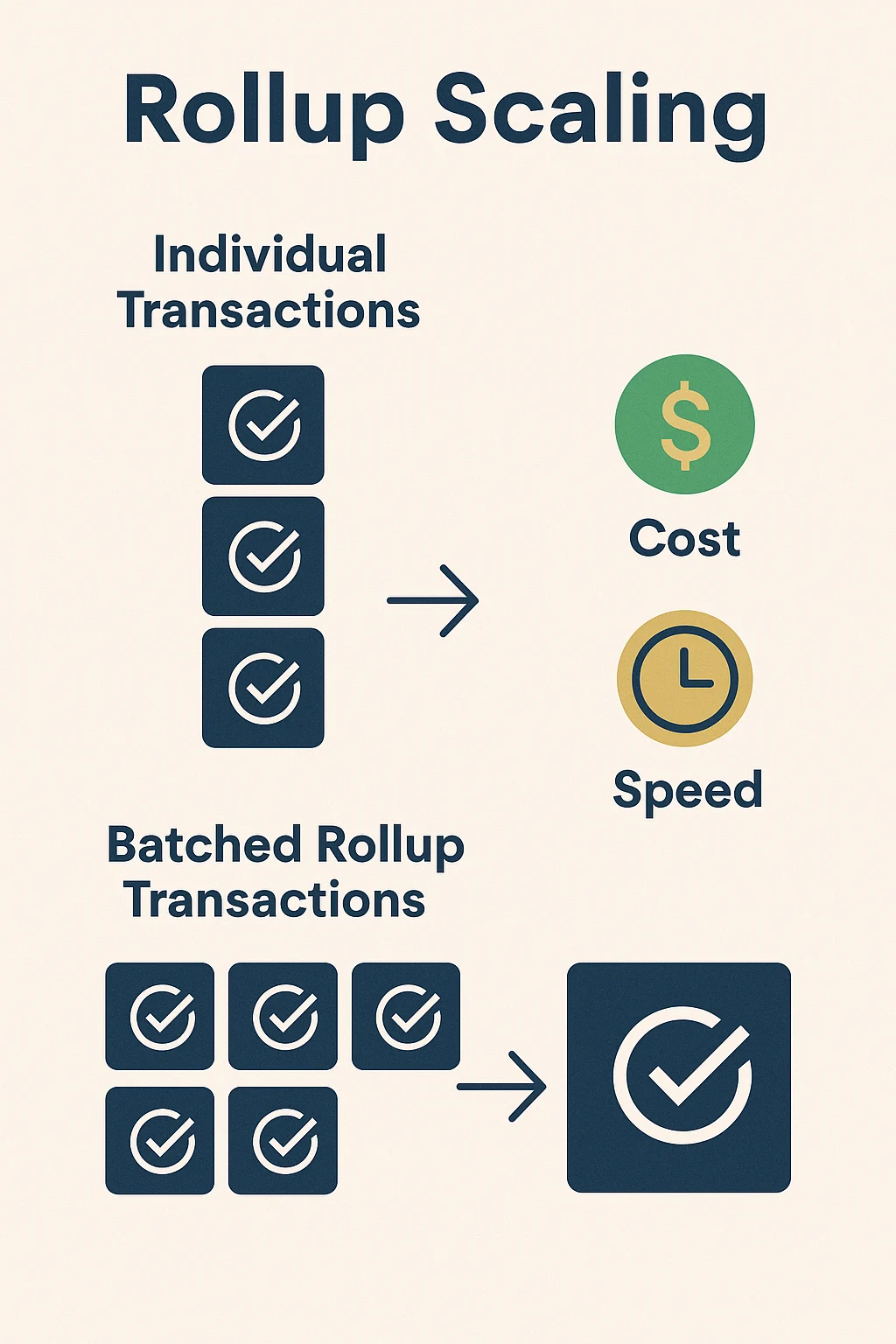
Infographic comparing individual blockchain transactions to batched rollup transactions, showing improvements in cost and speed

Real-World Examples

  • Arbitrum – Popular optimistic rollup with major DeFi protocols and lower fees
  • Optimism – Ethereum scaling solution with retroactive public goods funding
  • StarkNet – Zero-knowledge rollup using STARK proofs for scalability

Why Beginners Should Care

Massive fee savings make DeFi accessible to smaller users who were priced out by high Ethereum mainnet transaction costs during peak usage.

Security inheritance from Ethereum mainnet provides stronger guarantees than sidechains or independent Layer 1 blockchains with smaller validator sets.

Growing ecosystem sees major protocols launching on rollups, making them increasingly necessary for accessing the latest DeFi innovations and competitive yields.

Related Terms: Layer 2, Optimistic Rollup, zk-Rollup, Scaling

Back to Crypto Glossary

Similar Posts

  • Anonymity

    Anonymity: Hiding Identity in Digital TransactionsAnonymity in cryptocurrency refers to the ability to conduct transactions without revealing personal identity. It's like wearing a mask that completely hides who you are during financial transactions.Anonymity refers to the state of being unidentifiable in cryptocurrency transactions and blockchain interactions. True anonymity means that transaction participants cannot be linked to…

  • On-Chain Gaming

    On-Chain Gaming: Fully Decentralized Games On-chain gaming runs game logic entirely on blockchain networks rather than traditional servers. It’s like having board games where the rules are enforced by mathematics instead of human referees. On-chain gaming executes all game logic, state management, and interactions through smart contracts on blockchain networks. Unlike traditional games with centralized…

  • Bagholder

    Bagholder: Stuck with Worthless Tokens A bagholder is someone stuck holding cryptocurrency that has lost most of its value with little hope of recovery. It’s crypto’s version of being left holding the bag. A bagholder is an investor who continues holding a cryptocurrency that has significantly decreased in value, often because they’re unable or unwilling…

  • Avatar

    Avatar: Digital Identity RepresentationAn avatar is a digital representation of a user's identity in virtual worlds, games, or online platforms. In crypto, avatars often take the form of NFTs that represent unique digital identities.An avatar is a digital representation of a user's identity or persona, often taking the form of NFTs or profile pictures that…

  • Smart Contract

    Smart Contract: Code That Enforces Agreements Smart contracts are why crypto is bigger than just digital money. They’re agreements that execute themselves automatically when conditions are met. A smart contract is computer code that automatically executes agreement terms when predetermined conditions are satisfied. No lawyers, no courts, no arguing – just math and code enforcing…

  • Governance Token

    Governance Token: Voting Rights in CryptoGovernance tokens provide holders with voting rights in decentralized protocols and organizations. They're like shares in a company, but for decentralized projects where the community makes decisions.A governance token is a cryptocurrency that grants holders voting rights over protocol changes, treasury allocation, and other governance decisions in decentralized projects. These tokens…