
Optimistic Rollup

Optimistic Rollup: Trust but Verify Scaling

Optimistic rollups assume transactions are valid by default but allow challenges during dispute periods. It’s like innocent until proven guilty for blockchain transactions.

An optimistic rollup is a Layer 2 scaling solution that assumes transactions are valid by default and only verifies them if someone submits a fraud proof during a challenge period. This enables fast, cheap transactions while maintaining security through economic incentives.

How Optimistic Rollups Work

Optimistic execution processes transactions immediately without validation, posting transaction data to the main chain for availability.

Challenge periods allow anyone to submit fraud proofs if they detect invalid transactions, with economic penalties for false challenges.

Fraud proofs enable verification of specific transactions without re-executing entire blocks, making dispute resolution efficient.
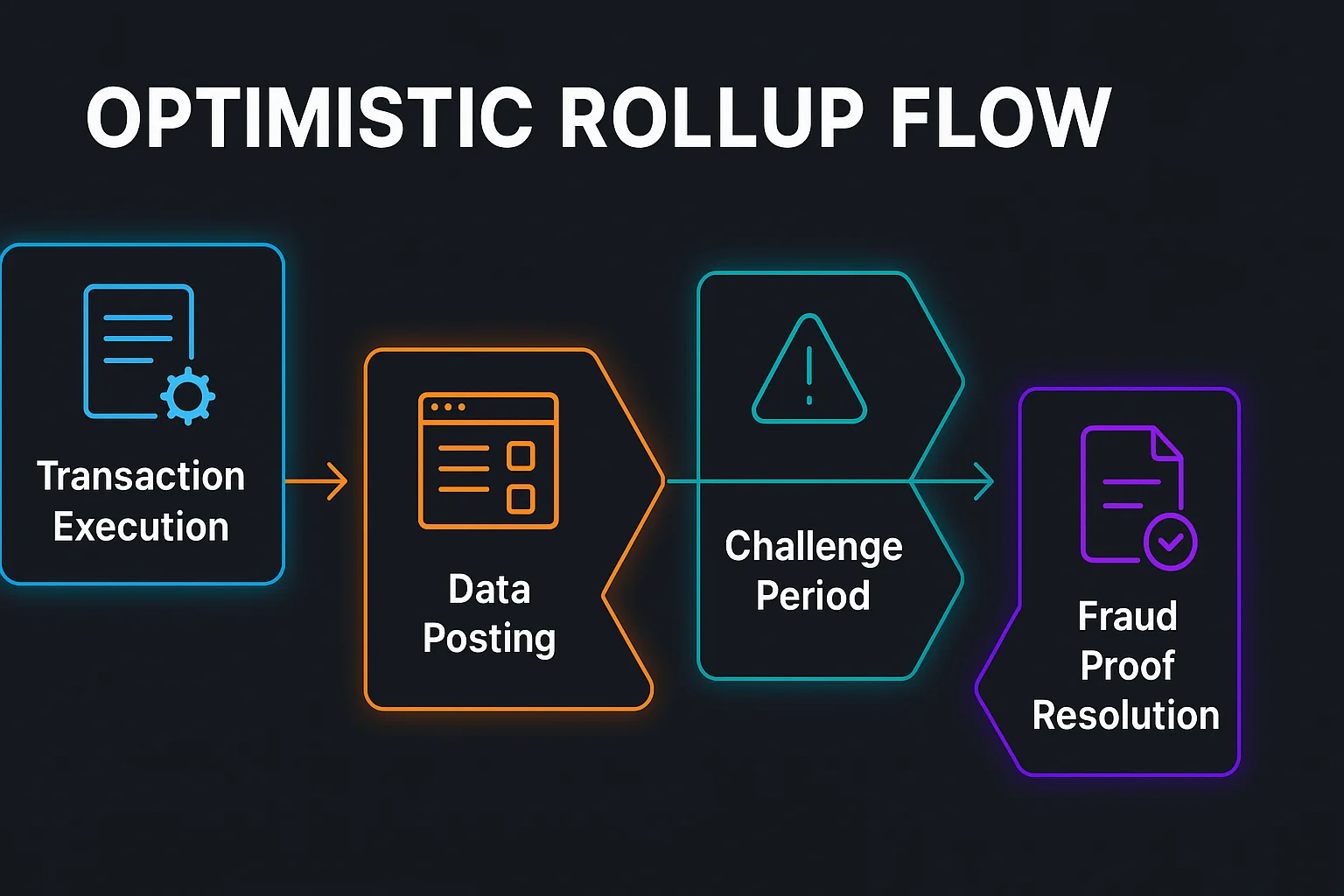
Optimistic rollup process showing transaction execution, data posting, challenge period, and fraud proof resolution

Real-World Examples

  • Arbitrum is the largest optimistic rollup with billions in TVL and major DeFi protocols
  • Optimism focuses on public goods funding and retroactive rewards for ecosystem development
  • Polygon Hermez (now zkEVM) started as an optimistic rollup before transitioning to ZK proofs

Why Beginners Should Care

Fast finality for most transactions since optimistic assumptions allow immediate execution without waiting for complex validation.

Withdrawal delays typically require 7-day challenge periods before funds can be moved back to Ethereum mainnet.

Lower costs compared to Ethereum mainnet while maintaining strong security guarantees through fraud proof mechanisms.

Related Terms: Layer 2, Fraud Proof, Challenge Period, Rollups

Back to Crypto Glossary

Similar Posts

  • Private Key

    Private Key: Your Crypto’s Secret Password Your private key is the most important thing you’ll ever own in crypto. Lose it, and your money’s gone forever. No customer service number to call. A private key is a secret code that proves you own your cryptocurrency and allows you to spend it. It’s like the combination…

  • Asset Backing

    Asset Backing: Value Foundation for TokensAsset backing refers to reserves of real-world assets that support the value of cryptocurrency tokens. It's like having gold in a vault to back paper money.Asset backing involves holding reserves of traditional assets like cash, bonds, commodities, or real estate to support the value and redemption of cryptocurrency tokens. This creates…

  • Challenge Period

    Challenge Period: Dispute Resolution WindowA challenge period is a time window during which participants can dispute or challenge proposed changes before they become final. It's like a cooling-off period for important decisions.A challenge period is a predetermined time frame that allows network participants to dispute transactions, withdrawals, or governance proposals before they become irreversible. This mechanism…

  • Reentrancy Attack

    Reentrancy Attack: Exploiting Function Recursion Reentrancy attacks exploit smart contracts by repeatedly calling functions before previous executions complete. It’s like withdrawing money from an ATM that forgets to update your balance between transactions. A reentrancy attack is a smart contract exploit where malicious contracts repeatedly call vulnerable functions before state changes are finalized, potentially draining…

  • Custodial Wallet

    Custodial Wallet: Someone Else Holds Your Keys Custodial wallets store your cryptocurrency private keys for you, like having a bank hold your money. Convenient but risky – if they go down, your crypto might go with them. A custodial wallet is a cryptocurrency storage service where a third party (like an exchange or wallet provider)…

  • Wallet Drainer

    Wallet Drainer: Malicious Fund Extraction Wallet drainers are malicious smart contracts or applications designed to steal all assets from connected wallets through deceptive transaction approvals. They’re digital pickpockets with smart contract superpowers. A wallet drainer is malicious software that tricks users into signing transactions that grant unlimited access to their cryptocurrency holdings. These attacks often…