
Dynamic Gas Pricing

Dynamic Gas Pricing: Adaptive Fee Markets

Dynamic gas pricing automatically adjusts transaction fees based on network demand. It’s like surge pricing for blockchain transactions – pay more when everyone wants to transact.

Dynamic gas pricing is a mechanism that automatically adjusts transaction fees based on current network congestion and demand. This creates more efficient fee markets while maintaining network performance during high usage periods.

How Dynamic Gas Pricing Works

Demand monitoring tracks network usage and mempool congestion to determine appropriate fee levels that balance accessibility with spam prevention.

Automatic adjustment increases fees during high demand periods and decreases them when the network is less congested, creating responsive pricing.

User experience improvements through predictable fee estimation and reduced need for manual gas price optimization.
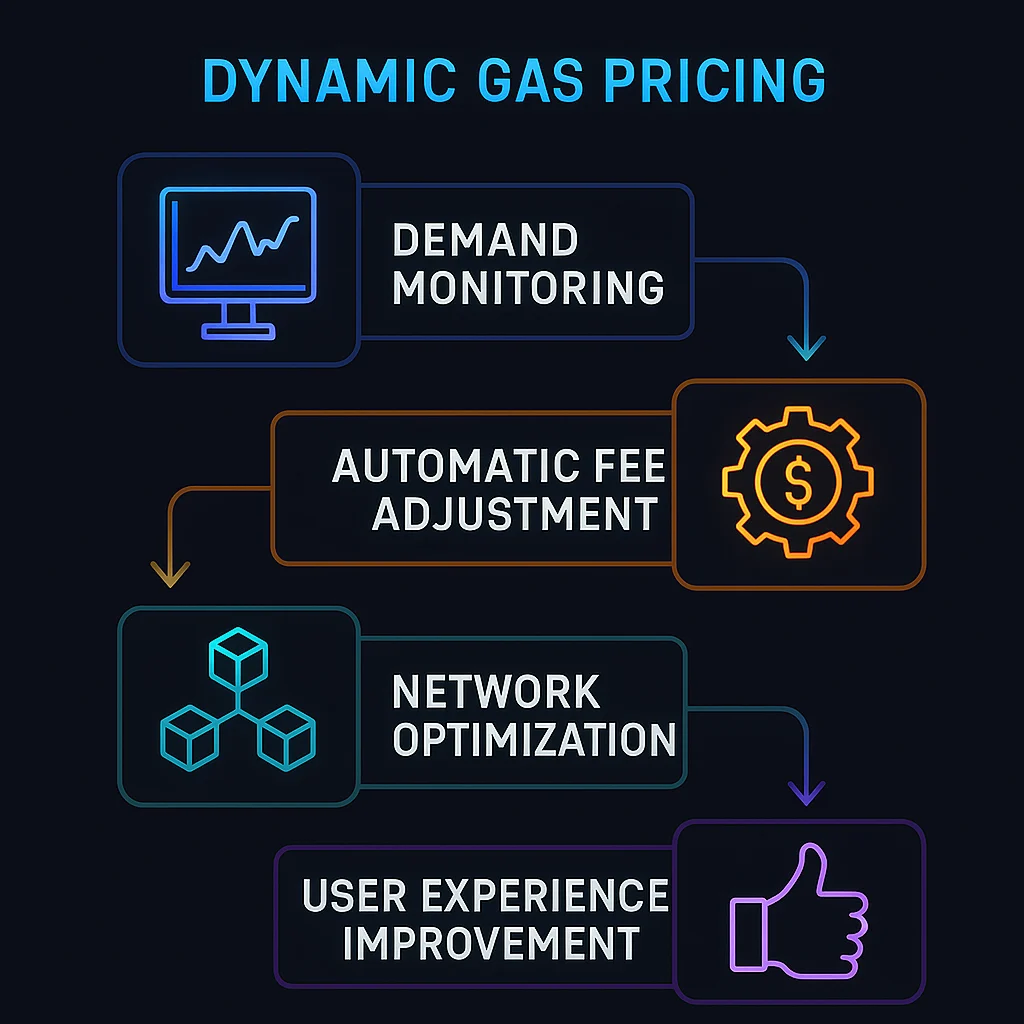
Dynamic gas pricing diagram showing demand monitoring, automatic fee adjustment, network optimization, and user experience improvement

Real-World Examples

  • EIP-1559 introduced dynamic base fees on Ethereum that burn with usage
  • Polygon uses dynamic fee adjustment to maintain consistent block times
  • Various Layer 2s implement dynamic pricing to optimize for their specific use cases

Why Beginners Should Care

Predictable costs as dynamic pricing provides better fee estimation and reduces the guesswork in transaction pricing.

Network efficiency through automatic congestion management that maintains performance without manual intervention.

Fair access as dynamic pricing prevents spam while ensuring legitimate users can always access the network by paying appropriate fees.

Related Terms: Gas Fees, EIP-1559, Network Congestion, Fee Market

Back to Crypto Glossary

Similar Posts

  • Real Yield

    Real Yield: Sustainable Return GenerationReal yield refers to returns generated from actual economic activity and revenue rather than token emissions or inflationary rewards. It's like earning interest from a bank's profitable lending operations instead of them just printing more money to pay you.Real yield describes investment returns generated from genuine economic activity, protocol revenue, or…

  • Scalability

    Scalability: Handling Growing Network DemandScalability refers to a blockchain network's ability to handle increasing transaction volumes without degrading performance or significantly increasing costs. It's like building highways that don't get congested as more cars use them.Scalability describes how well blockchain networks can accommodate growing user bases and transaction volumes while maintaining reasonable fees and confirmation…

  • Sidechain

    Sidechain: Independent Chains with Main Chain Connections Sidechains operate independently while maintaining bridges to main blockchains. They’re like having a separate express lane that connects back to the main highway when needed. A sidechain is an independent blockchain that runs parallel to a main blockchain and is connected through a two-way bridge allowing asset transfers….

  • Merkle Tree

    Merkle Tree: Efficient Data Verification Merkle trees enable efficient verification of large datasets without downloading everything. They’re like having a fingerprint for an entire library that proves any book belongs. A Merkle tree is a binary tree structure where each leaf represents a data element and each branch contains cryptographic hashes of its children. The…

  • Network Decentralization

    Network Decentralization: Distributed Control ArchitectureNetwork decentralization refers to distributing control and operation of blockchain networks across many independent participants rather than concentrating power. It's like having a town where decisions are made by all residents voting together instead of a single mayor controlling everything.Network decentralization describes the distribution of control, validation, and governance functions across…

  • Value Capture

    Value Capture: Extracting Economic BenefitsValue capture refers to mechanisms that extract and redirect economic value from ecosystem activity to specific stakeholders or protocols. It's like having toll booths that collect fees from traffic flowing through valuable infrastructure.Value capture describes mechanisms that extract economic value from ecosystem activity and redirect it to token holders, protocols, or…