
Rehypothecation

Rehypothecation: Reusing Collateral Multiple Times

Rehypothecation involves using the same collateral to back multiple obligations simultaneously. It’s like using your house as collateral for three different loans at the same time.

Rehypothecation is the practice of using customer assets as collateral for the institution’s own borrowing or trading activities. In DeFi, this creates leverage and capital efficiency but increases systemic risk.

How Rehypothecation Works

Collateral reuse allows deposited assets to be lent out or used as backing for additional positions, creating multiple claims on the same underlying assets.

Leverage amplification enables institutions to take larger positions than their actual capital would normally allow through reusing customer deposits.

Chain reactions can occur when asset values decline, triggering margin calls across multiple positions backed by the same underlying collateral.
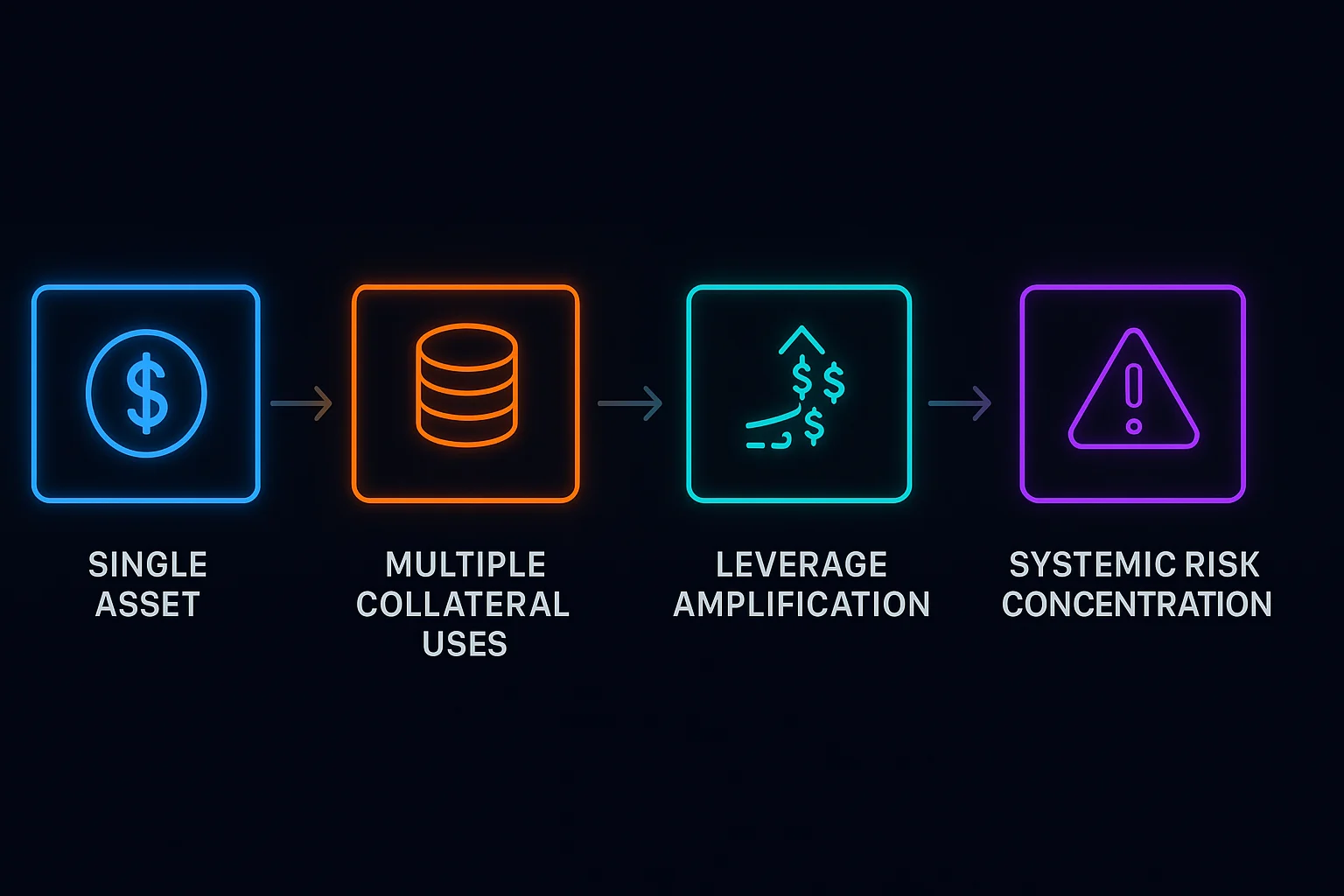
Rehypothecation chain showing single asset, multiple collateral uses, leverage amplification, and systemic risk concentration

Real-World Examples

  • Celsius allegedly rehypothecated customer deposits for high-risk trading activities before bankruptcy
  • Traditional finance has used rehypothecation extensively, contributing to the 2008 financial crisis
  • Some DeFi protocols enable rehypothecation-like mechanics through recursive borrowing

Why Beginners Should Care

Hidden leverage in the system that may not be apparent until market stress reveals the extent of rehypothecation.

Counterparty risk increases when your deposits are being used to back other people’s risky positions without your knowledge.

Regulatory attention as rehypothecation practices often violate customer protection laws in traditional finance.

Related Terms: Leverage, Counterparty Risk, Systemic Risk, Asset Rehypothecation

Back to Crypto Glossary

Similar Posts

  • Smart Contract Audit

    Smart Contract Audit: Code Security ReviewSmart contract audits involve professional security reviews of blockchain code to identify vulnerabilities before deployment. It's like having building inspectors for digital architecture.A smart contract audit is a comprehensive security review of blockchain application code conducted by experts to identify vulnerabilities, bugs, and potential attack vectors before public deployment. These reviews…

  • Yield Stacking

    Yield Stacking: Combining Multiple Income StreamsYield stacking involves combining multiple yield-generating strategies to maximize returns on cryptocurrency investments. It's like having several part-time jobs that all pay into the same bank account.Yield stacking refers to the strategy of combining multiple yield-generating opportunities across different protocols, assets, and mechanisms to maximize overall returns. This approach leverages various…

  • Project Vetting

    Project Vetting: Investment Due DiligenceProject vetting involves thoroughly researching and evaluating cryptocurrency projects before investing to identify legitimate opportunities and avoid scams. It's like inspecting a house before buying it to check the foundation, plumbing, and electrical systems.Project vetting refers to the comprehensive research and analysis process used to evaluate cryptocurrency projects, including team credentials,…

  • Asset Backing

    Asset Backing: Value Foundation for TokensAsset backing refers to reserves of real-world assets that support the value of cryptocurrency tokens. It's like having gold in a vault to back paper money.Asset backing involves holding reserves of traditional assets like cash, bonds, commodities, or real estate to support the value and redemption of cryptocurrency tokens. This creates…

  • Peer-to-Peer (P2P)

    Peer-to-Peer (P2P): Direct Network Communication Peer-to-peer networks enable direct communication between participants without central intermediaries. It’s like having a telephone system where everyone connects directly instead of going through switchboard operators. Peer-to-peer (P2P) refers to network architectures where participants communicate directly with each other rather than through centralized servers or intermediaries. This creates decentralized systems…

  • Verifiable Randomness

    Verifiable Randomness: Provably Fair Random NumbersVerifiable randomness provides cryptographically secure random numbers that can be independently verified for fairness. It's like having dice that everyone can mathematically confirm are not loaded.Verifiable randomness refers to random number generation systems that produce unpredictable outputs while providing cryptographic proofs that the randomness is fair and unbiased. This enables trustless…