
DeFi Composability

DeFi Composability: Building Block Finance

DeFi composability allows protocols to integrate seamlessly, creating complex financial products by combining simpler components. It’s like financial Lego blocks that snap together perfectly.

DeFi composability refers to the ability of decentralized finance protocols to interact and build upon each other, creating more complex financial products through modular integration. This enables innovation through combining existing building blocks.

How DeFi Composability Works

Standardized interfaces like ERC-20 tokens and common smart contract patterns enable protocols to interact without custom integration work.

Permissionless innovation allows anyone to build on existing protocols without asking permission, creating rapid ecosystem development.

Yield stacking combines multiple protocols to optimize returns, such as lending tokens that earn yield while being used as collateral elsewhere.
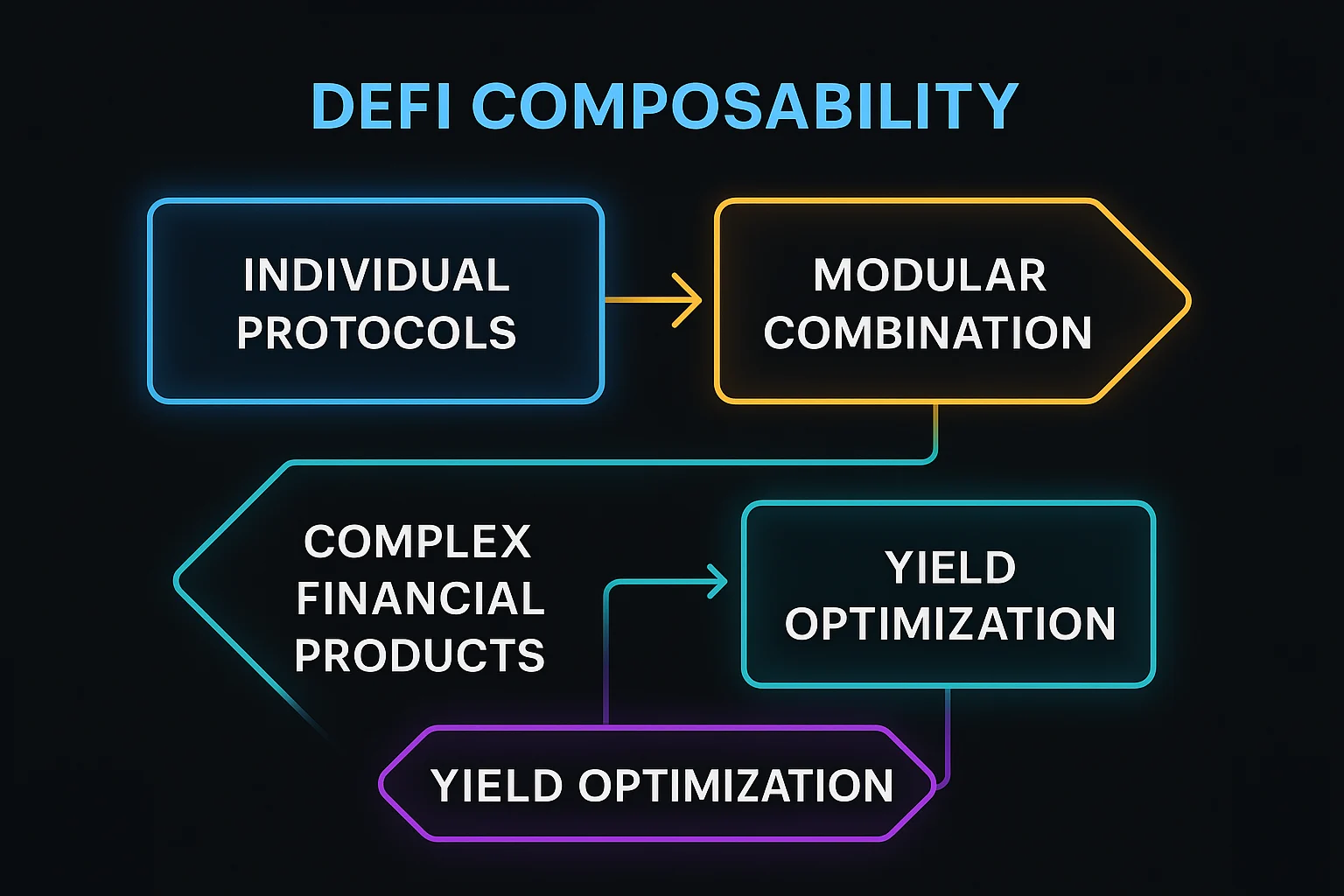
DeFi composability diagram showing individual protocols, modular combination, complex financial products, and yield optimization

Real-World Examples

  • Yearn Finance combines lending, farming, and trading protocols to optimize yields automatically
  • Convex Finance builds on Curve to enhance liquidity mining rewards
  • Index protocols create diversified portfolios using multiple DeFi primitives

Why Beginners Should Care

Innovation acceleration as new protocols can leverage existing infrastructure rather than rebuilding everything from scratch.

Systemic risks from interconnected protocols where failures can cascade across multiple applications and user positions.

Complexity management becomes crucial as composed strategies may be difficult to understand and evaluate for risk.

Related Terms: DeFi Primitives, Yield Stacking, Smart Contract

Back to Crypto Glossary

Similar Posts

  • Community

    Community: Decentralized Project StakeholdersCommunity refers to the users, developers, investors, and supporters who participate in and contribute to cryptocurrency projects. They're like the citizens of a digital nation working toward common goals.Community encompasses all stakeholders who participate in cryptocurrency projects including users, developers, investors, validators, and supporters who collectively contribute to project success. Strong communities drive…

  • Smart Contract Royalties

    Smart Contract Royalties: Automated Creator Payments Smart contract royalties automatically pay creators a percentage every time their NFTs are resold. It’s like having a永続 commission that follows your work forever. Smart contract royalties are automated payment mechanisms built into NFT contracts that send a percentage of each resale back to the original creator. These payments…

  • Staking Rewards

    Staking Rewards: Earning from Network Security Staking rewards compensate users for locking up cryptocurrency to help secure proof-of-stake networks. It’s like earning interest for helping guard the bank vault. Staking rewards are cryptocurrency payments earned by users who lock up tokens to participate in proof-of-stake network consensus and security. These rewards incentivize honest participation while…

  • Slippage

    Slippage: The Cost of Market Impact Slippage is the difference between expected and actual trade prices. It’s the tax you pay for moving markets when your trade is large relative to available liquidity. Slippage occurs when the execution price of a trade differs from the expected price due to market movement or insufficient liquidity. Large…

  • Transaction Privacy

    Transaction Privacy: Protecting Financial InformationTransaction privacy keeps cryptocurrency transaction details confidential while maintaining network security. It's like having private bank accounts in a transparent financial system.Transaction privacy refers to techniques that conceal cryptocurrency transaction information such as sender addresses, recipient addresses, and transaction amounts from public observation. This enables financial privacy while maintaining blockchain functionality.How Transaction…

  • Lockup Period

    Lockup Period: Temporary Access RestrictionsLockup periods prevent token holders from selling or transferring their holdings for specified time frames. It's like having a certificate of deposit that you can't cash out early.A lockup period is a predetermined time frame during which cryptocurrency holders cannot sell, transfer, or access their tokens. These restrictions are typically enforced through…