
Proof of Burn

Proof of Burn: Destroying Value for Consensus

Proof of Burn requires destroying cryptocurrency to participate in consensus or gain network benefits. It’s like burning money to prove you’re serious about network security.

Proof of Burn is a consensus mechanism where participants destroy cryptocurrency by sending it to unrecoverable addresses to gain mining rights or network privileges. The economic cost of burned tokens incentivizes honest behavior.

How Proof of Burn Works

Token destruction sends cryptocurrency to addresses with no known private keys, permanently removing it from circulation as proof of economic commitment.

Mining rights are awarded based on the value of recently burned tokens, with more burns providing higher chances of being selected to create blocks.

Economic incentives align participant interests with network security since dishonest behavior would waste the burned tokens without rewards.
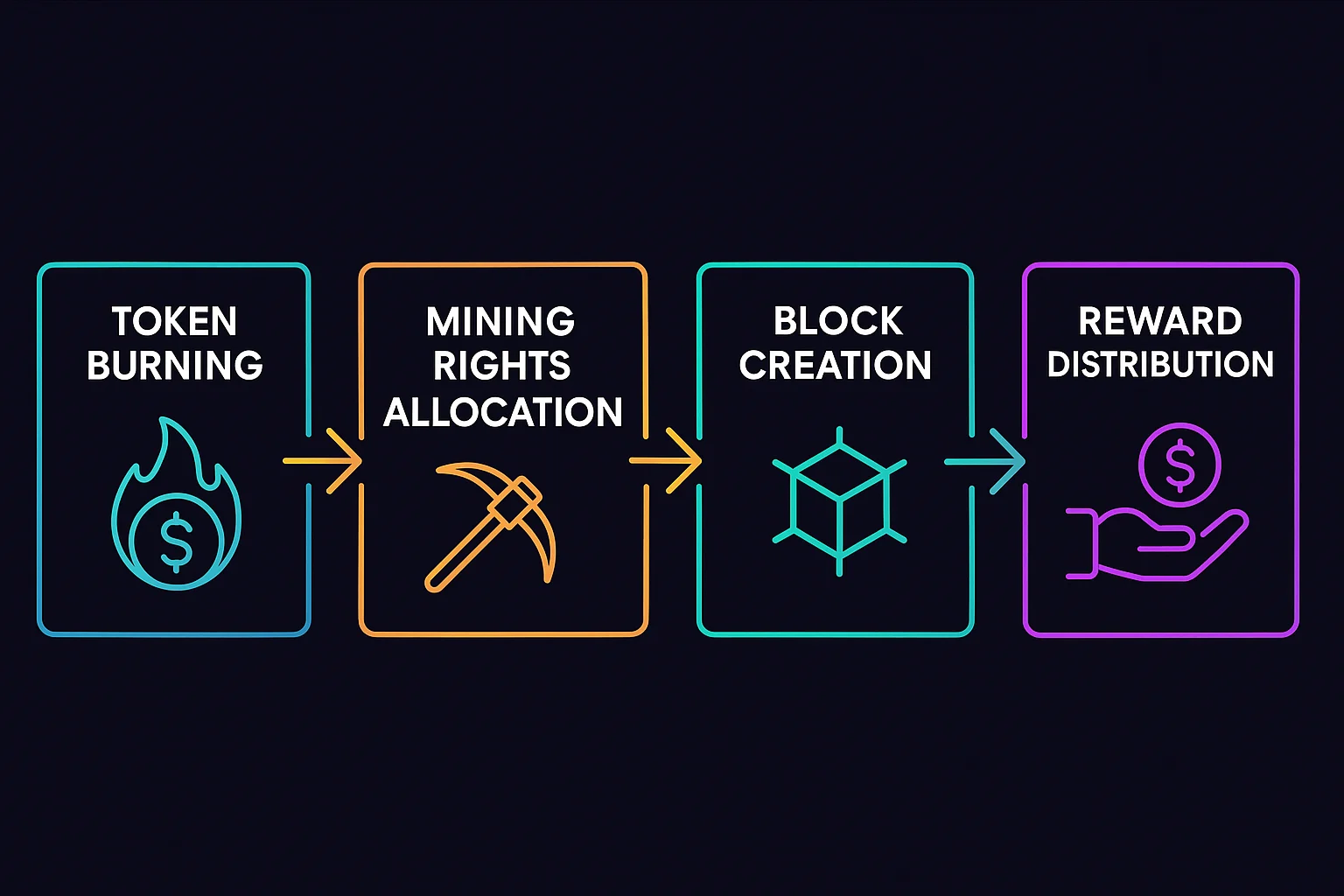
Proof of Burn process showing token burning, mining rights allocation, block creation, and reward distribution

Real-World Examples

  • Counterparty used Bitcoin burning to distribute XCP tokens during its initial launch
  • Slimcoin implements Proof of Burn as part of its hybrid consensus mechanism
  • Various token launches have used burning mechanisms to create fair distribution

Why Beginners Should Care

Environmental efficiency compared to Proof of Work since burning doesn’t require ongoing energy consumption for mining operations.

Economic sustainability questions about whether participants will continue burning tokens when rewards don’t justify the costs.

Limited adoption as most networks prefer Proof of Stake or other alternatives that don’t require permanent value destruction.

Related Terms: Consensus Mechanism, Token Burn, Economic Security

Back to Crypto Glossary

Similar Posts

  • Throughput

    Throughput: Network Processing CapacityThroughput measures how many transactions a blockchain network can process per second. It's like measuring how many cars can drive through a highway during rush hour.Throughput refers to the number of transactions a blockchain network can process within a given time period, typically measured in transactions per second (TPS). Higher throughput enables more…

  • Token Distribution

    Token Distribution: Allocating Digital AssetsToken distribution refers to how cryptocurrency tokens are allocated among different stakeholders and released into circulation. It's like deciding how to divide up a pie among various groups of people.Token distribution encompasses the initial allocation and ongoing release of cryptocurrency tokens to various stakeholder groups including founders, investors, community members, and…

  • Rollups

    Rollups: Scaling Through Bundling Rollups process hundreds of transactions off-chain then bundle the results into single on-chain transactions. It’s like carpooling for blockchain transactions – everyone shares the gas costs. Rollups are Layer 2 scaling solutions that execute transactions off the main blockchain but post transaction data on-chain for security. They inherit the security of…

  • Phishing Attack

    Phishing Attack: How Scammers Steal Your Crypto Phishing attacks are the #1 way people lose crypto. Scammers create fake websites that look identical to real ones, then steal your login credentials and private keys. A phishing attack is a fraudulent attempt to obtain sensitive information by impersonating a trustworthy entity through fake websites, emails, or…

  • Team Doxxing

    Team Doxxing: Revealing Anonymous IdentitiesTeam doxxing involves revealing the real identities of previously anonymous cryptocurrency project team members. It's like unmasking superheroes to show who's really behind the project.Team doxxing refers to the disclosure of real identities, backgrounds, and personal information of cryptocurrency project team members who were previously anonymous or pseudonymous. This can be voluntary…

  • Recovery

    Recovery: Restoring Access to Crypto AssetsRecovery refers to methods for regaining access to cryptocurrency wallets and accounts when primary access methods are lost or compromised. It's like having spare keys for your digital vault.Recovery encompasses various mechanisms for restoring access to cryptocurrency wallets, accounts, or assets when primary authentication methods like passwords or devices are…