
Token Burn

Token Burn: Destroying Supply for Value

Token burns permanently remove cryptocurrency from circulation by sending it to addresses where it can never be recovered. It’s digital deflation in action.

Token burn is the permanent removal of cryptocurrency tokens from circulation by sending them to an unusable address or smart contract that destroys them. This reduces total supply, potentially increasing the value of remaining tokens.

How Token Burns Work

Burn addresses are cryptocurrency addresses with no known private keys, ensuring sent tokens can never be retrieved. Bitcoin uses addresses like 1BitcoinEaterAddressDontSendf59kuE for provable burns.

Smart contract burns automatically destroy tokens through code, often triggered by specific events like transaction fees or governance votes.

Buyback and burn programs see projects purchase tokens from open markets then burn them, combining market buying pressure with supply reduction.
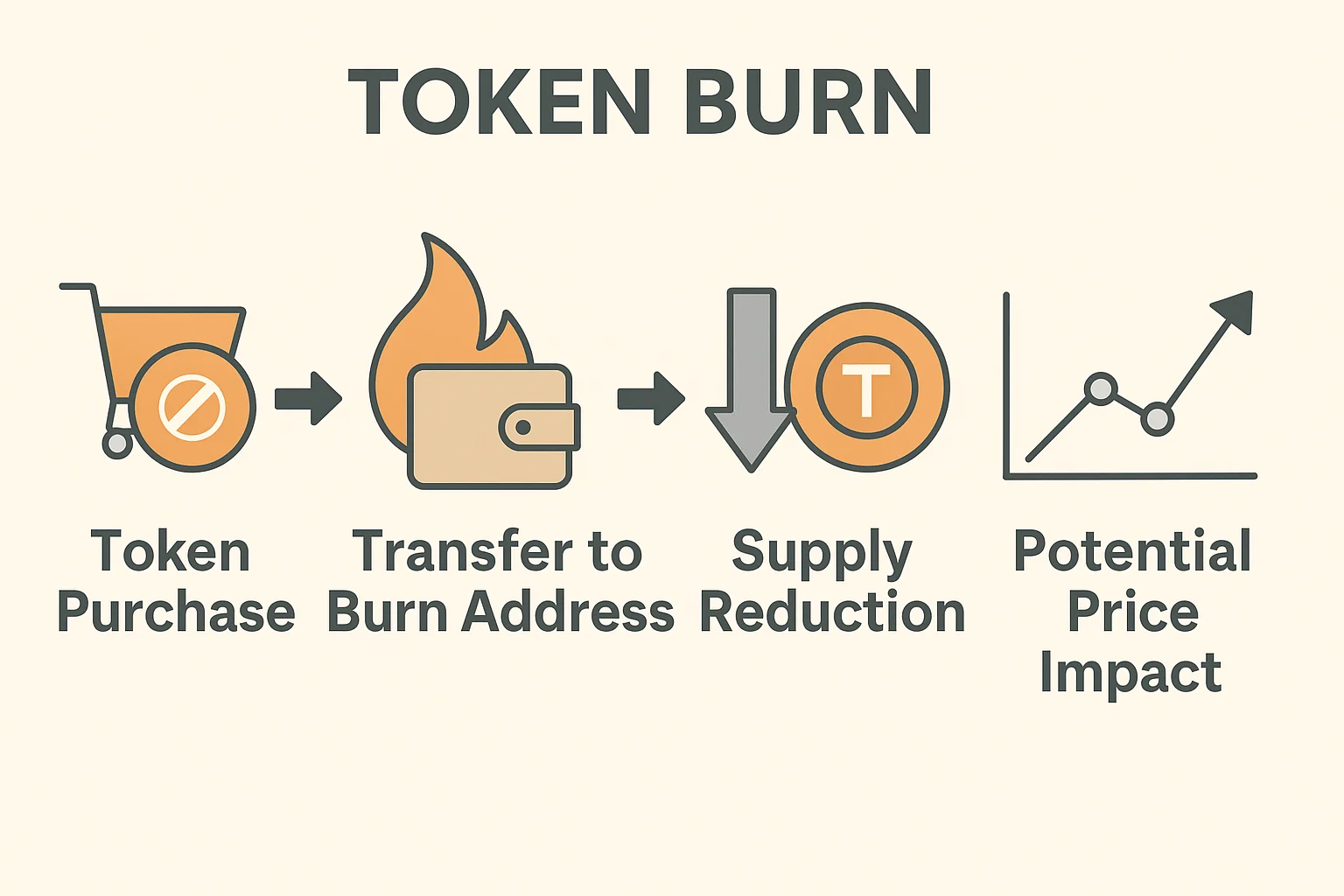
Infographic showing the token burn process from token purchase to transfer to a burn address, leading to supply reduction and potential price impact

Real-World Examples

  • Binance Coin (BNB) burns tokens quarterly based on exchange profits
  • Ethereum EIP-1559 burns base fees from every transaction, making ETH deflationary during high usage
  • Shiba Inu community-driven burns attempt to reduce massive token supply

Why Beginners Should Care

Supply and demand economics suggest that reducing supply while maintaining demand should increase token value, though this isn’t guaranteed in practice.

Marketing benefits from burns often create more price impact than the actual supply reduction, especially for tokens with large circulating supplies.

Sustainability questions arise when burn mechanisms depend on continuous project revenue or community participation that might not persist long-term.

Related Terms: Tokenomics, Supply, Deflationary, Buyback

Back to Crypto Glossary

Similar Posts

  • Regulation

    Regulation: Government Rules for CryptoCryptocurrency regulation involves government rules and oversight for digital assets, exchanges, and blockchain businesses. It's the ongoing battle between innovation and compliance.Regulation refers to government laws, rules, and oversight mechanisms that govern cryptocurrency activities, including trading, taxation, anti-money laundering compliance, and consumer protection. Regulatory approaches vary significantly between jurisdictions.How Crypto Regulation WorksLicensing…

  • Data Availability Layer

    Data Availability Layer: Ensuring Information Access Data availability layers ensure that blockchain data remains accessible for verification without requiring full nodes to store everything. It’s like having a library system where you can verify any book exists without storing them all. A data availability layer guarantees that blockchain transaction data is published and remains accessible…

  • SegWit

    SegWit: Bitcoin's Transaction Efficiency UpgradeSegregated Witness (SegWit) is a Bitcoin protocol upgrade that increased transaction capacity by separating signature data from transaction data. It's like reorganizing luggage to fit more in the same space.SegWit (Segregated Witness) is a Bitcoin protocol upgrade that moves signature data outside the main transaction block, effectively increasing block capacity and…

  • Security Token

    Security Token: Regulated Digital AssetsSecurity tokens are cryptocurrency tokens that represent ownership in real-world assets and are subject to securities regulations. They're like digital stock certificates that comply with financial laws.Security tokens are cryptocurrency tokens that represent ownership stakes in real-world assets and are subject to securities regulations and compliance requirements. These bridge traditional finance with…

  • Total Supply

    Total Supply: Maximum Token QuantityTotal supply refers to the maximum number of cryptocurrency tokens that will ever exist, including those not yet in circulation. It's like knowing how many copies of a collectible item will ever be made.Total supply encompasses all cryptocurrency tokens that exist or will ever be created, including circulating supply, locked tokens,…

  • Blockchain

    Blockchain: The Unchangeable Digital Ledger Forget the hype – blockchain is simply a better way to keep records. It’s like a ledger book that everyone can see, but no one can cheat. Blockchain is a chain of digital records (blocks) that are linked together and secured using cryptography. Once information goes into a block, changing…