
Airdrop

Airdrop: Free Tokens From the Sky

Airdrops distribute free tokens to wallet addresses, usually to reward early users or generate buzz for new projects. Some are worth pennies, others change lives.

An airdrop is the distribution of free cryptocurrency tokens to wallet addresses, typically as a marketing strategy, reward for early adoption, or method of decentralizing token ownership. Recipients usually don’t need to pay anything to receive airdropped tokens.

How Airdrops Work

Snapshot-based airdrops take blockchain snapshots at specific times, then distribute tokens to addresses holding certain cryptocurrencies or using specific protocols during the snapshot.

Task-based airdrops require users to complete actions like following social media accounts, joining communities, or testing protocols before receiving tokens.

Retroactive airdrops reward past users of protocols that later launch governance tokens. These are often the most valuable since they reward genuine usage over speculation.
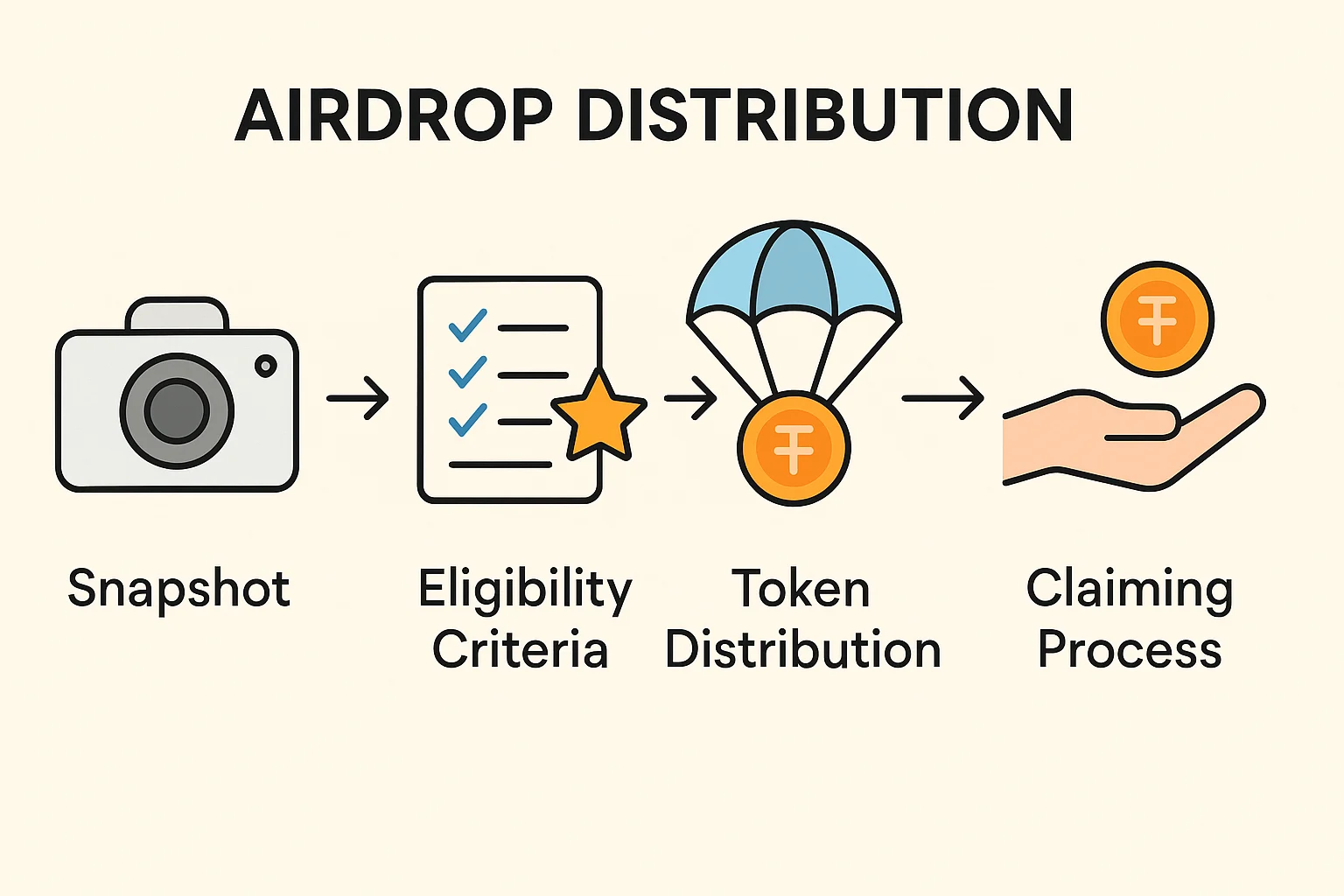
Infographic showing the airdrop distribution process from blockchain snapshot to eligibility verification, token delivery, and claim steps

Real-World Examples

  • Uniswap (UNI) airdropped 400 tokens worth $1,200+ to early platform users
  • Ethereum Name Service (ENS) distributed tokens based on domain ownership duration
  • dYdX rewarded trading volume with governance tokens worth thousands for active users

Why Beginners Should Care

Airdrop farming involves using multiple protocols hoping for future token distributions. This can be profitable but requires gas fees and time investment with no guarantees.

Scam airdrops are common – malicious tokens that steal funds when you try to sell them or interact with fake contracts. Never connect wallets to unknown airdrop claims.

Tax implications exist in many jurisdictions where airdropped tokens count as taxable income at fair market value when received.

Related Terms: Token Distribution, Governance Token, DeFi, Wallet

Back to Crypto Glossary

Similar Posts

  • Play-to-Earn (P2E)

    Play-to-Earn (P2E): Gaming Meets Income Play-to-earn games let players earn cryptocurrency and NFTs through gameplay. It’s turned gaming from entertainment expense into potential income source for millions worldwide. Play-to-earn (P2E) is a gaming model where players earn cryptocurrency tokens, NFTs, or other digital assets with real-world value through gameplay activities. Players own in-game assets that…

  • Hardware Wallet

    Hardware Wallet: Your Crypto’s Personal Vault If you’re serious about crypto, you need a hardware wallet. It’s the difference between keeping cash in your wallet versus storing it in a bank vault. A hardware wallet is a physical device that stores your cryptocurrency private keys offline, away from internet hackers. Think of it as a…

  • Yield Optimization

    Yield Optimization: Maximizing Investment ReturnsYield optimization involves strategies and protocols that automatically maximize returns on cryptocurrency investments through dynamic allocation and compounding. It's like having a financial advisor that works 24/7 to find the best returns.Yield optimization refers to automated strategies that maximize returns on cryptocurrency investments by continuously monitoring opportunities and reallocating funds to…

  • Over-Collateralization

    Over-Collateralization: Excess Security DepositsOver-collateralization requires borrowers to deposit assets worth more than their loan amount as security against default. It's like putting down a $15,000 deposit to borrow $10,000, ensuring the lender is protected even if asset values decline.Over-collateralization refers to requiring collateral deposits that exceed the value of loans or borrowed assets, providing additional…

  • Omnichain

    Omnichain: Universal Blockchain ConnectivityOmnichain refers to applications and protocols that operate seamlessly across multiple blockchain networks as if they were a single unified system. It's like having apps that work on every phone brand without modification.Omnichain describes systems that can operate across multiple blockchain networks simultaneously, providing unified functionality and user experiences regardless of which…

  • Regulatory Risk

    Regulatory Risk: Government Policy UncertaintyRegulatory risk refers to potential losses from government policy changes affecting cryptocurrency legality, taxation, or usage restrictions. It's like the risk that traffic laws might change and make your car illegal to drive.Regulatory risk encompasses potential negative impacts from government actions including bans, restrictions, taxation changes, or new compliance requirements affecting…