
Dusting Attack

Dusting Attack: Tracking Through Tiny Transactions

Dusting attacks send tiny amounts of cryptocurrency to addresses to track user behavior and deanonymize transactions. It’s like sprinkling digital breadcrumbs to follow where people go.

A dusting attack sends small amounts of cryptocurrency (dust) to many addresses to track users’ transaction patterns and potentially identify wallet owners. Attackers hope recipients will consolidate dust with other funds, revealing connections between addresses.

How Dusting Attacks Work

Mass distribution of tiny token amounts targets thousands of addresses simultaneously, often using automated tools to send minimal amounts that barely exceed network dust limits.

Behavioral analysis tracks how recipients handle dust, looking for patterns like consolidation with main balances or specific timing that reveals user habits.

Address clustering connects multiple addresses to single users when dust gets mixed with other transactions, potentially deanonymizing previously private holdings.
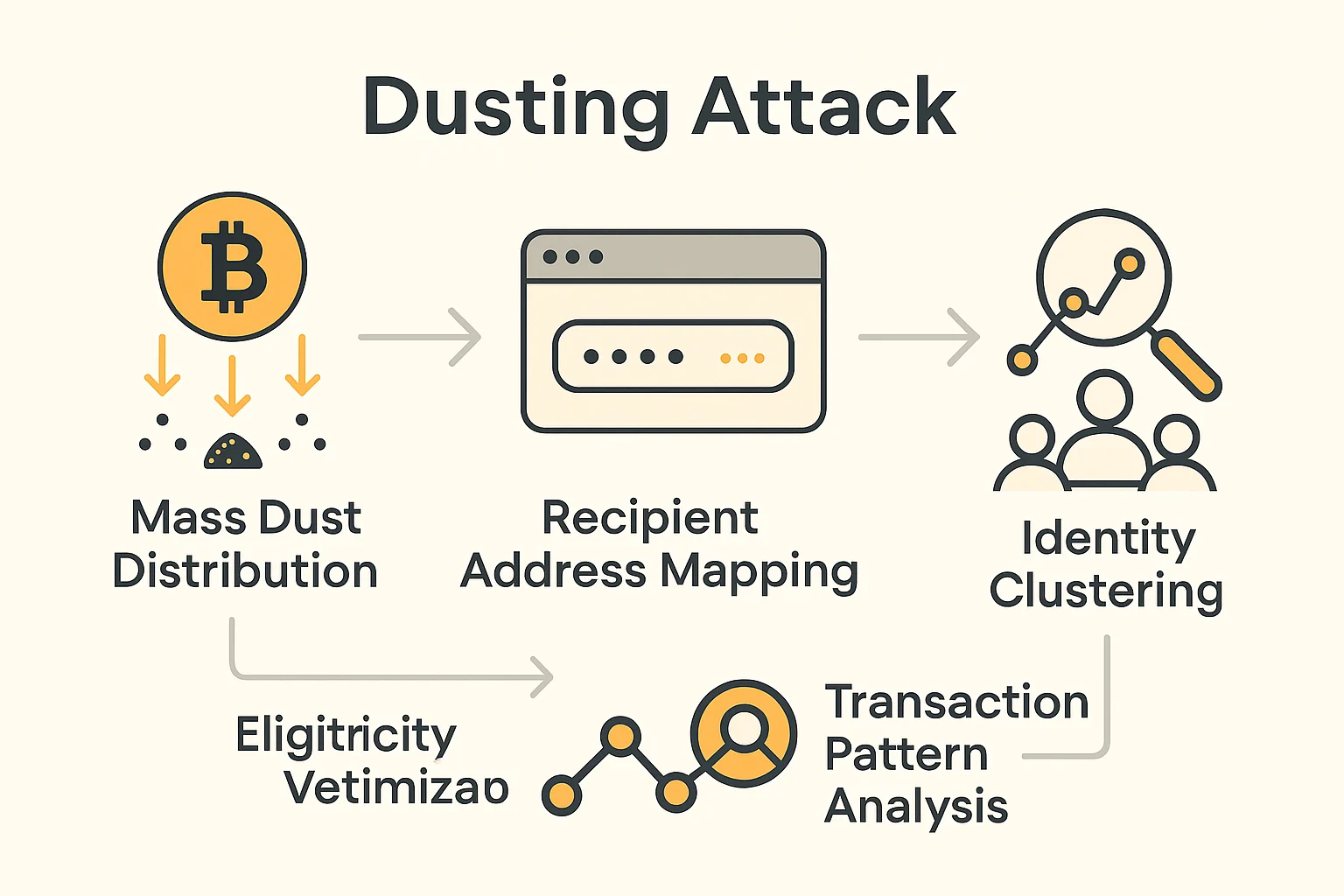
Infographic showing the dusting attack process: mass dust distribution, recipient address mapping, transaction pattern analysis, and identity clustering

Real-World Examples

  • Bitcoin dusting campaigns have targeted hundreds of thousands of addresses with minimal satoshi amounts
  • Binance Smart Chain tokens often used for dusting due to extremely low transaction costs
  • Privacy coin attacks attempt to break anonymity features through sophisticated dusting techniques

Why Beginners Should Care

Privacy erosion occurs when dust gets mixed with legitimate transactions, potentially revealing spending patterns and wallet connections to surveillance companies.

Wallet hygiene practices include freezing or ignoring dust rather than spending it, preventing attackers from gaining additional tracking information.

Limited direct harm exists from dusting attacks themselves – they don’t steal funds but can compromise privacy if handled improperly.

Related Terms: Privacy, Address Clustering, Transaction Analysis, Anonymity

Back to Crypto Glossary

Similar Posts

  • Asset Locking

    Asset Locking: Securing Value Across ChainsAsset locking involves securing cryptocurrency on one blockchain to enable representation or usage on another network. It's like putting money in escrow while you get a receipt to spend elsewhere.Asset locking refers to securing cryptocurrency tokens in smart contracts or custody solutions to enable their representation or usage on different…

  • Fee Sharing

    Fee Sharing: Distributing Protocol RevenueFee sharing distributes a portion of protocol revenues to token holders, stakers, or other participants. It's like getting dividends from a company you own shares in.Fee sharing refers to mechanisms that distribute portions of protocol fees, transaction costs, or other revenues to token holders or network participants. This creates direct financial incentives…

  • Network Decentralization

    Network Decentralization: Distributed Control ArchitectureNetwork decentralization refers to distributing control and operation of blockchain networks across many independent participants rather than concentrating power. It's like having a town where decisions are made by all residents voting together instead of a single mayor controlling everything.Network decentralization describes the distribution of control, validation, and governance functions across…

  • Mobile Wallet

    Mobile Wallet: Cryptocurrency on Your PhoneMobile wallets are smartphone applications that store, send, and receive cryptocurrency. They're like having a digital bank in your pocket with global reach.A mobile wallet is a smartphone application that enables users to store, manage, and transact with cryptocurrencies directly from their mobile devices. These wallets prioritize convenience and accessibility for…

  • Transaction Approval

    Transaction Approval: Authorizing Blockchain ActionsTransaction approval is the process of authorizing blockchain operations through wallet signatures or smart contract permissions. It's like signing checks, but with permanent consequences.Transaction approval involves granting permission for blockchain operations through cryptographic signatures, smart contract interactions, or delegation mechanisms. These approvals authorize spending, contract execution, or account access.How Transaction Approval WorksSignature…

  • Resistance

    Resistance: Technical Analysis Price BarriersResistance refers to price levels where cryptocurrency faces selling pressure that prevents further upward movement. It's like hitting an invisible ceiling where the price bounces back down, as if there's a barrier preventing it from going higher.Resistance describes price levels where selling pressure consistently prevents cryptocurrency prices from rising further, creating…