
DeFi Aggregator

DeFi Aggregator: Finding the Best Yields

DeFi aggregators automatically find the best rates across multiple protocols for lending, borrowing, or trading. They’re like Expedia for decentralized finance.

A DeFi aggregator is a platform that searches multiple protocols to find the best rates, yields, or liquidity for users’ specific needs. Instead of manually checking dozens of platforms, aggregators do the comparison shopping automatically.

How DeFi Aggregators Work

Rate comparison across lending protocols, DEXs, and yield farming opportunities to identify the highest returns or lowest costs for specific actions.

Smart routing splits large trades across multiple DEXs to minimize slippage and maximize execution efficiency compared to single-platform trades.

Yield optimization automatically moves funds between protocols as rates change, maintaining exposure to the highest available returns.
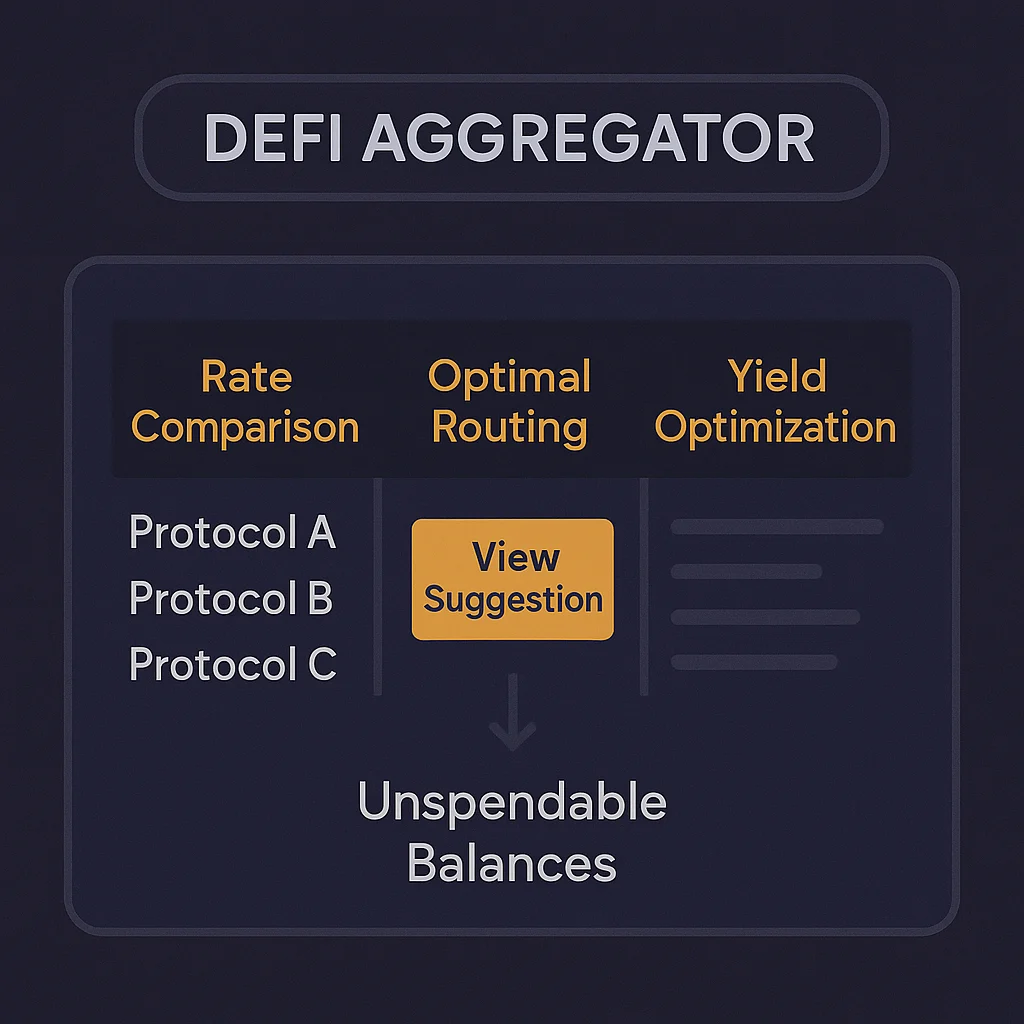
DeFi aggregator dashboard displaying rate comparisons, optimal routing suggestions, and yield optimization strategies across multiple protocols.

Real-World Examples

  • 1inch aggregates DEX liquidity to find best trading prices across multiple exchanges
  • Yearn Finance automatically moves deposited funds to highest-yielding opportunities
  • Zapper simplifies complex DeFi interactions through a single interface

Why Beginners Should Care

Time savings from aggregators eliminate the need to manually research and compare rates across dozens of constantly changing DeFi protocols.

Better execution through smart routing and yield optimization can significantly improve returns compared to single-protocol strategies.

Smart contract risk increases when aggregators interact with multiple protocols, as vulnerabilities in any connected platform could affect aggregator users.

Related Terms: Yield Farming, DEX, Slippage, Yield Optimization

Back to Crypto Glossary

Similar Posts

  • Custom Blockchain

    Custom Blockchain: Purpose-Built NetworksA custom blockchain is a network designed for specific use cases rather than general-purpose applications. It's like building a specialized tool for a particular job instead of using a multi-purpose tool.A custom blockchain is a purpose-built blockchain network designed to meet specific requirements for particular applications or use cases. These networks optimize for…

  • Peer-to-Peer (P2P)

    Peer-to-Peer (P2P): Direct Network Communication Peer-to-peer networks enable direct communication between participants without central intermediaries. It’s like having a telephone system where everyone connects directly instead of going through switchboard operators. Peer-to-peer (P2P) refers to network architectures where participants communicate directly with each other rather than through centralized servers or intermediaries. This creates decentralized systems…

  • Shared Security

    Shared Security: Collective Network ProtectionShared security allows multiple blockchain applications or chains to benefit from common security infrastructure rather than maintaining separate validator sets. It's like having a shared security service for multiple buildings.Shared security refers to security models where multiple blockchain networks or applications are protected by a common set of validators or consensus…

  • Gas Limit

    Gas Limit: Setting Your Transaction Budget Gas limit is the maximum amount of gas you’re willing to spend on a transaction. Set it too low and your transaction fails. Set it too high and you overpay for simple operations. Gas limit is the maximum amount of computational work (measured in gas units) that a user…

  • MetaMask

    MetaMask: Your Gateway to Web3 MetaMask is the browser extension wallet that connects you to the decentralized web. It’s like having a crypto wallet built into your browser that talks to every DeFi protocol. MetaMask is a browser extension and mobile wallet that enables interaction with Ethereum-based applications directly through web browsers. It manages private…

  • Protocol Security

    Protocol Security: Protecting Blockchain InfrastructureProtocol security involves designing and maintaining blockchain networks to resist attacks, prevent exploits, and ensure reliable operation. It's like building a fortress with multiple defensive layers.Protocol security encompasses all measures taken to protect blockchain networks from technical attacks, economic manipulation, and operational failures. This includes consensus security, smart contract auditing, and network…