
MetaMask

MetaMask: Your Gateway to Web3

MetaMask is the browser extension wallet that connects you to the decentralized web. It’s like having a crypto wallet built into your browser that talks to every DeFi protocol.

MetaMask is a browser extension and mobile wallet that enables interaction with Ethereum-based applications directly through web browsers. It manages private keys locally while providing easy access to DeFi protocols, NFT marketplaces, and Web3 applications.

How MetaMask Works

Browser integration injects Web3 functionality into websites, allowing dApps to request wallet connections and transaction signatures without handling private keys directly.

Local key storage keeps private keys encrypted on your device rather than on remote servers, giving you full control over your funds and signing capabilities.

Network switching enables access to multiple Ethereum-compatible chains like Polygon, Avalanche, and Binance Smart Chain through a single interface.
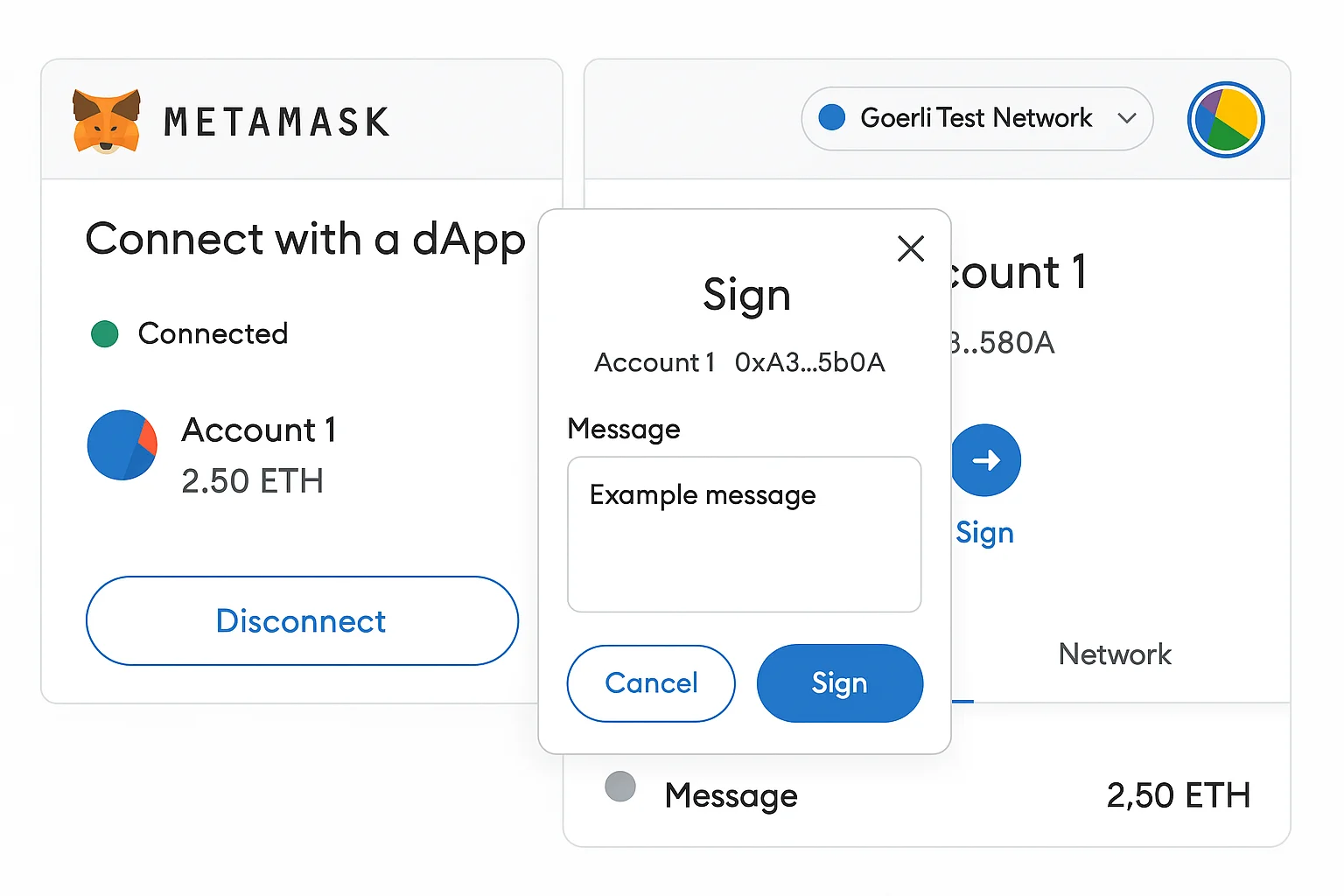
MetaMask interface showing wallet connected to a dApp, transaction signing prompt, and active network selection.

Real-World Examples

  • DeFi interactions on Uniswap, Compound, and Aave all use MetaMask for wallet connectivity
  • NFT purchases on OpenSea and other marketplaces integrate seamlessly with MetaMask
  • Web3 gaming platforms use MetaMask for in-game asset ownership and transactions

Why Beginners Should Care

Ease of use makes MetaMask the most beginner-friendly way to start exploring DeFi and Web3 applications without complex wallet setup procedures.

Security responsibility shifts to users since MetaMask stores private keys locally. Losing your seed phrase or getting phished means permanent loss of funds.

Phishing risks are high since malicious websites can create fake MetaMask prompts. Always verify URLs and transaction details before signing.

Related Terms: Hot Wallet, dApp, Web3, Seed Phrase

Back to Crypto Glossary

Similar Posts

  • Difficulty

    Difficulty: Mining Competition AdjustmentDifficulty refers to how hard it is to mine new blocks in proof-of-work cryptocurrencies, automatically adjusting to maintain consistent block times. It's like a video game that gets harder when you're doing too well and easier when you're struggling.Difficulty describes the measure of how computationally challenging it is to find valid proof-of-work…

  • Bonding Curve

    Bonding Curve: Algorithmic Token Pricing Bonding curves use mathematical formulas to automatically price tokens based on supply. As more tokens get bought, prices increase predictably according to the curve’s formula. A bonding curve is an algorithmic pricing mechanism that determines token price based on token supply through a mathematical function. Prices increase as supply grows…

  • Dark Web

    Dark Web: Hidden Internet NetworksThe dark web consists of encrypted online networks accessible only through specialized software like Tor. It's where privacy advocates and criminals both hang out, but for very different reasons.The dark web refers to encrypted online content that exists on overlay networks requiring specific software, configurations, or authorization to access. Unlike the regular…

  • Value Capture

    Value Capture: Extracting Economic BenefitsValue capture refers to mechanisms that extract and redirect economic value from ecosystem activity to specific stakeholders or protocols. It's like having toll booths that collect fees from traffic flowing through valuable infrastructure.Value capture describes mechanisms that extract economic value from ecosystem activity and redirect it to token holders, protocols, or…

  • L2 Sequencer

    L2 Sequencer: Transaction Ordering Engine L2 sequencers determine transaction order on Layer 2 networks, controlling which transactions get included and how they’re arranged. They’re like traffic controllers for blockchain highways. An L2 sequencer is a specialized node that collects, orders, and batches transactions for Layer 2 networks before submitting them to the main blockchain. Sequencers…

  • Permit (EIP-2612)

    Permit (EIP-2612): Gasless Approvals Permit functionality allows token approvals through signatures instead of transactions, enabling gasless user experiences for DeFi interactions. It’s like signing a check instead of going to the bank. Permit (EIP-2612) is a token standard that enables gasless approvals through cryptographic signatures rather than on-chain transactions. Users can authorize token spending without…