
dApp Browser

dApp Browser: Gateway to Decentralized Apps

dApp browsers enable easy access to decentralized applications through integrated wallet functionality and Web3 connectivity. They’re like having a web browser that speaks cryptocurrency natively.

A dApp browser is a specialized web browser or application that integrates cryptocurrency wallet functionality to seamlessly interact with decentralized applications. These browsers handle Web3 connections, transaction signing, and blockchain interactions automatically.

How dApp Browsers Work

Wallet integration provides built-in cryptocurrency wallet functionality, eliminating the need for separate browser extensions or external wallet applications.

Web3 connectivity enables automatic connection to decentralized applications with integrated transaction signing and blockchain interaction capabilities.

Security features include transaction preview, dApp permission management, and protection against malicious websites or smart contracts.
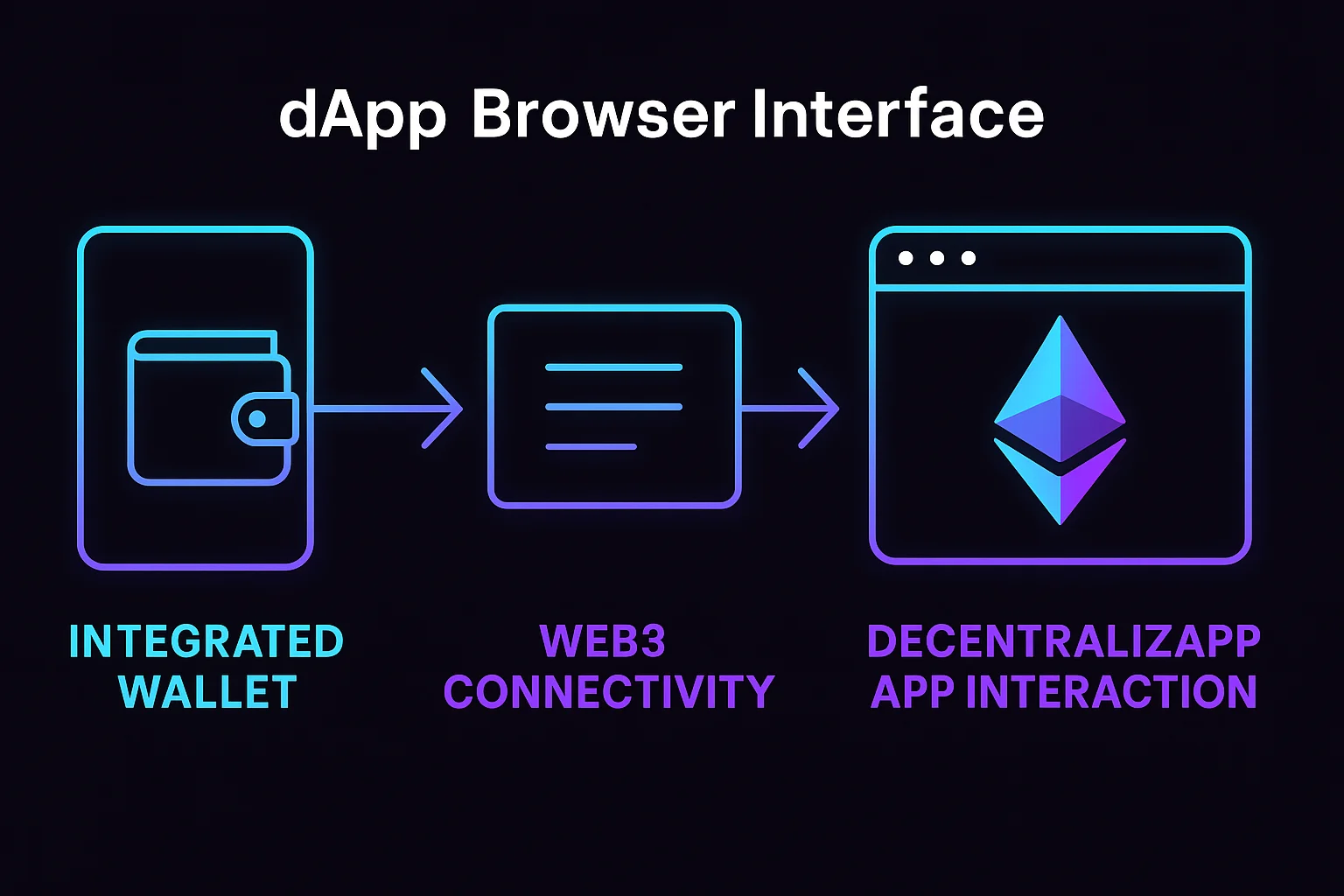
dApp browser interface showing integrated wallet, Web3 connectivity, transaction signing, and decentralized app interaction

  • MetaMask mobile browser combines wallet functionality with Web3-enabled browsing
  • Trust Wallet browser provides integrated access to DeFi protocols and dApps
  • Brave browser includes built-in crypto wallet and Web3 functionality

Why Beginners Should Care

Simplified onboarding eliminates complex setup procedures for accessing decentralized applications and DeFi protocols.

Integrated security provides better protection than manually managing wallet connections and transaction approvals across multiple applications.

Mobile accessibility enables smartphone users to access the full range of Web3 applications without desktop computer requirements.

Related Terms: dApp, Web3, Wallet Integration, Transaction Signing

Back to Crypto Glossary

Similar Posts

  • Go

    Go: Programming Language for BlockchainGo is a programming language widely used for building blockchain infrastructure and cryptocurrency applications. It's like the construction language for digital money systems.Go (also called Golang) is a programming language developed by Google that's popular for blockchain development due to its performance, simplicity, and excellent concurrency support. Many major cryptocurrency projects use…

  • ENS

    ENS: Ethereum Name ServiceENS provides human-readable names for Ethereum addresses, making cryptocurrency transactions more user-friendly. It's like having domain names for websites instead of remembering IP addresses.Ethereum Name Service (ENS) is a decentralized naming system that maps human-readable names to Ethereum addresses, smart contracts, and other identifiers. ENS makes blockchain interactions more accessible by replacing complex…

  • Smart Order Routing

    Smart Order Routing: Optimal Trade Execution Smart order routing automatically finds the best prices across multiple exchanges and liquidity sources for each trade. It’s like having a shopping bot that checks every store for the best deal. Smart order routing is an algorithmic system that automatically splits and routes orders across multiple trading venues to…

  • Launchpad

    Launchpad: The Crypto Startup Accelerator Launchpads are platforms that help new crypto projects raise funds and launch tokens. They’re like Kickstarter for cryptocurrencies, but with more speculation and less product delivery. A launchpad is a platform that facilitates fundraising and token launches for new cryptocurrency projects. They provide infrastructure, marketing, and community access to help…

  • Bot Trading

    Bot Trading: Automated Market ParticipationBot trading involves using automated software programs to execute cryptocurrency trades based on predetermined strategies and market conditions. It's like having a tireless assistant that trades for you around the clock.Bot trading refers to using automated software to execute cryptocurrency trades, monitor markets, and implement trading strategies without constant human supervision. These…

  • Play-to-Earn (P2E)

    Play-to-Earn (P2E): Gaming Meets Income Play-to-earn games let players earn cryptocurrency and NFTs through gameplay. It’s turned gaming from entertainment expense into potential income source for millions worldwide. Play-to-earn (P2E) is a gaming model where players earn cryptocurrency tokens, NFTs, or other digital assets with real-world value through gameplay activities. Players own in-game assets that…