
Decentralized Exchange (DEX)

Decentralized Exchange (DEX): Trading Without Middlemen

DEXs are what happens when you remove the corporate overlords from crypto trading. No account required, no permission needed – just you, your wallet, and the market.

A decentralized exchange (DEX) is a cryptocurrency trading platform that operates without a central authority controlling user funds. You trade directly from your wallet using smart contracts that automatically execute trades when conditions are met.

How DEXs Work

Instead of depositing funds into an exchange account, you connect your wallet directly to the DEX. Smart contracts hold the trading logic and automatically swap tokens when you make a trade.

Liquidity pools replace traditional order books. Users deposit token pairs into pools, earning fees when others trade against their liquidity. No market makers, no trading desks – just code and math.

Your funds never leave your control until the exact moment of the trade. No KYC forms, no account freezes, no “maintenance” that locks you out during market crashes.
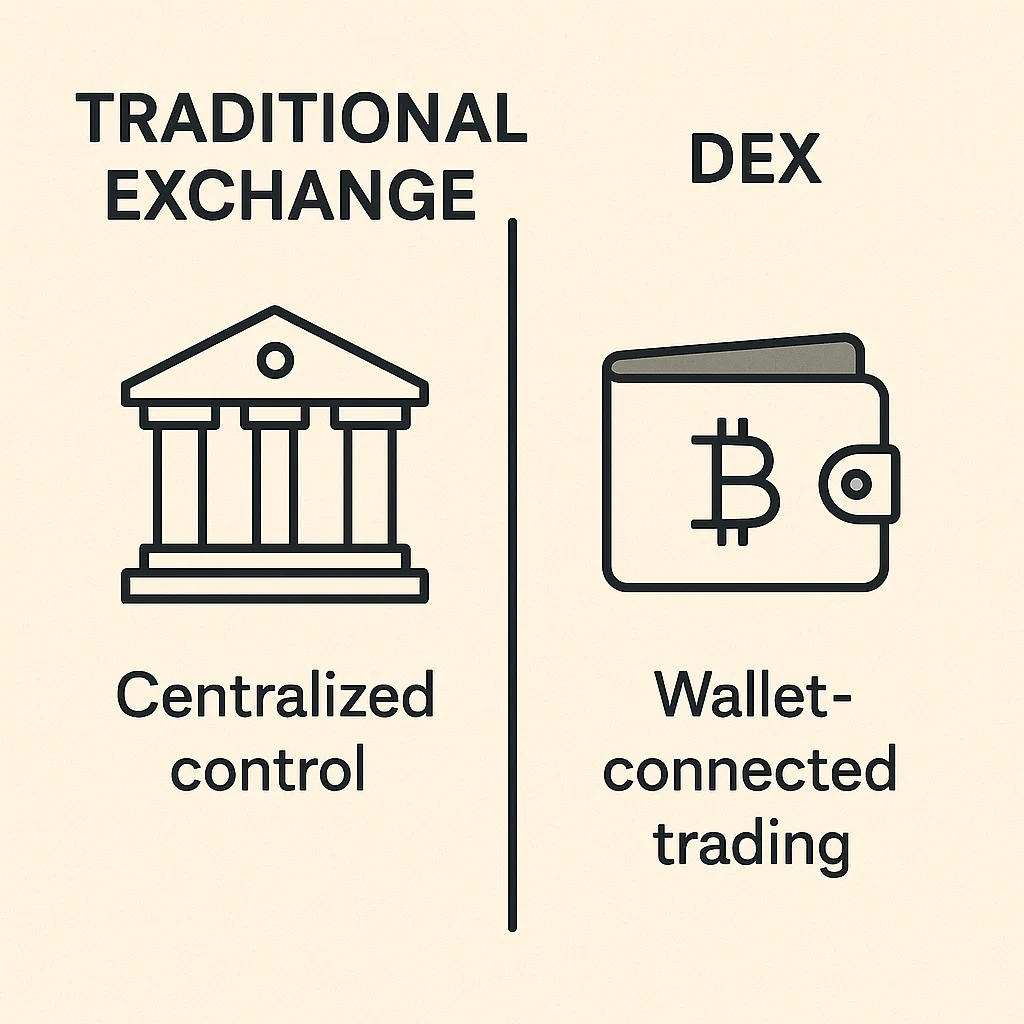
Side-by-side comparison of a traditional crypto exchange and a DEX, showing centralized control vs wallet-connected trading

Real-World Examples

  • Uniswap – Largest DEX on Ethereum with billions in trading volume
  • PancakeSwap – Popular DEX on Binance Smart Chain with lower fees
  • SushiSwap – Community-owned DEX with governance tokens

Why Beginners Should Care

DEXs give you true financial sovereignty. No exchange can freeze your account, require additional verification, or shut down withdrawals when markets get volatile.

The trade-off is complexity – DEX interfaces assume you understand gas fees, slippage, and wallet management. Start small and practice before committing serious money.

Related Terms: Smart Contract, Liquidity Pool, Gas Fees, Exchange

Back to Crypto Glossary

Similar Posts

  • Gas Optimization

    Gas Optimization: Reducing Transaction CostsGas optimization involves techniques to minimize the computational cost of blockchain transactions and smart contracts. It's like finding the most fuel-efficient route for your digital transactions.Gas optimization refers to practices and techniques used to reduce the gas consumption of blockchain transactions and smart contract operations. This minimizes transaction costs and improves application…

  • MEV Protection

    MEV Protection: Defending Against Value ExtractionMEV protection shields users from having value extracted from their transactions by sophisticated bots and arbitrageurs. It's like having bodyguards that protect you from pickpockets in a crowded market.MEV protection refers to techniques and services that prevent or minimize Maximal Extractable Value extraction from user transactions. These solutions help users get…

  • EVM (Ethereum Virtual Machine)

    EVM (Ethereum Virtual Machine): The World Computer The EVM is the runtime environment where Ethereum smart contracts execute. It’s like having one giant computer that runs the same programs across thousands of machines worldwide. The Ethereum Virtual Machine (EVM) is a decentralized computing environment that executes smart contracts on the Ethereum blockchain. Every Ethereum node…

  • Full Node

    Full Node: Complete Blockchain ParticipantA full node maintains a complete copy of the blockchain and validates all transactions independently. It's like having the complete library instead of just borrowing books when you need them.A full node is a computer that downloads, stores, and validates the complete blockchain history while participating in network consensus and transaction…

  • VPN

    VPN: Virtual Private Network for Crypto PrivacyA VPN creates secure, encrypted connections between your device and the internet to protect privacy and bypass restrictions. It's like having a private tunnel through the public internet highway.A Virtual Private Network (VPN) encrypts internet traffic and routes it through remote servers to hide user location and protect online…

  • Solver Network

    Solver Network: Optimized Transaction ExecutionA solver network consists of specialized entities that find optimal execution paths for complex transactions across multiple protocols and chains. They're like GPS systems that find the best routes for your crypto transactions.A solver network comprises specialized services that analyze and execute complex transactions by finding optimal paths across multiple protocols,…