
Session Keys

Session Keys: Temporary Wallet Permissions

Session keys provide temporary, limited permissions for applications to perform specific actions without exposing main wallet private keys. It’s like giving valet keys instead of your full car keys.

Session keys are temporary cryptographic keys that grant limited permissions to applications for specific time periods or transaction types. They enable seamless user experiences while maintaining security through restricted access scope.

How Session Keys Work

Permission scoping limits what actions session keys can perform, such as trading specific tokens, interacting with certain contracts, or spending up to defined amounts.

Time expiration automatically revokes session key access after predetermined periods, preventing indefinite exposure if keys are compromised.

Revocation mechanisms allow users to immediately cancel session keys if they detect suspicious activity or no longer want to grant access.
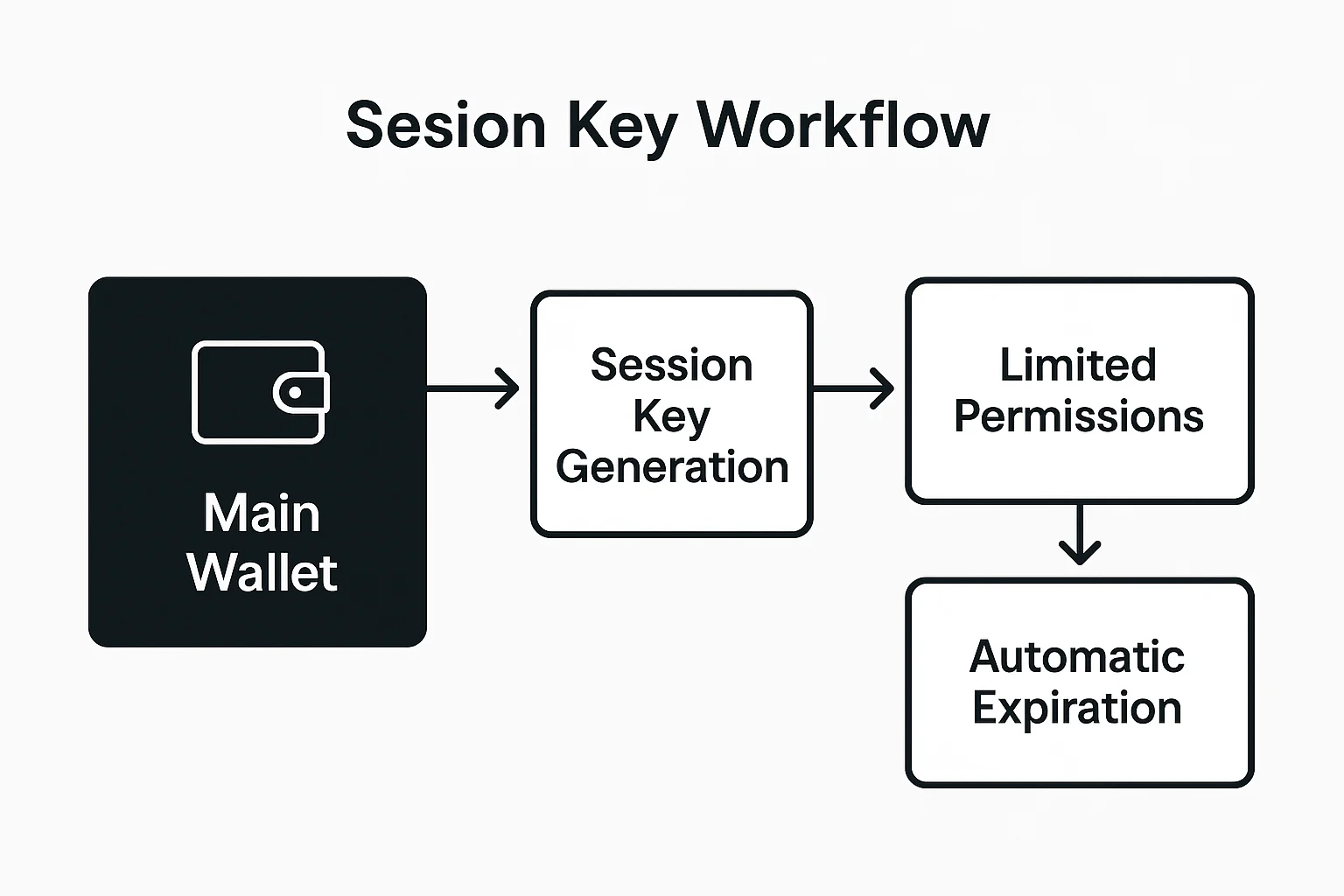
Session key workflow diagram showing main wallet generating a session key with limited permissions and automatic expiration.

Real-World Examples

  • Gaming applications use session keys for in-game transactions without requiring wallet approval for every action
  • DeFi protocols enable automated trading strategies with spending limits and time constraints
  • Mobile wallets create session keys for app interactions while keeping main keys in secure storage

Why Beginners Should Care

Improved UX eliminates constant wallet approval prompts for routine actions while maintaining security through limited permission scope.

Risk reduction means compromised session keys can only perform limited actions rather than providing full wallet access to attackers.

Automation enablement allows complex multi-step operations to execute automatically within predefined parameters without manual intervention.

Related Terms: Account Abstraction, Smart Contract, Security

Back to Crypto Glossary

Similar Posts

  • Fee Sharing

    Fee Sharing: Distributing Protocol RevenueFee sharing distributes a portion of protocol revenues to token holders, stakers, or other participants. It's like getting dividends from a company you own shares in.Fee sharing refers to mechanisms that distribute portions of protocol fees, transaction costs, or other revenues to token holders or network participants. This creates direct financial incentives…

  • Circulating Supply

    Circulating Supply: Tokens Available for TradingCirculating supply represents the number of cryptocurrency tokens currently available for public trading and use. It's like counting how much money is actually in circulation versus locked away.Circulating supply refers to the number of cryptocurrency tokens that are publicly available and actively trading in the market. This excludes tokens that are…

  • Public Key

    Public Key: Cryptographic Identity VerificationA public key is the openly shareable part of a cryptographic key pair that enables others to send you cryptocurrency or verify your digital signatures. It's like your mailing address that you can give to anyone who wants to send you mail.Public key refers to the cryptographic component of a key…

  • Governance Token

    Governance Token: Voting Rights in Digital Form Governance tokens turn users into stakeholders with voting power over protocol decisions. It’s democracy meets DeFi, with mixed results. A governance token grants holders voting rights on protocol decisions like parameter changes, upgrade proposals, treasury spending, and strategic direction. Token weight typically determines voting power – more tokens…

  • Liquidation Bot

    Liquidation Bot: Automated Debt Collection Liquidation bots monitor lending protocols for undercollateralized positions and automatically liquidate them for profit. They’re like repo men but for DeFi loans. A liquidation bot is an automated program that monitors DeFi lending protocols for loans that fall below required collateral ratios and triggers liquidations to earn rewards. These bots…

  • Autonomous World (AW)

    Autonomous World (AW): Persistent Virtual Realities Autonomous worlds are persistent virtual environments that continue existing and evolving even when no players are actively participating. They’re like having a Minecraft world that keeps running and changing forever. An Autonomous World (AW) is a virtual environment that operates independently through blockchain infrastructure, maintaining state and enabling interactions…