
Liquidation Bot

Liquidation Bot: Automated Debt Collection

Liquidation bots monitor lending protocols for undercollateralized positions and automatically liquidate them for profit. They’re like repo men but for DeFi loans.

A liquidation bot is an automated program that monitors DeFi lending protocols for loans that fall below required collateral ratios and triggers liquidations to earn rewards. These bots help maintain protocol solvency while capturing liquidation bonuses.

How Liquidation Bots Work

Continuous monitoring tracks collateral ratios across lending platforms, identifying positions approaching liquidation thresholds as asset prices fluctuate.

Flash loan capital enables bots to liquidate large positions without holding significant capital upfront, borrowing funds for liquidation then repaying from proceeds.

Gas competition involves bots bidding higher gas prices to ensure their liquidation transactions get processed first when multiple bots target the same position.
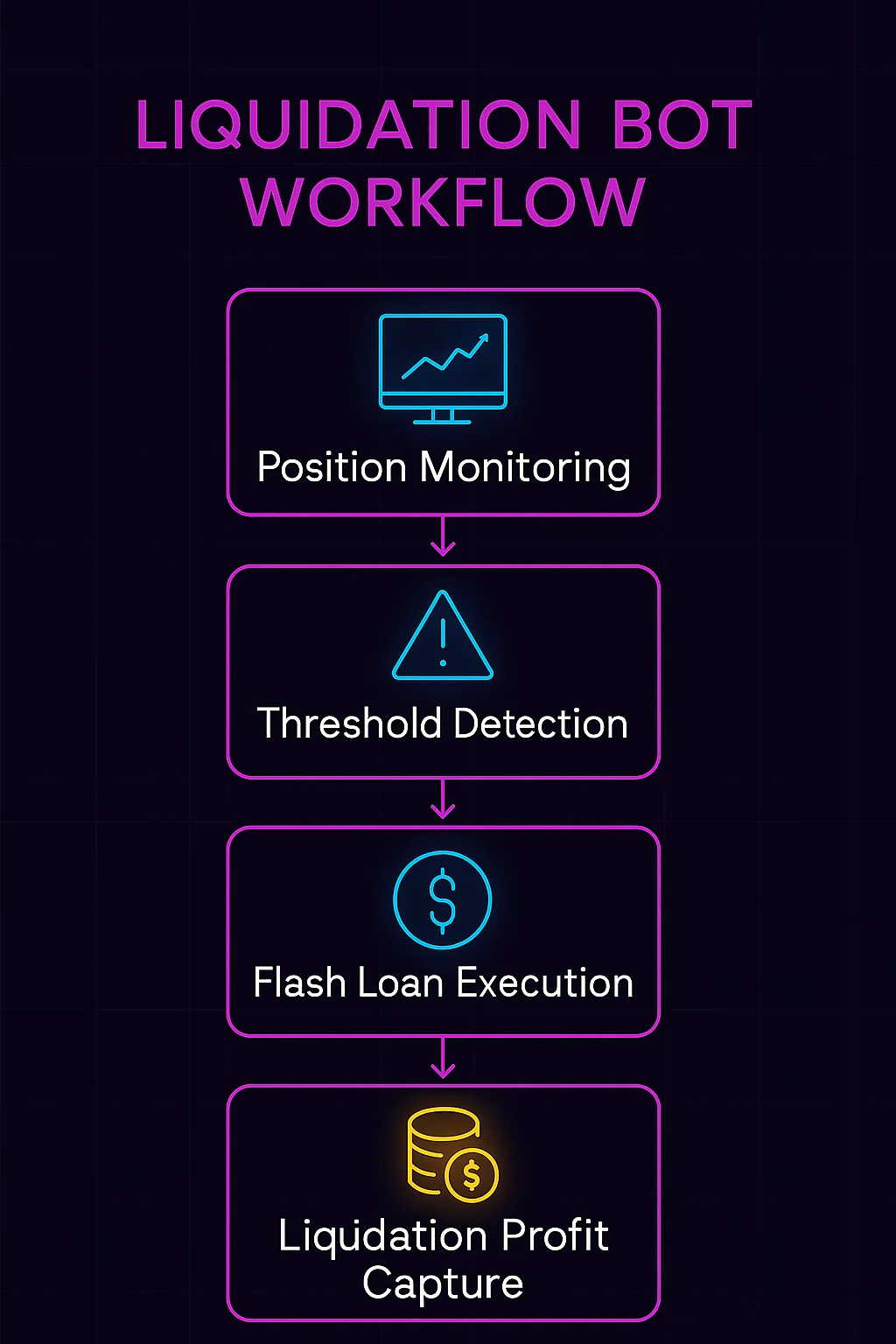
Infographic showing liquidation bot process: position monitoring, threshold detection, flash loan execution, and liquidation profit capture

Real-World Examples

  • Compound liquidations during market crashes can generate millions in bot profits as leveraged positions get liquidated en masse
  • Aave liquidation bonuses typically range from 5-15% of liquidated collateral value
  • MakerDAO liquidations use auction mechanisms that bots participate in to acquire discounted collateral

Why Beginners Should Care

Market efficiency from liquidation bots helps maintain lending protocol solvency by quickly removing bad debt before it becomes unrecoverable.

Borrower risks increase during volatile markets when liquidation bots aggressively target positions near liquidation thresholds.

Technical barriers make running competitive liquidation bots challenging for individuals due to infrastructure and capital requirements.

Related Terms: Liquidation, Flash Loan, Collateral Ratio, DeFi Lending

Back to Crypto Glossary

Similar Posts

  • |

    zkEVM

    zkEVM: Zero-Knowledge Ethereum Virtual Machine zkEVM provides Ethereum compatibility with zero-knowledge proof validation, enabling existing dApps to run on faster, cheaper networks while maintaining security. It’s like having Ethereum that’s been turbocharged with privacy and speed. zkEVM is a zero-knowledge virtual machine that executes Ethereum transactions and smart contracts while generating cryptographic proofs of correct…

  • Rarity

    Rarity: Scarcity-Based Value AssessmentRarity refers to how uncommon or scarce particular traits, items, or attributes are within collections or ecosystems. It's like having a rare baseball card that's valuable because few others like it exist.Rarity describes the relative scarcity of digital assets, particularly NFT traits or characteristics, that affects their perceived value and market pricing. Rarer…

  • Capital Preservation

    Capital Preservation: Protecting Investment PrincipalCapital preservation focuses on protecting the original investment amount rather than maximizing returns. It's like choosing a safe over a lottery ticket for your money.Capital preservation is an investment strategy that prioritizes protecting the original principal amount over generating high returns. This conservative approach minimizes downside risk while accepting lower potential upside.How…

  • Scaling

    Scaling: Handling More TransactionsScaling refers to increasing a blockchain network's capacity to handle more transactions per second without sacrificing security or decentralization. It's the holy grail of blockchain development.Scaling in blockchain technology involves improving transaction throughput, reducing costs, and maintaining performance as networks grow in size and usage. This typically requires technical solutions that balance speed,…

  • Real Yield

    Real Yield: Sustainable Revenue-Based Returns Real yield comes from actual protocol revenue rather than token emissions or inflationary rewards. It’s the difference between earning from productive business activity versus printing more money. Real yield refers to returns generated from genuine protocol revenue, fees, or value creation rather than token inflation or emissions. These yields can…

  • Asset Rehypothecation

    Asset Rehypothecation: Reusing Collateral for Multiple PurposesAsset rehypothecation involves using the same collateral for multiple financial purposes simultaneously. It's like using your house as collateral for multiple loans at the same time.Asset rehypothecation refers to the practice of using deposited or pledged assets as collateral for additional financial activities beyond their original purpose. This can multiply…