
Liquidation Bot

Liquidation Bot: Automated Debt Collection

Liquidation bots monitor lending protocols for undercollateralized positions and automatically liquidate them for profit. They’re like repo men but for DeFi loans.

A liquidation bot is an automated program that monitors DeFi lending protocols for loans that fall below required collateral ratios and triggers liquidations to earn rewards. These bots help maintain protocol solvency while capturing liquidation bonuses.

How Liquidation Bots Work

Continuous monitoring tracks collateral ratios across lending platforms, identifying positions approaching liquidation thresholds as asset prices fluctuate.

Flash loan capital enables bots to liquidate large positions without holding significant capital upfront, borrowing funds for liquidation then repaying from proceeds.

Gas competition involves bots bidding higher gas prices to ensure their liquidation transactions get processed first when multiple bots target the same position.
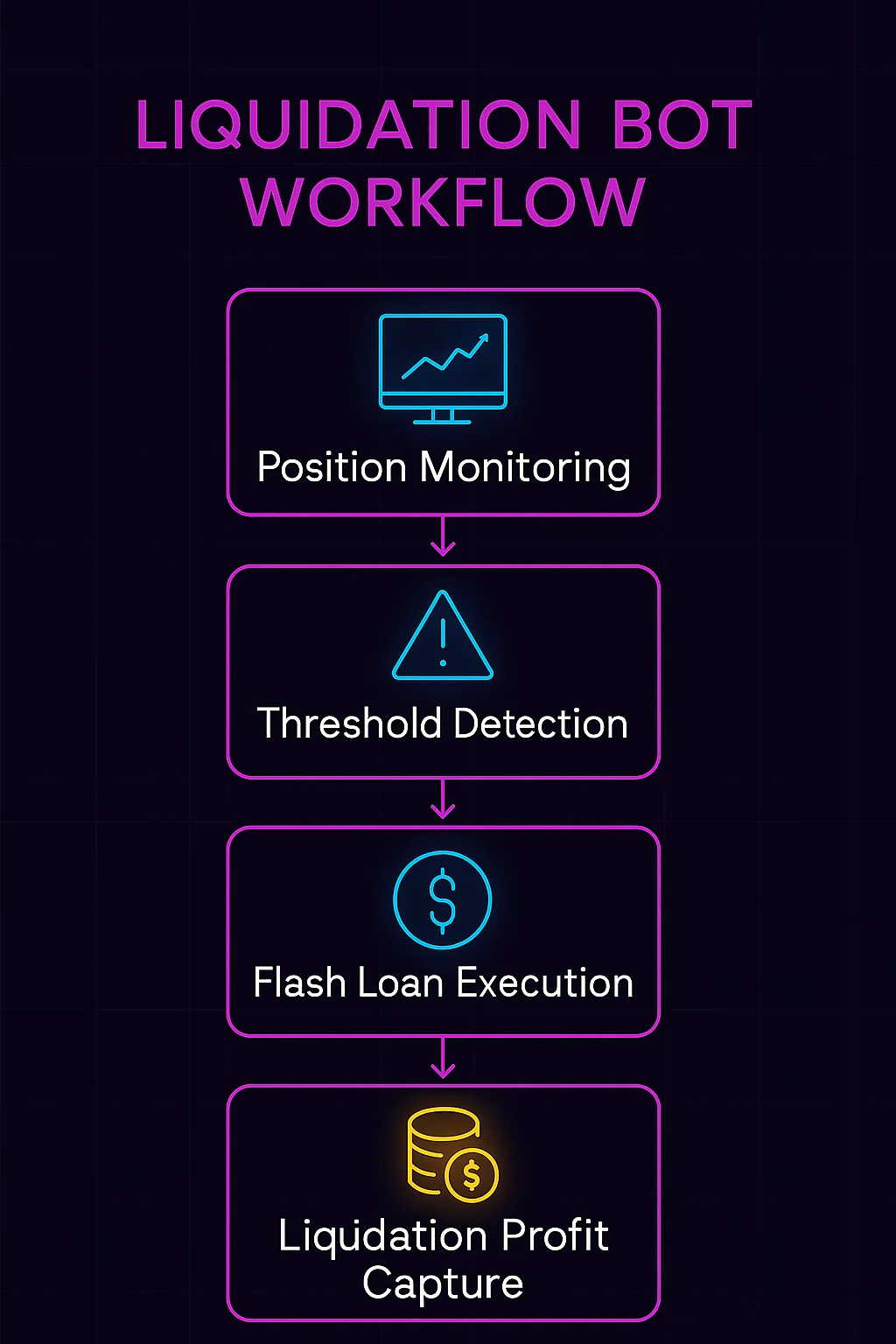
Infographic showing liquidation bot process: position monitoring, threshold detection, flash loan execution, and liquidation profit capture

Real-World Examples

  • Compound liquidations during market crashes can generate millions in bot profits as leveraged positions get liquidated en masse
  • Aave liquidation bonuses typically range from 5-15% of liquidated collateral value
  • MakerDAO liquidations use auction mechanisms that bots participate in to acquire discounted collateral

Why Beginners Should Care

Market efficiency from liquidation bots helps maintain lending protocol solvency by quickly removing bad debt before it becomes unrecoverable.

Borrower risks increase during volatile markets when liquidation bots aggressively target positions near liquidation thresholds.

Technical barriers make running competitive liquidation bots challenging for individuals due to infrastructure and capital requirements.

Related Terms: Liquidation, Flash Loan, Collateral Ratio, DeFi Lending

Back to Crypto Glossary

Similar Posts

  • Omnichain

    Omnichain: Universal Blockchain ConnectivityOmnichain refers to applications and protocols that operate seamlessly across multiple blockchain networks as if they were a single unified system. It's like having apps that work on every phone brand without modification.Omnichain describes systems that can operate across multiple blockchain networks simultaneously, providing unified functionality and user experiences regardless of which…

  • |

    Bridgeless Interop

    Bridgeless Interop: Direct Cross-Chain Communication Bridgeless interoperability enables direct communication between blockchains without traditional bridge infrastructure. It’s like having chains that can talk directly to each other instead of using translators. Bridgeless interoperability refers to cross-chain communication methods that don’t rely on traditional bridge protocols, instead using native blockchain features or specialized infrastructure for direct…

  • Inter Chain Protocol

    Inter Chain Protocol: Cross-Blockchain CommunicationInter-chain protocols enable different blockchain networks to communicate and exchange data or assets securely. They're like universal translators that help different blockchain languages understand each other.Inter-chain protocols are standardized communication systems that enable different blockchain networks to exchange information, transfer assets, and coordinate actions across network boundaries. These protocols create interoperability between…

  • Capital Preservation

    Capital Preservation: Protecting Investment PrincipalCapital preservation focuses on protecting the original investment amount rather than maximizing returns. It's like choosing a safe over a lottery ticket for your money.Capital preservation is an investment strategy that prioritizes protecting the original principal amount over generating high returns. This conservative approach minimizes downside risk while accepting lower potential upside.How…

  • Peer-to-Peer (P2P)

    Peer-to-Peer (P2P): Direct Network Communication Peer-to-peer networks enable direct communication between participants without central intermediaries. It’s like having a telephone system where everyone connects directly instead of going through switchboard operators. Peer-to-peer (P2P) refers to network architectures where participants communicate directly with each other rather than through centralized servers or intermediaries. This creates decentralized systems…

  • CoinJoin

    CoinJoin: Bitcoin Transaction MixingCoinJoin combines multiple Bitcoin transactions into single transactions to obscure the connection between inputs and outputs. It's like mixing your laundry with other people's to make it harder to tell which clothes belong to whom.CoinJoin is a Bitcoin privacy technique that combines multiple transactions from different users into a single transaction, making…