
Stable Yield

Stable Yield: Predictable DeFi Returns

Stable yield refers to DeFi strategies that provide consistent returns with lower volatility than traditional yield farming. It’s like finding the boring but reliable investment in a casino full of slot machines.

Stable yield strategies focus on generating consistent returns from DeFi protocols with lower risk and volatility than high-APY farming opportunities. These approaches prioritize capital preservation and predictable income over maximum yield extraction.

How Stable Yield Works

Stablecoin strategies use dollar-pegged assets to eliminate token price volatility while earning yield from lending, liquidity provision, or protocol rewards.

Blue-chip protocol focus concentrates on established, well-audited platforms with proven track records rather than experimental high-yield opportunities.

Risk management through diversification, position sizing, and avoiding leverage or complex strategies that could amplify losses.
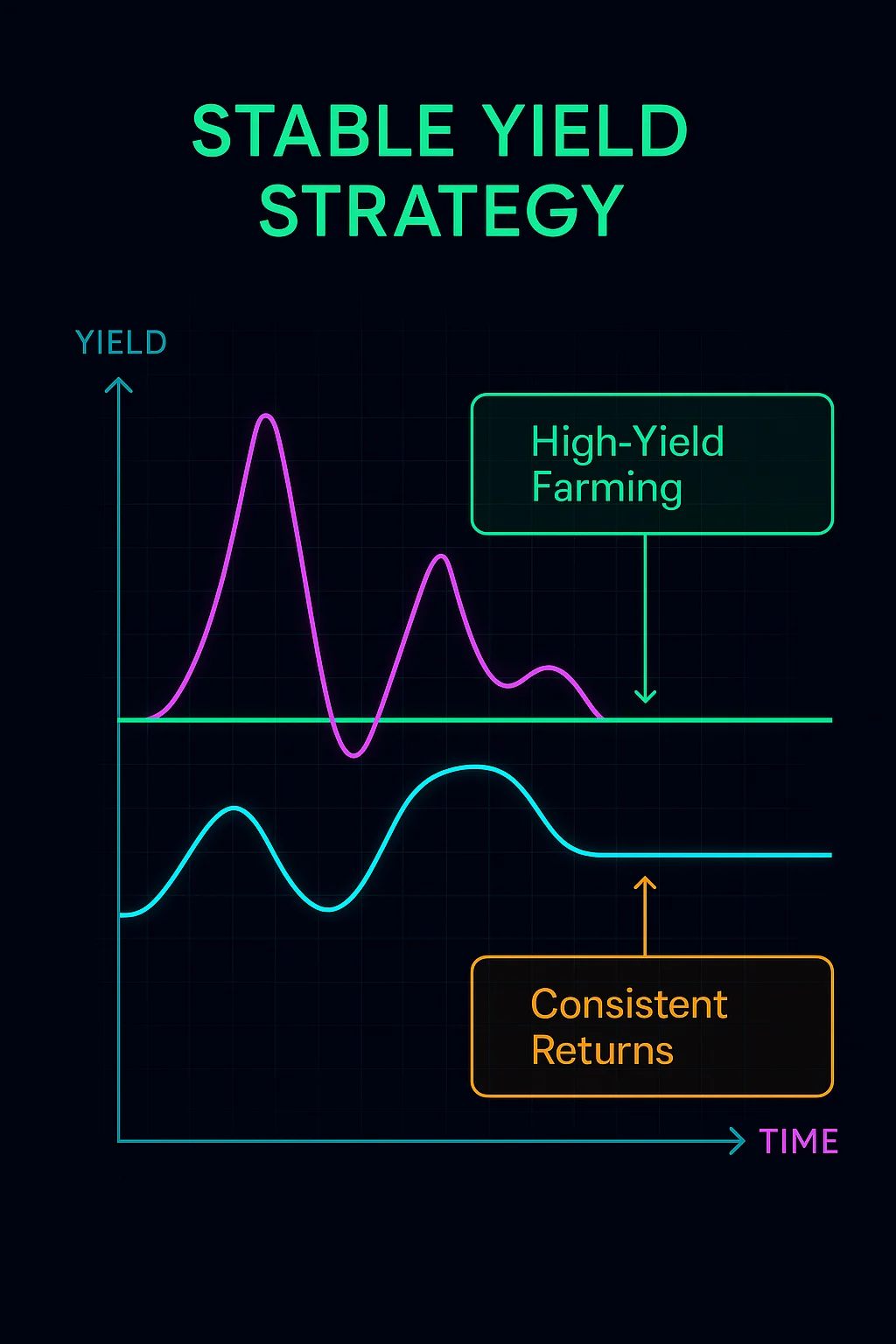
Infographic comparing stable yield strategies and high-yield farming with yield performance over time

Real-World Examples

  • USDC lending on Aave or Compound for steady 3-5% returns without token price risk
  • Curve stablecoin pools providing consistent yields from trading fees and CRV rewards
  • Treasury bill protocols offering on-chain access to government bond yields

Why Beginners Should Care

Sustainable returns that don’t depend on unsustainable token emissions or speculative trading activity for yield generation.

Lower complexity compared to active yield farming strategies that require constant monitoring and position management.

Inflation hedge potential as stable yields often exceed traditional savings account rates while maintaining dollar exposure.

Related Terms: Yield Farming, Stablecoin, Risk Management, Capital Preservation

Back to Crypto Glossary

Similar Posts

  • AML (Anti-Money Laundering)

    AML (Anti-Money Laundering): Fighting Financial Crime AML regulations force crypto businesses to monitor and report suspicious activities. It’s the government’s attempt to prevent crypto from becoming a money laundering paradise. Anti-Money Laundering (AML) refers to laws, regulations, and procedures designed to prevent criminals from disguising illegally obtained funds as legitimate income. Crypto exchanges and businesses…

  • Data Availability Layer

    Data Availability Layer: Ensuring Information Access Data availability layers ensure that blockchain data remains accessible for verification without requiring full nodes to store everything. It’s like having a library system where you can verify any book exists without storing them all. A data availability layer guarantees that blockchain transaction data is published and remains accessible…

  • Centralization Risk

    Centralization Risk: Single Point of Failure DangersCentralization risk refers to vulnerabilities created when critical functions are controlled by single entities rather than distributed among many participants. It's like having all eggs in one basket that could break everything at once.Centralization risk encompasses the potential negative impacts when blockchain networks, applications, or services become overly dependent…

  • FUD (Fear, Uncertainty, Doubt)

    FUD: Fear, Uncertainty, and Doubt FUD is FOMO’s evil twin. While FOMO makes you buy at peaks, FUD makes you sell at bottoms. Understanding FUD helps you think clearly when markets panic. FUD stands for Fear, Uncertainty, and Doubt – negative sentiment spread to influence crypto prices downward. Sometimes it’s legitimate concerns, often it’s manufactured…

  • Cold Wallet

    Cold Wallet Backup: Securing Your Security Cold wallet backup ensures you can recover your cryptocurrency even if your hardware wallet is lost, stolen, or destroyed. It’s like having spare keys to your safe deposit box. Cold wallet backup refers to secure storage methods for seed phrases and recovery information that enable restoring access to hardware…

  • Chainlink

    Chainlink: Decentralized Oracle NetworkChainlink is a decentralized oracle network that connects blockchains to external data sources and APIs. It's like a bridge that brings real-world information into smart contracts.Chainlink is a decentralized oracle network that provides reliable, tamper-proof data feeds to smart contracts on various blockchain networks. It solves the oracle problem by aggregating data from…