
Modular Execution Layer

Modular Execution Layer: Specialized Transaction Processing

Modular execution layers handle transaction processing separately from consensus and data availability. It’s like having specialized assembly lines instead of one worker doing everything.

A modular execution layer is a specialized blockchain component that focuses solely on processing transactions and executing smart contracts while relying on other layers for consensus and data availability. This separation enables optimization for specific execution requirements.

How Modular Execution Works

Execution specialization optimizes specifically for transaction processing speed, smart contract efficiency, or particular application requirements.

Layer separation enables using different consensus mechanisms, data availability solutions, or settlement layers while maintaining execution compatibility.

Scalability improvements through parallel execution environments that can process more transactions than monolithic blockchain architectures.
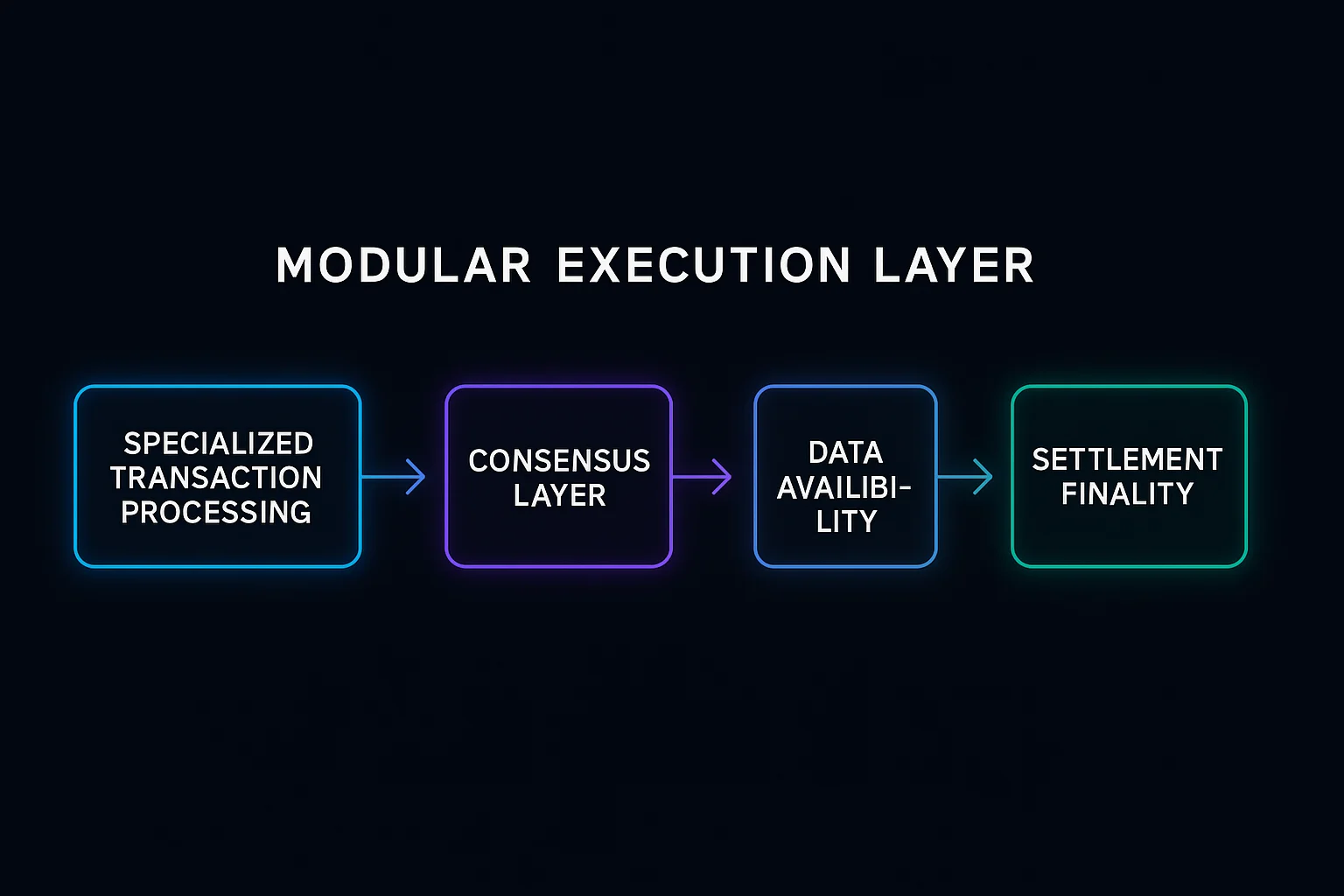
Modular execution layer showing specialized transaction processing, consensus, data availability, and settlement finality

Real-World Examples

  • Fuel Network provides optimized execution for high-throughput applications
  • Eclipse offers Solana execution with Ethereum settlement and Celestia data availability
  • Movement Labs builds Move-based execution layers for various blockchain stacks

Why Beginners Should Care

Performance optimization through specialization can dramatically improve transaction speed and reduce costs compared to general-purpose chains.

Flexibility benefits as execution layers can be swapped or upgraded without changing other parts of the blockchain stack.

Complexity trade-offs as modular architectures require understanding interactions between multiple specialized components.

Related Terms: Modular Blockchain, Execution Environment, Layer Separation

Back to Crypto Glossary

Similar Posts

  • Verifiable Credentials

    Verifiable Credentials: Tamper-Proof Digital DocumentsVerifiable credentials are digital documents that can be cryptographically verified without contacting the issuing authority. They're like diplomas that anyone can authenticate instantly.Verifiable credentials are digital documents that use cryptographic techniques to enable instant verification of authenticity without requiring contact with the issuing organization. These credentials enable trusted digital identity and qualification…

  • Computational Mining

    Computational Mining: Earning Through Processing PowerComputational mining involves providing computer processing power to networks in exchange for cryptocurrency rewards. It's like renting out your computer's brain for digital money.Computational mining refers to using computer hardware to perform calculations for blockchain networks or distributed computing projects in exchange for cryptocurrency payments. This enables monetizing spare computing resources.How…

  • Solver Network

    Solver Network: Optimized Transaction ExecutionA solver network consists of specialized entities that find optimal execution paths for complex transactions across multiple protocols and chains. They're like GPS systems that find the best routes for your crypto transactions.A solver network comprises specialized services that analyze and execute complex transactions by finding optimal paths across multiple protocols,…

  • Collateral

    Collateral: Security for Borrowed FundsCollateral is an asset pledged as security for a loan that can be seized if the borrower fails to repay. In crypto, it's typically cryptocurrency deposited to secure borrowing positions.Collateral refers to assets deposited as security for loans, with the understanding that lenders can seize these assets if borrowers default on…

  • Liquidity

    Liquidity: How Easily You Can Buy or Sell Liquidity determines whether you can actually trade your crypto at fair prices. High liquidity means smooth trading. Low liquidity means getting rekt by slippage. Liquidity refers to how easily an asset can be bought or sold without significantly affecting its price. In crypto markets, liquidity comes from…

  • Proof of Stake (PoS)

    Proof of Stake (PoS): Energy-Efficient Consensus Proof of Stake secures blockchain networks through economic staking rather than energy-intensive mining. It’s like replacing a gold rush with a security deposit system. Proof of Stake (PoS) is a consensus mechanism where validators are chosen to create new blocks based on their stake in the network rather than…