
Bridge Token

Bridge Token: Cross-Chain Asset Representations

Bridge tokens are wrapped versions of assets that exist on different blockchains through cross-chain bridge protocols. They’re like having dollars that work in different countries’ ATM systems.

A bridge token is a representation of an asset from one blockchain that can be used on a different blockchain through cross-chain bridge infrastructure. The original asset gets locked while an equivalent token gets minted on the destination chain.

How Bridge Tokens Work

Asset locking secures original tokens in smart contracts or custody solutions while equivalent bridge tokens get minted on destination chains.

Peg maintenance ensures bridge tokens maintain 1:1 value with underlying assets through arbitrage mechanisms and redemption guarantees.

Cross-chain liquidity enables using assets across multiple blockchains without selling and repurchasing on each chain separately.
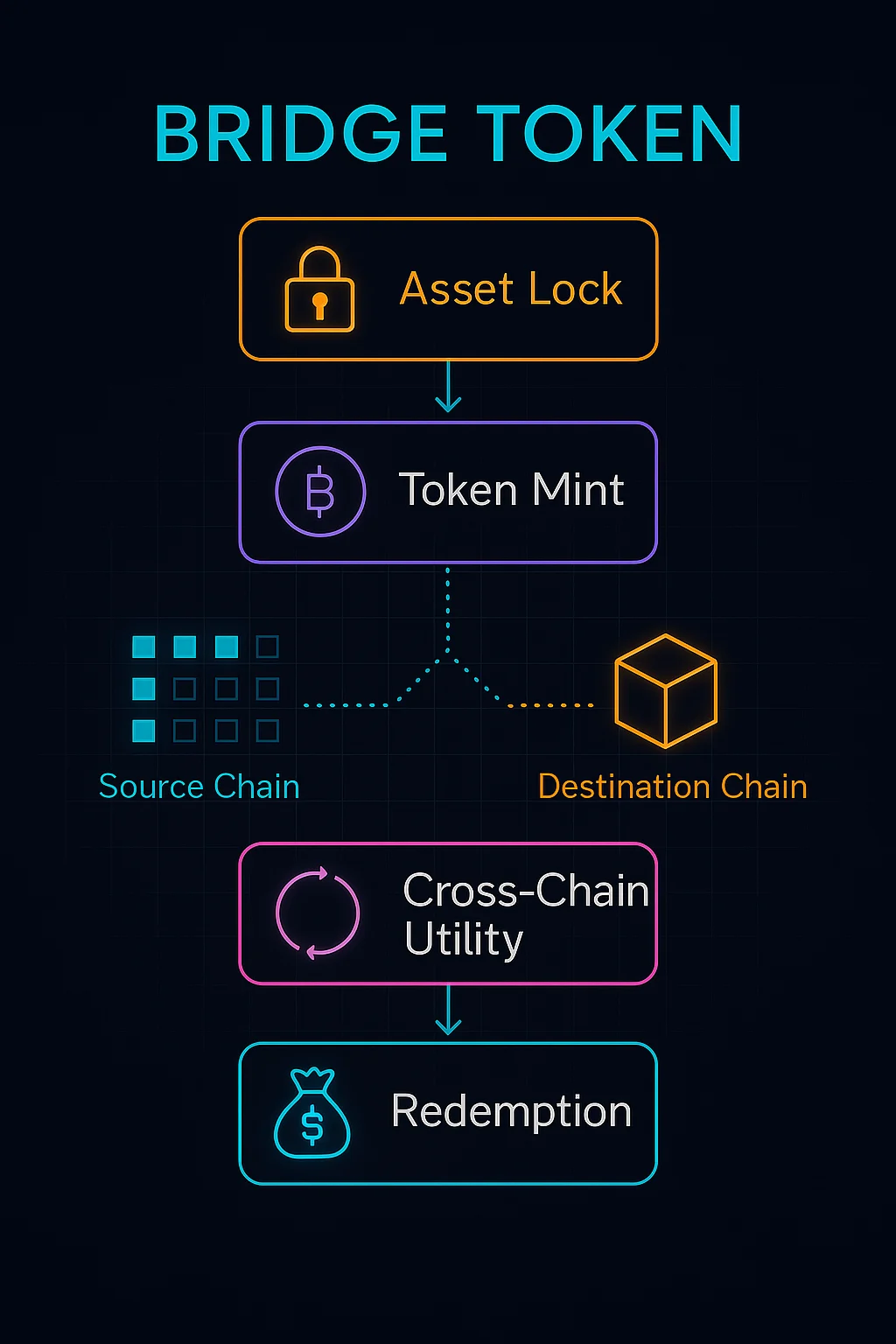
Infographic showing bridge token flow from asset lock on source chain to token mint on destination chain, enabling cross-chain utility and redemption

Real-World Examples

  • Wrapped Bitcoin (WBTC) enables Bitcoin usage in Ethereum DeFi applications
  • Portal tokens from Wormhole bridge enable asset movement across multiple chains
  • Polygon bridge tokens provide Ethereum asset access on Polygon’s faster, cheaper network

Why Beginners Should Care

Expanded utility for assets by enabling use across multiple blockchain ecosystems without complex trading procedures.

Bridge risks include smart contract vulnerabilities, custody failures, or validator misbehavior that could result in bridge token depeg or loss.

Liquidity fragmentation as bridge tokens may have different trading volumes and prices across various chains and exchanges.

Related Terms: Cross-Chain Bridge, Wrapped Token, Peg Mechanism, Asset Locking

Back to Crypto Glossary

Similar Posts

  • Cross-Chain Messaging

    Cross-Chain Messaging: Inter-Blockchain Communication Cross-chain messaging enables smart contracts on different blockchains to communicate and trigger actions across networks. It’s like having a universal translator for blockchain conversations. Cross-chain messaging allows smart contracts on different blockchain networks to send data, trigger functions, and coordinate actions across multiple chains. This enables true interoperability beyond simple asset…

  • Transaction Fees

    Transaction Fees: Network Processing CostsTransaction fees are payments made to network validators for processing and confirming cryptocurrency transactions. They're like postage stamps that you need to attach to letters, except the cost varies depending on how quickly you want your mail delivered.Transaction fees refer to payments made to miners, validators, or network operators who process…

  • State Channel

    State Channel: Off-Chain Interaction Highways State channels enable instant, low-cost transactions between parties by moving interactions off-chain while maintaining blockchain security. It’s like having a private highway between two cities. A state channel is a two-way communication channel between blockchain users that enables off-chain transactions with on-chain security guarantees. Participants can transact instantly and cheaply,…

  • Project Vetting

    Project Vetting: Investment Due DiligenceProject vetting involves thoroughly researching and evaluating cryptocurrency projects before investing to identify legitimate opportunities and avoid scams. It's like inspecting a house before buying it to check the foundation, plumbing, and electrical systems.Project vetting refers to the comprehensive research and analysis process used to evaluate cryptocurrency projects, including team credentials,…

  • Wallet Address

    Wallet Address: Your Cryptocurrency Bank Account NumberA wallet address is a unique identifier that enables receiving cryptocurrency payments. It's like a bank account number that others can send money to, but it's generated from your private keys.A wallet address is a unique alphanumeric string that serves as a destination for cryptocurrency transactions. These addresses are derived…

  • Mooning

    Mooning: When Prices Go Parabolic Mooning describes cryptocurrency prices shooting up dramatically and rapidly. It’s what every crypto holder dreams about and what usually signals dangerous market euphoria. Mooning refers to cryptocurrency prices rising dramatically and rapidly, often in parabolic fashion. The term suggests prices going “to the moon” – reaching astronomical levels that seemed…