
Wrapped Token

Wrapped Token: Bringing Assets Cross-Chain

Wrapped tokens let you use Bitcoin on Ethereum, Ethereum on Solana, and any asset on any blockchain. They’re the universal adapters of crypto.

A wrapped token is a cryptocurrency that represents another asset on a different blockchain, maintaining a 1:1 peg through collateralization. The original asset gets locked in a smart contract while an equivalent wrapped version gets minted on the target chain.

How Wrapped Tokens Work

Custodial wrapping involves trusted entities holding the original asset and minting wrapped versions. WBTC uses this model – BitGo holds real Bitcoin while minting wrapped Bitcoin on Ethereum.

Decentralized bridges use smart contracts and multi-signature schemes to lock assets and mint wrapped versions without single custodians. These are more decentralized but also more complex.

Burning and redemption processes allow users to destroy wrapped tokens and receive the underlying asset back, maintaining the 1:1 peg relationship.
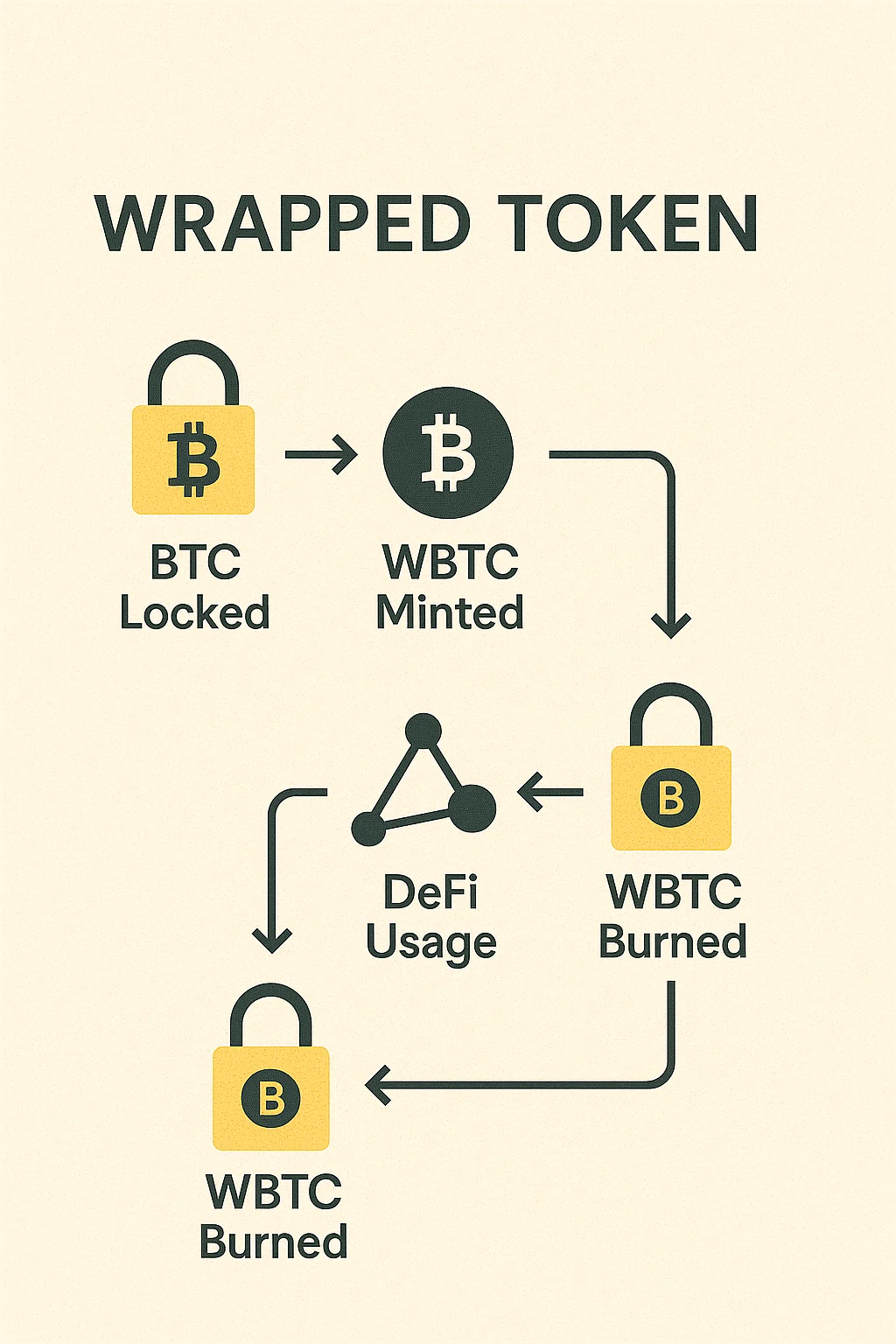
Infographic showing the wrapped token process: BTC locked, WBTC minted, used in DeFi, burned, and BTC returned

Real-World Examples

  • Wrapped Bitcoin (WBTC) – Bitcoin usable in Ethereum DeFi with $1+ billion market cap
  • Wrapped Ethereum (WETH) – ETH conforming to ERC-20 standards for DeFi compatibility
  • Cross-chain bridges creating wrapped versions of tokens across different blockchains

Why Beginners Should Care

Wrapped tokens unlock cross-chain DeFi opportunities. You can earn yield on Bitcoin through Ethereum protocols or use Ethereum assets on faster, cheaper chains.

Trust assumptions vary significantly. Custodial wrapped tokens require trusting centralized entities, while decentralized bridges have smart contract risks.

Depeg risks exist if the backing mechanism fails. Wrapped tokens should trade at 1:1 with underlying assets, but this isn’t guaranteed during extreme market stress.

Related Terms: Bridge, Cross-Chain, DeFi, Smart Contract

Back to Crypto Glossary

Similar Posts

  • Liquid Restaking

    Liquid Restaking: Flexible High-Yield Staking Liquid restaking combines the capital efficiency of liquid staking with additional yield from securing multiple networks. It’s like having your cake and eating it too, but with slashing risks. Liquid restaking allows staked assets to secure additional protocols while remaining liquid through tokenized representations. Users can earn enhanced yields from…

  • Token Economics

    Token Economics: Digital Asset Value DesignToken economics encompasses the economic principles and mechanisms that govern cryptocurrency token value, distribution, and utility. It's like designing the economic system for a digital nation.Token economics (tokenomics) refers to the study and design of economic systems around cryptocurrency tokens, including supply mechanisms, distribution models, utility functions, and incentive structures. Good…

  • Order Book

    Order Book: Market Trading QueueAn order book displays all buy and sell orders for a trading pair, showing market depth and price discovery. It's like a transparent auction house where everyone can see all bids and offers.An order book is a real-time list of buy and sell orders for a specific trading pair, organized by…

  • Bitcoin (BTC)

    Bitcoin (BTC): Digital Money That Banks Can’t Control Bitcoin isn’t just another investment – it’s the financial revolution that started it all. When traditional banks failed us in 2008, Bitcoin emerged as the answer. Bitcoin is digital money that operates without banks, governments, or middlemen controlling it. Think of it as cash for the internet…

  • Permit (EIP-2612)

    Permit (EIP-2612): Gasless Approvals Permit functionality allows token approvals through signatures instead of transactions, enabling gasless user experiences for DeFi interactions. It’s like signing a check instead of going to the bank. Permit (EIP-2612) is a token standard that enables gasless approvals through cryptographic signatures rather than on-chain transactions. Users can authorize token spending without…

  • Chain Abstraction

    Chain Abstraction: Invisible Multi-Chain Experience Chain abstraction hides blockchain complexity from users, making multi-chain interactions feel like using a single network. It’s like having universal currency that works everywhere without exchange rates. Chain abstraction creates user experiences where interactions with multiple blockchains happen seamlessly without users needing to understand or manage different networks, tokens, or…