
Play-to-Earn (P2E)

Play-to-Earn (P2E): Gaming Meets Income

Play-to-earn games let players earn cryptocurrency and NFTs through gameplay. It’s turned gaming from entertainment expense into potential income source for millions worldwide.

Play-to-earn (P2E) is a gaming model where players earn cryptocurrency tokens, NFTs, or other digital assets with real-world value through gameplay activities. Players own in-game assets that can be traded or sold outside the game.

How Play-to-Earn Works

Blockchain integration records game assets as NFTs and tracks token rewards on public ledgers. This gives players true ownership of items that persist even if the game company disappears.

Earning mechanisms include completing quests, winning battles, breeding creatures, or providing value to other players through crafting or services within the game economy.

Scholarship programs allow players without startup capital to borrow expensive NFT characters from investors, splitting earnings between player labor and investor capital.
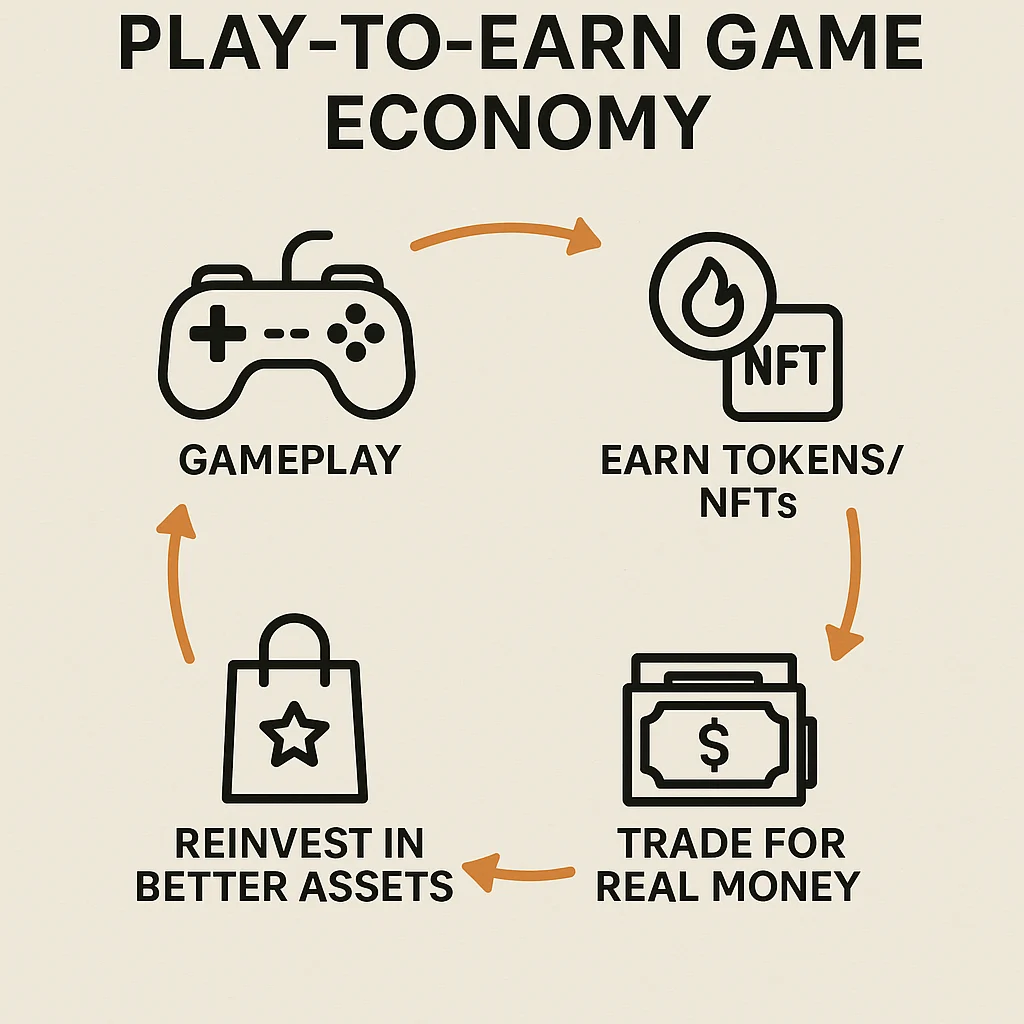
Infographic showing play-to-earn game economy cycle from gameplay to earning tokens/NFTs, trading for money, and reinvesting in assets

Real-World Examples

  • Axie Infinity – Players earned thousands monthly during peak, especially in Philippines and Venezuela
  • Splinterlands – Card-based battles with tradeable NFT cards and daily token rewards
  • STEPN – Move-to-earn app rewarding users for walking and running

Why Beginners Should Care

P2E can provide real income in countries with lower living costs, but earnings have crashed dramatically from 2021-2022 peaks as token prices fell and player bases saturated.

High upfront costs often required to start playing – quality NFT characters can cost hundreds or thousands of dollars before earning anything.

Sustainability questions remain about whether P2E economies can maintain high earning rates as player bases grow and token inflation increases.

Related Terms: NFT, Gaming Token, Metaverse, Scholarship

Back to Crypto Glossary

Similar Posts

  • Token Lockup

    Token Lockup: Preventing Early Selling Token lockups prevent allocated tokens from being sold or transferred for specific time periods. It’s like putting your poker winnings in a time-locked safe to prevent impulse spending. Token lockup is a mechanism that prevents token holders from selling, transferring, or accessing their tokens until predetermined conditions are met. Lockups…

  • Dark Web

    Dark Web: Hidden Internet NetworksThe dark web consists of encrypted online networks accessible only through specialized software like Tor. It's where privacy advocates and criminals both hang out, but for very different reasons.The dark web refers to encrypted online content that exists on overlay networks requiring specific software, configurations, or authorization to access. Unlike the regular…

  • Wallet Connect

    Wallet Connect: Universal dApp Connection Standard WalletConnect is an open protocol that enables secure connections between mobile wallets and desktop applications. It’s like Bluetooth for crypto wallets and dApps. WalletConnect is a communication protocol that allows cryptocurrency wallets to interact with decentralized applications across different devices and platforms. It enables secure, encrypted connections without exposing…

  • Restaking Slashing

    Restaking Slashing: Enhanced Penalty Risks Restaking slashing involves penalties from multiple protocols simultaneously, amplifying potential losses for validators who secure additional networks. It’s like being liable for multiple insurance policies with a single accident. Restaking slashing refers to the enhanced penalty mechanisms that apply when validators use restaked assets to secure multiple protocols, potentially facing…

  • Dispute Resolution

    Dispute Resolution: Solving Blockchain ConflictsDispute resolution mechanisms help resolve conflicts that arise in decentralized systems where no central authority can make binding decisions. It's like having a digital court system.Dispute resolution in blockchain systems refers to mechanisms for resolving conflicts between parties in decentralized environments where traditional legal systems may be inadequate or unavailable. These systems…

  • Light Client

    Light Client: Lightweight Blockchain AccessA light client provides blockchain access without downloading the entire blockchain history. It's like having a summary instead of reading the entire encyclopedia.A light client is a blockchain node that maintains network connectivity and basic functionality without storing the complete blockchain history or state. This enables resource-constrained devices to participate in blockchain…