
Restaking Slashing

Restaking Slashing: Enhanced Penalty Risks

Restaking slashing involves penalties from multiple protocols simultaneously, amplifying potential losses for validators who secure additional networks. It’s like being liable for multiple insurance policies with a single accident.

Restaking slashing refers to the enhanced penalty mechanisms that apply when validators use restaked assets to secure multiple protocols, potentially facing slashing from multiple sources for single violations. This creates compounded risk but also enhanced rewards.

How Restaking Slashing Works

Multiple slashing conditions from different protocols can trigger simultaneously, creating larger penalty exposure than traditional single-protocol staking.

Cascading failures may occur when slashing in one protocol affects the validator’s ability to meet requirements in other protocols they’re securing.

Risk amplification means validators face greater potential losses in exchange for earning rewards from multiple sources simultaneously.
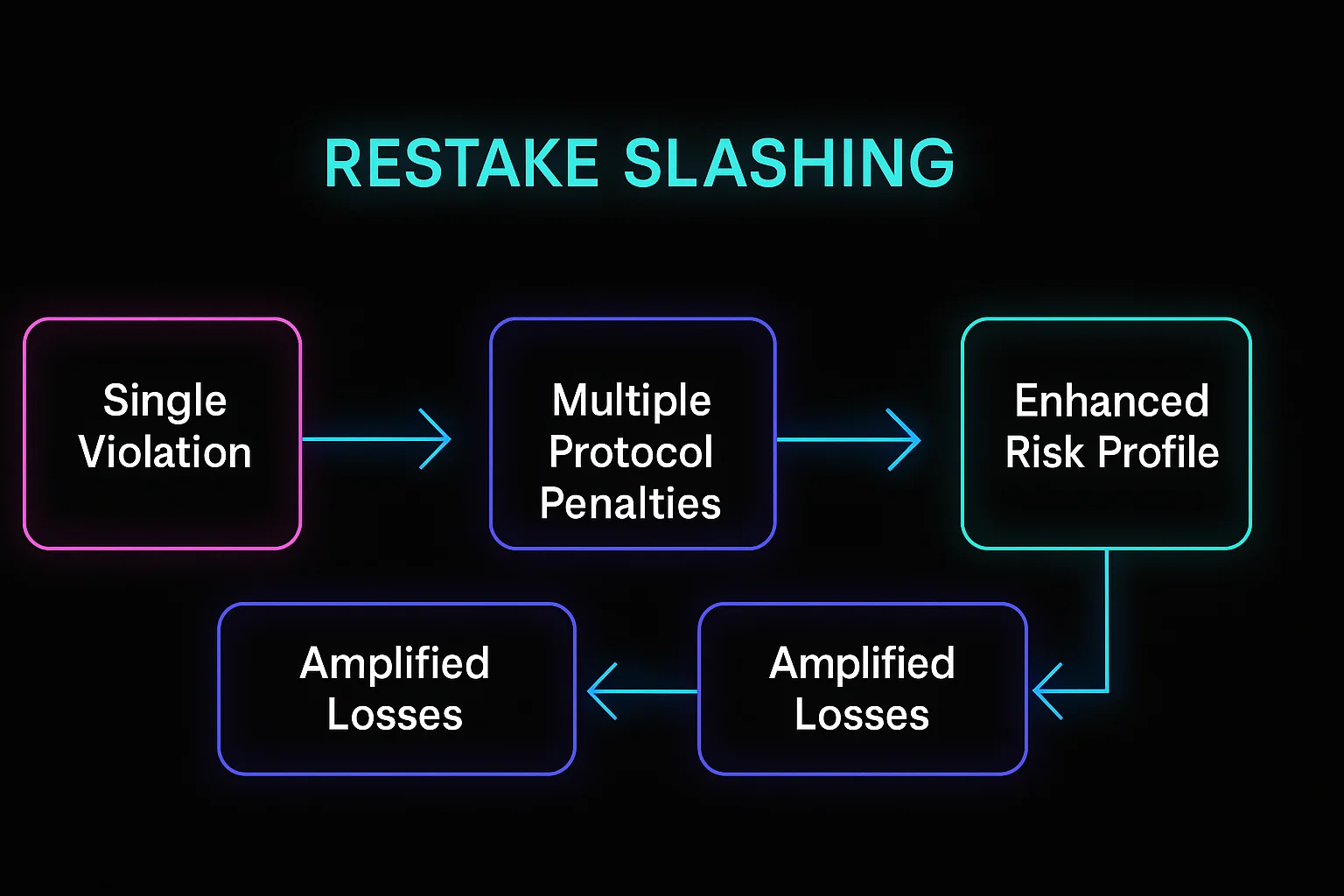
Restaking slashing diagram showing single violation, multiple protocol penalties, amplified losses, and enhanced risk profile

Real-World Examples

  • EigenLayer restaking creates exposure to slashing from both Ethereum and additional protocol violations
  • Babylon Bitcoin staking introduces slashing mechanisms to normally non-slashable Bitcoin
  • Various middleware protocols that add their own slashing conditions to base layer stakes

Why Beginners Should Care

Risk multiplication requires careful consideration of whether enhanced yields justify significantly increased slashing exposure.

Operator selection becomes more critical when choosing validators who must competently manage multiple protocol requirements.

Insurance considerations may become important for large restaking positions given the amplified penalty risks.

Related Terms: Restaking, Slashing, Validator, Risk Management

Back to Crypto Glossary

Similar Posts

  • Yield Stacking

    Yield Stacking: Combining Multiple Income StreamsYield stacking involves combining multiple yield-generating strategies to maximize returns on cryptocurrency investments. It's like having several part-time jobs that all pay into the same bank account.Yield stacking refers to the strategy of combining multiple yield-generating opportunities across different protocols, assets, and mechanisms to maximize overall returns. This approach leverages various…

  • |

    Bridgeless Interop

    Bridgeless Interop: Direct Cross-Chain Communication Bridgeless interoperability enables direct communication between blockchains without traditional bridge infrastructure. It’s like having chains that can talk directly to each other instead of using translators. Bridgeless interoperability refers to cross-chain communication methods that don’t rely on traditional bridge protocols, instead using native blockchain features or specialized infrastructure for direct…

  • DeFi Aggregator

    DeFi Aggregator: Finding the Best Yields DeFi aggregators automatically find the best rates across multiple protocols for lending, borrowing, or trading. They’re like Expedia for decentralized finance. A DeFi aggregator is a platform that searches multiple protocols to find the best rates, yields, or liquidity for users’ specific needs. Instead of manually checking dozens of…

  • EVM (Ethereum Virtual Machine)

    EVM (Ethereum Virtual Machine): The World Computer The EVM is the runtime environment where Ethereum smart contracts execute. It’s like having one giant computer that runs the same programs across thousands of machines worldwide. The Ethereum Virtual Machine (EVM) is a decentralized computing environment that executes smart contracts on the Ethereum blockchain. Every Ethereum node…

  • Transaction Ordering

    Transaction Ordering: Sequence Control SystemsTransaction ordering determines the sequence in which transactions get processed within blockchain blocks. It's like controlling the line at a busy restaurant.Transaction ordering refers to the process by which blockchain networks determine the sequence of transactions within blocks. This ordering can significantly affect transaction outcomes, especially in DeFi applications sensitive to price…

  • Compliance

    Compliance: Following Regulatory RequirementsCompliance involves adhering to laws, regulations, and industry standards that govern cryptocurrency activities. It's like following traffic laws, but for digital money and blockchain businesses.Compliance refers to conforming with applicable laws, regulations, licensing requirements, and industry standards for cryptocurrency operations. This includes financial regulations, tax obligations, and consumer protection measures.How Crypto Compliance WorksRegulatory…