
DeFi Aggregator

DeFi Aggregator: Finding the Best Yields

DeFi aggregators automatically find the best rates across multiple protocols for lending, borrowing, or trading. They’re like Expedia for decentralized finance.

A DeFi aggregator is a platform that searches multiple protocols to find the best rates, yields, or liquidity for users’ specific needs. Instead of manually checking dozens of platforms, aggregators do the comparison shopping automatically.

How DeFi Aggregators Work

Rate comparison across lending protocols, DEXs, and yield farming opportunities to identify the highest returns or lowest costs for specific actions.

Smart routing splits large trades across multiple DEXs to minimize slippage and maximize execution efficiency compared to single-platform trades.

Yield optimization automatically moves funds between protocols as rates change, maintaining exposure to the highest available returns.
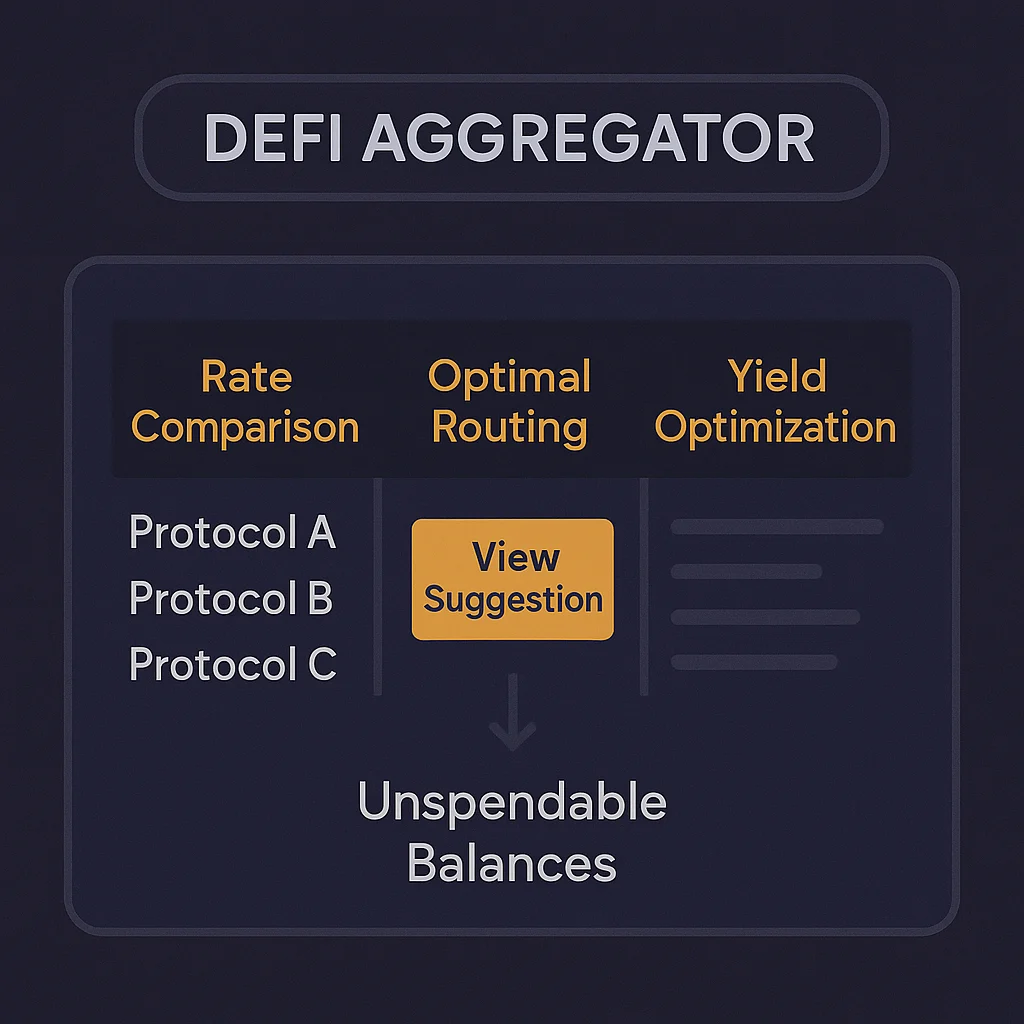
DeFi aggregator dashboard displaying rate comparisons, optimal routing suggestions, and yield optimization strategies across multiple protocols.

Real-World Examples

  • 1inch aggregates DEX liquidity to find best trading prices across multiple exchanges
  • Yearn Finance automatically moves deposited funds to highest-yielding opportunities
  • Zapper simplifies complex DeFi interactions through a single interface

Why Beginners Should Care

Time savings from aggregators eliminate the need to manually research and compare rates across dozens of constantly changing DeFi protocols.

Better execution through smart routing and yield optimization can significantly improve returns compared to single-protocol strategies.

Smart contract risk increases when aggregators interact with multiple protocols, as vulnerabilities in any connected platform could affect aggregator users.

Related Terms: Yield Farming, DEX, Slippage, Yield Optimization

Back to Crypto Glossary

Similar Posts

  • Data Availability Layer

    Data Availability Layer: Ensuring Information Access Data availability layers ensure that blockchain data remains accessible for verification without requiring full nodes to store everything. It’s like having a library system where you can verify any book exists without storing them all. A data availability layer guarantees that blockchain transaction data is published and remains accessible…

  • Verifiable Credentials

    Verifiable Credentials: Tamper-Proof Digital DocumentsVerifiable credentials are digital documents that can be cryptographically verified without contacting the issuing authority. They're like diplomas that anyone can authenticate instantly.Verifiable credentials are digital documents that use cryptographic techniques to enable instant verification of authenticity without requiring contact with the issuing organization. These credentials enable trusted digital identity and qualification…

  • Sunk Cost

    Sunk Cost: Irretrievable Past InvestmentsSunk cost refers to money already spent that cannot be recovered, which shouldn't influence future investment decisions. It's like refusing to leave a terrible movie halfway through just because you already paid for the ticket.Sunk cost describes past investments or expenditures that cannot be recovered and should not factor into future…

  • Native Interop

    Native Interop: Built-in Cross-Chain CommunicationNative interoperability refers to blockchain networks designed from the ground up to communicate with other chains without requiring external bridges or intermediaries. It's like speaking multiple languages fluently.Native interoperability describes blockchain architectures that include cross-chain communication capabilities as core features rather than external additions. These systems can interact with other networks through…

  • Supply Shock

    Supply Shock: Sudden Token Availability ChangesA supply shock occurs when cryptocurrency token supply changes dramatically and unexpectedly, often causing significant price volatility. It's like suddenly discovering a new oil field or losing access to existing reserves.A supply shock refers to a sudden, significant change in cryptocurrency token supply that disrupts market equilibrium and typically causes…

  • Sybil Attack

    Sybil Attack: Fake Identity Manipulation Sybil attacks involve creating multiple fake identities to gain disproportionate influence in networks that assume one person equals one vote. It’s like stuffing the ballot box with imaginary voters. A Sybil attack is when an individual or entity creates multiple fake identities to gain unfair influence over a network, voting…