
Sybil Attack

Sybil Attack: Fake Identity Manipulation

Sybil attacks involve creating multiple fake identities to gain disproportionate influence in networks that assume one person equals one vote. It’s like stuffing the ballot box with imaginary voters.

A Sybil attack is when an individual or entity creates multiple fake identities to gain unfair influence over a network, voting system, or resource allocation mechanism. These attacks exploit systems that rely on identity-based participation without proper verification.

How Sybil Attacks Work

Identity proliferation involves creating numerous fake accounts, wallets, or profiles to appear as many different participants in the system.

Influence amplification uses multiple identities to vote multiple times, claim multiple rewards, or gain disproportionate network power.

Detection evasion requires making fake identities appear legitimate through activity patterns, social connections, or other verification requirements.
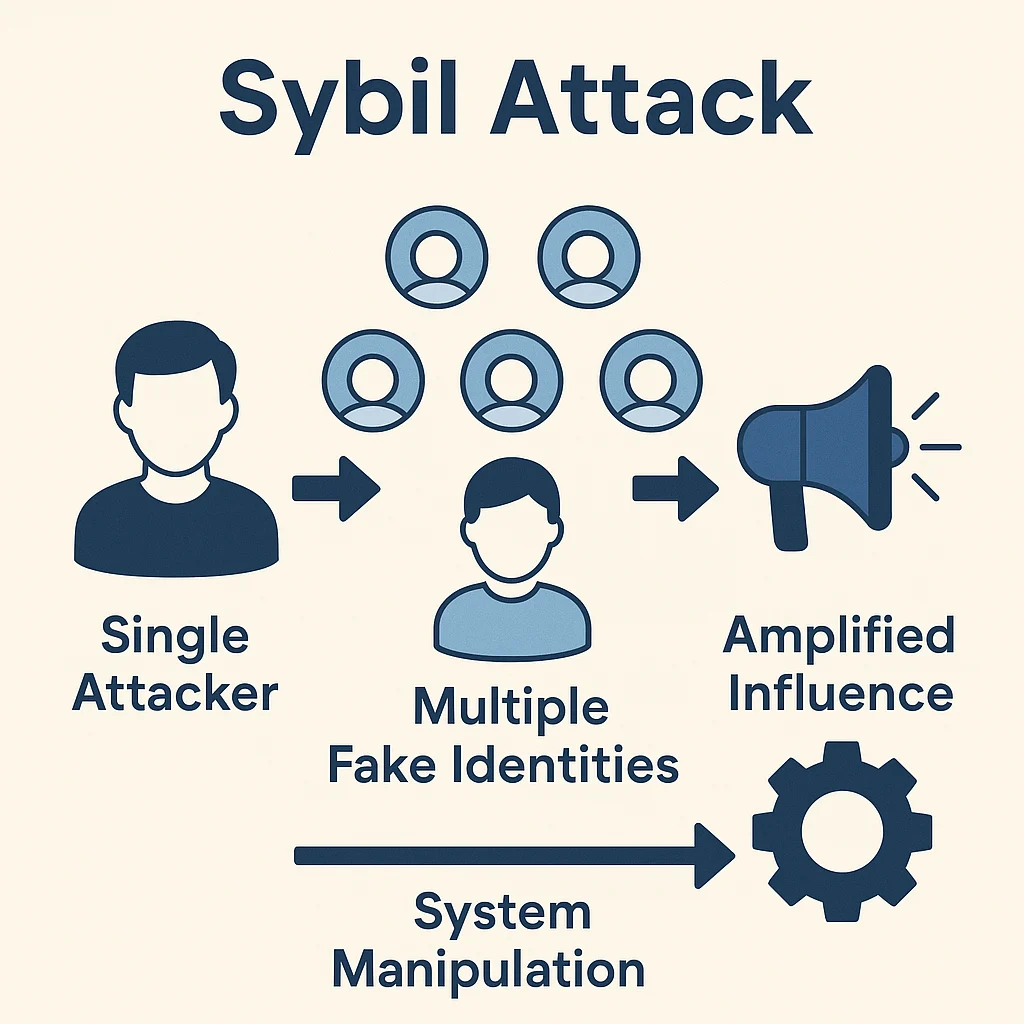
Infographic showing a Sybil attack process: one attacker creates multiple fake identities to amplify influence and manipulate a decentralized system

Real-World Examples

  • Airdrop farming using multiple wallets to claim the same airdrop many times
  • Governance attacks creating multiple voting accounts to influence DAO decisions
  • Review manipulation using fake accounts to boost ratings or reputation scores

Why Beginners Should Care

System integrity depends on preventing Sybil attacks to maintain fair participation and democratic decision-making processes.

Detection mechanisms like proof of humanity, stake-weighting, or social verification help identify and prevent fake identities.

Participation fairness ensures that resources and influence are distributed based on legitimate participation rather than identity manipulation.

Related Terms: Anti-Sybil Mechanism, Proof of Humanity, Governance Attack

Back to Crypto Glossary

Similar Posts

  • Dusting Attack

    Dusting Attack: Tracking Through Tiny Transactions Dusting attacks send tiny amounts of cryptocurrency to addresses to track user behavior and deanonymize transactions. It’s like sprinkling digital breadcrumbs to follow where people go. A dusting attack sends small amounts of cryptocurrency (dust) to many addresses to track users’ transaction patterns and potentially identify wallet owners. Attackers…

  • HTLC

    HTLC: Hash Time-Locked ContractsHTLCs are smart contracts that lock cryptocurrency until specific conditions are met within time limits. They're like escrow services with built-in deadlines that automatically return funds if deals fall through.Hash Time-Locked Contracts (HTLCs) are smart contracts that require both cryptographic proof and time-based conditions to be met before cryptocurrency can be accessed. These…

  • Verifiable Credentials

    Verifiable Credentials: Tamper-Proof Digital DocumentsVerifiable credentials are digital documents that can be cryptographically verified without contacting the issuing authority. They're like diplomas that anyone can authenticate instantly.Verifiable credentials are digital documents that use cryptographic techniques to enable instant verification of authenticity without requiring contact with the issuing organization. These credentials enable trusted digital identity and qualification…

  • Exchange

    Exchange: Where Crypto Gets Bought and Sold Crypto exchanges are the on-ramps to digital money. But not all exchanges are created equal – some prioritize security, others prioritize profits. A cryptocurrency exchange is a platform where you can buy, sell, and trade cryptocurrencies using traditional money or other digital assets. Think of it as a…

  • Circulating Supply

    Circulating Supply: Tokens Available for TradingCirculating supply represents the number of cryptocurrency tokens currently available for public trading and use. It's like counting how much money is actually in circulation versus locked away.Circulating supply refers to the number of cryptocurrency tokens that are publicly available and actively trading in the market. This excludes tokens that are…

  • Challenge Period

    Challenge Period: Dispute Resolution WindowA challenge period is a time window during which participants can dispute or challenge proposed changes before they become final. It's like a cooling-off period for important decisions.A challenge period is a predetermined time frame that allows network participants to dispute transactions, withdrawals, or governance proposals before they become irreversible. This mechanism…