
Exchange

Exchange: Where Crypto Gets Bought and Sold

Crypto exchanges are the on-ramps to digital money. But not all exchanges are created equal – some prioritize security, others prioritize profits.

A cryptocurrency exchange is a platform where you can buy, sell, and trade cryptocurrencies using traditional money or other digital assets. Think of it as a stock market for crypto, but operating 24/7 worldwide.

How Exchanges Work

Exchanges match buyers with sellers, taking a small fee from each transaction. They hold customer funds in hot wallets (connected to internet) for quick trading and cold storage for security.

Centralized exchanges like Coinbase control your funds and require identity verification. Decentralized exchanges let you trade directly from your wallet without giving up control.

Most beginners start with centralized exchanges because they’re user-friendly, but experienced users often graduate to DEXs for better privacy and control.
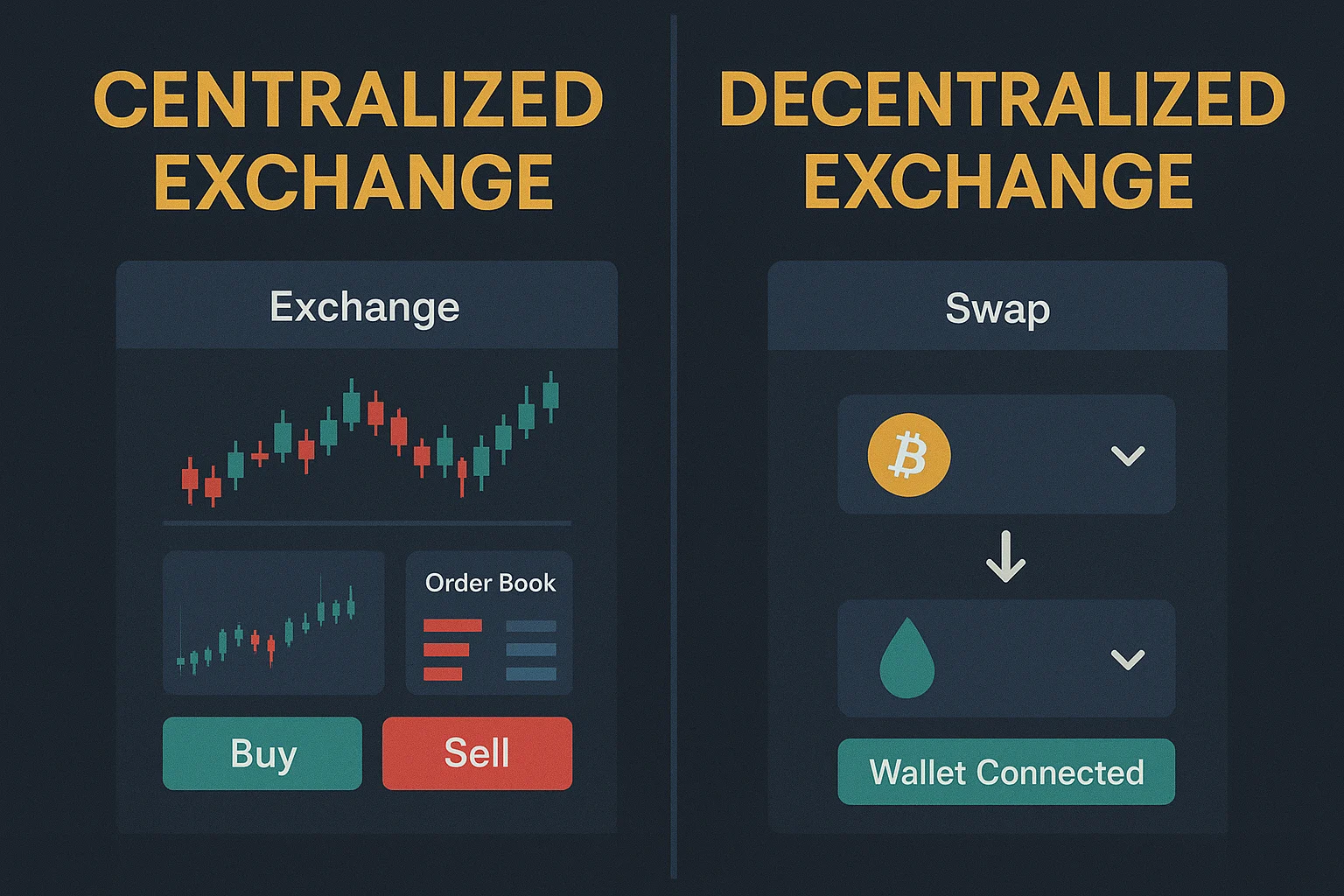
Side-by-side comparison of centralized exchange vs decentralized exchange interfaces

Real-World Examples

  • Kraken – Known for security and regulatory compliance
  • Binance – Largest exchange by trading volume
  • Uniswap – Popular decentralized exchange on Ethereum

Why Beginners Should Care

Your choice of exchange affects your security, fees, and available cryptocurrencies. Exchanges with strong regulatory compliance like Kraken offer better protection and insurance for your funds.

Remember: exchanges are for trading, not storing. Once you buy crypto, transfer it to your own wallet where you control the private keys.

Related Terms: DEX, Trading Pairs, KYC, Liquidity

Back to Crypto Glossary

Similar Posts

  • Wallet Drainer

    Wallet Drainer: Malicious Fund Extraction Wallet drainers are malicious smart contracts or applications designed to steal all assets from connected wallets through deceptive transaction approvals. They’re digital pickpockets with smart contract superpowers. A wallet drainer is malicious software that tricks users into signing transactions that grant unlimited access to their cryptocurrency holdings. These attacks often…

  • Wallet Address

    Wallet Address: Your Cryptocurrency Bank Account NumberA wallet address is a unique identifier that enables receiving cryptocurrency payments. It's like a bank account number that others can send money to, but it's generated from your private keys.A wallet address is a unique alphanumeric string that serves as a destination for cryptocurrency transactions. These addresses are derived…

  • Execution Layer

    Execution Layer: Transaction Processing EngineThe execution layer handles transaction processing and smart contract execution within blockchain architectures. It's like the engine that actually does the work in a modular blockchain system.The execution layer is responsible for processing transactions, executing smart contracts, and managing state changes within blockchain networks. In modular architectures, this layer can be optimized…

  • Encrypted Mempool

    Encrypted Mempool: Private Transaction Pools Encrypted mempools hide transaction details until inclusion in blocks, preventing front-running and MEV extraction. It’s like sending sealed bids instead of announcing your strategy publicly. An encrypted mempool contains pending transactions that are cryptographically hidden from public view until block inclusion. This prevents sophisticated actors from front-running or extracting MEV…

  • Algorithmic Trading

    Algorithmic Trading: Automated Trading StrategiesAlgorithmic trading uses computer programs to execute trades based on predetermined rules and market conditions. It's like having a robot trader that never sleeps and follows your strategy perfectly.Algorithmic trading involves using computer algorithms to automatically execute cryptocurrency trades based on predefined strategies, market signals, and risk parameters. These systems can operate…

  • VPN

    VPN: Virtual Private Network for Crypto PrivacyA VPN creates secure, encrypted connections between your device and the internet to protect privacy and bypass restrictions. It's like having a private tunnel through the public internet highway.A Virtual Private Network (VPN) encrypts internet traffic and routes it through remote servers to hide user location and protect online…