
Encrypted Mempool

Encrypted Mempool: Private Transaction Pools

Encrypted mempools hide transaction details until inclusion in blocks, preventing front-running and MEV extraction. It’s like sending sealed bids instead of announcing your strategy publicly.

An encrypted mempool contains pending transactions that are cryptographically hidden from public view until block inclusion. This prevents sophisticated actors from front-running or extracting MEV from regular users’ transactions.

How Encrypted Mempools Work

Cryptographic hiding conceals transaction details like amounts, tokens, and intended actions until validators include them in blocks.

Commit-reveal schemes require users to first commit to encrypted transactions, then reveal details after inclusion to prevent front-running.

Threshold decryption may require multiple parties to collaborate in revealing transaction details, preventing single-party censorship.
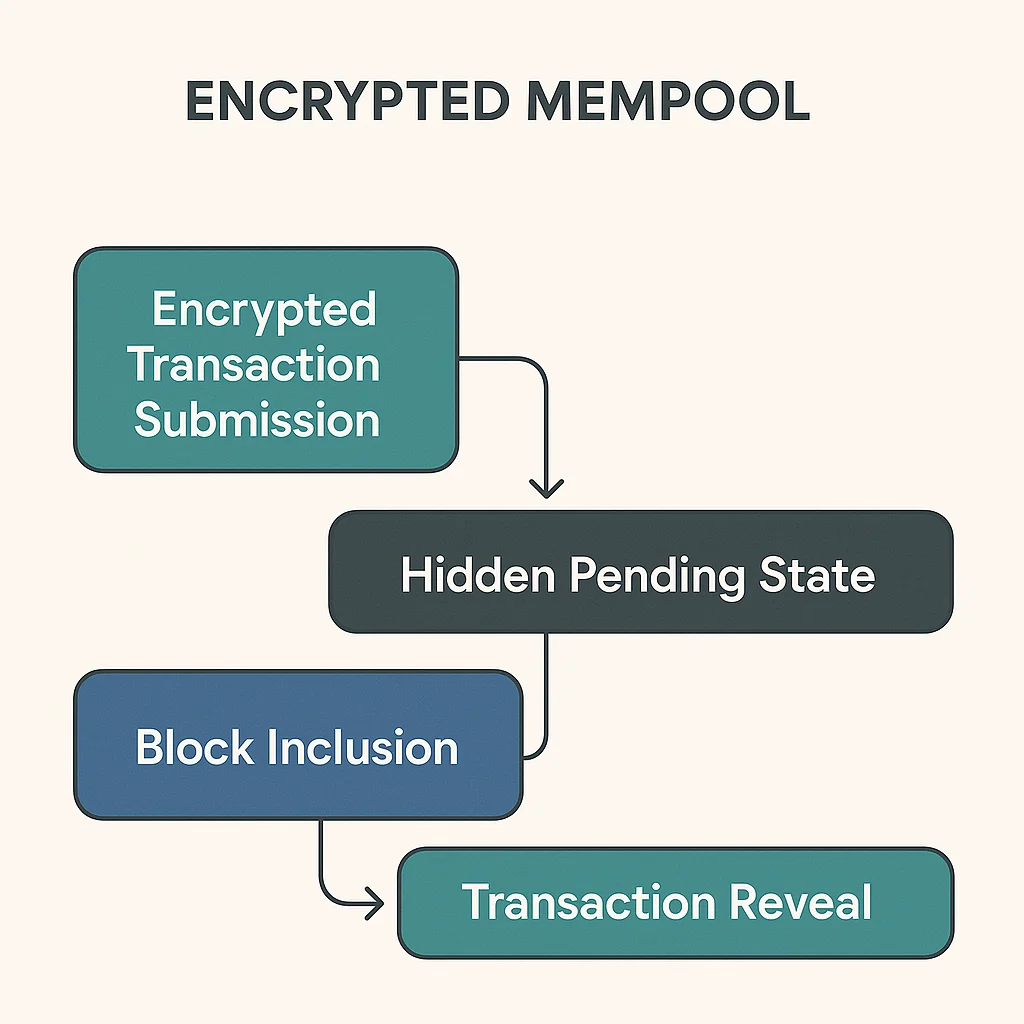
Encrypted mempool flow showing steps from encrypted transaction submission through hidden pending state to block inclusion and final transaction reveal.

Real-World Examples

  • Flashbots Protect provides MEV protection through private transaction pools
  • Shutter Network develops threshold encryption for Ethereum transactions
  • Aztec Network uses encrypted state for privacy-preserving smart contracts

Why Beginners Should Care

MEV protection significantly reduces the hidden tax on DeFi transactions that bots extract through front-running and sandwich attacks.

Fairer markets emerge when sophisticated actors can’t see pending transactions and position themselves advantageously.

Privacy enhancement protects trading strategies and financial information from public blockchain surveillance.

Related Terms: MEV, Front-Running, Private Mempool, Threshold Encryption

Back to Crypto Glossary

Similar Posts

  • Transaction Approval

    Transaction Approval: Authorizing Blockchain ActionsTransaction approval is the process of authorizing blockchain operations through wallet signatures or smart contract permissions. It's like signing checks, but with permanent consequences.Transaction approval involves granting permission for blockchain operations through cryptographic signatures, smart contract interactions, or delegation mechanisms. These approvals authorize spending, contract execution, or account access.How Transaction Approval WorksSignature…

  • Decentralized Identity (DID)

    Decentralized Identity (DID): Self-Sovereign Digital Identity DIDs give users control over their digital identity without relying on centralized authorities like governments or tech companies. It’s like having a passport that you issue and control yourself. Decentralized Identity (DID) is a digital identity framework that gives individuals control over their personal data and identity verification without…

  • Team Incentives

    Team Incentives: Aligning Development with SuccessTeam incentives structure compensation and motivation for cryptocurrency project developers and founders. They align team interests with long-term project success rather than short-term gains.Team incentives refer to compensation structures that motivate project teams to work toward long-term success rather than quick profits. These typically include token allocations with vesting schedules and…

  • Recovery

    Recovery: Restoring Access to Crypto AssetsRecovery refers to methods for regaining access to cryptocurrency wallets and accounts when primary access methods are lost or compromised. It's like having spare keys for your digital vault.Recovery encompasses various mechanisms for restoring access to cryptocurrency wallets, accounts, or assets when primary authentication methods like passwords or devices are…

  • Governance Token

    Governance Token: Voting Rights in Digital Form Governance tokens turn users into stakeholders with voting power over protocol decisions. It’s democracy meets DeFi, with mixed results. A governance token grants holders voting rights on protocol decisions like parameter changes, upgrade proposals, treasury spending, and strategic direction. Token weight typically determines voting power – more tokens…

  • Staking Rewards

    Staking Rewards: Earning from Network Security Staking rewards compensate users for locking up cryptocurrency to help secure proof-of-stake networks. It’s like earning interest for helping guard the bank vault. Staking rewards are cryptocurrency payments earned by users who lock up tokens to participate in proof-of-stake network consensus and security. These rewards incentivize honest participation while…