
Decentralized Identity (DID)

Decentralized Identity (DID): Self-Sovereign Digital Identity

DIDs give users control over their digital identity without relying on centralized authorities like governments or tech companies. It’s like having a passport that you issue and control yourself.

Decentralized Identity (DID) is a digital identity framework that gives individuals control over their personal data and identity verification without central authorities. Users can prove who they are and what credentials they hold without depending on third-party identity providers.

How DIDs Work

Self-sovereign control means users generate and manage their own identity credentials rather than relying on institutions to vouch for their identity.

Cryptographic verification enables proving identity ownership through digital signatures without revealing underlying personal information.

Interoperability standards allow DID credentials to work across different platforms and services that support the decentralized identity framework.
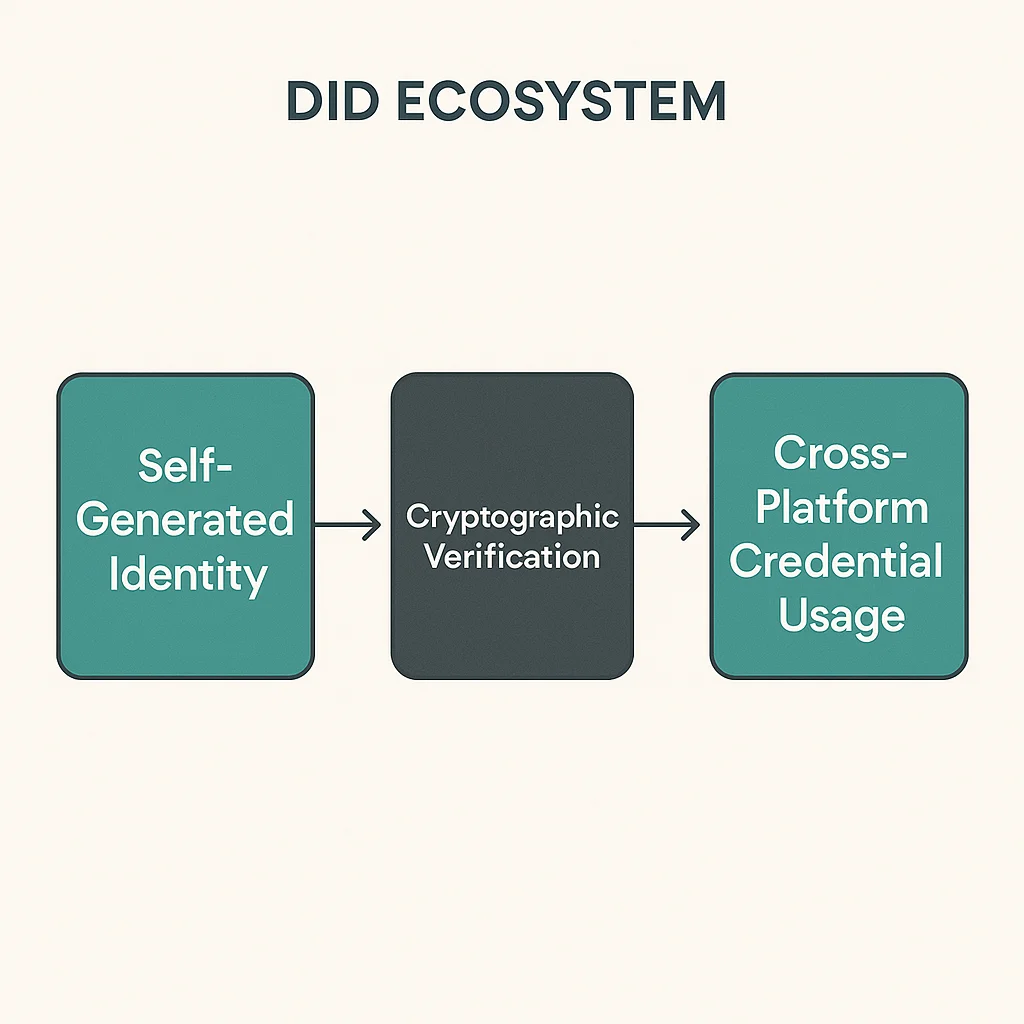
DID ecosystem diagram showing self-generated identity, cryptographic verification, and cross-platform credential usage in a decentralized framework.

Real-World Examples

  • ENS domains provide basic decentralized identity through blockchain-based naming
  • Ceramic Network enables composable identity and reputation across Web3 applications
  • Microsoft ION builds enterprise DID solutions on Bitcoin’s blockchain

Why Beginners Should Care

Privacy control over personal data sharing, allowing selective disclosure of only necessary information for specific use cases.

Reduced platform dependence eliminates risks of losing digital identity when centralized platforms ban accounts or shut down.

Credential portability enables taking verified achievements, reputation, and identity across different platforms and services.

Related Terms: Self-Sovereign Identity, ENS, Verifiable Credentials, Web3

Back to Crypto Glossary

Similar Posts

  • Yield Farming

    Yield Farming: Crypto’s High-Risk, High-Reward Game Yield farming is DeFi’s answer to traditional investing – except the yields are higher, the risks are bigger, and the game changes daily. Yield farming is the practice of lending, staking, or providing liquidity with your cryptocurrency to earn maximum returns across multiple DeFi protocols. It’s like playing musical…

  • Treasury

    Treasury: Protocol Fund ManagementA treasury is a fund controlled by cryptocurrency projects or DAOs for development, operations, and community initiatives. It's like a company's bank account that's managed by community voting instead of executives.A treasury refers to cryptocurrency funds held and managed by protocols, DAOs, or projects for operational expenses, development funding, and community initiatives. These…

  • Liquid Restaking

    Liquid Restaking: Flexible High-Yield Staking Liquid restaking combines the capital efficiency of liquid staking with additional yield from securing multiple networks. It’s like having your cake and eating it too, but with slashing risks. Liquid restaking allows staked assets to secure additional protocols while remaining liquid through tokenized representations. Users can earn enhanced yields from…

  • Chain Abstraction

    Chain Abstraction: Invisible Multi-Chain Experience Chain abstraction hides blockchain complexity from users, making multi-chain interactions feel like using a single network. It’s like having universal currency that works everywhere without exchange rates. Chain abstraction creates user experiences where interactions with multiple blockchains happen seamlessly without users needing to understand or manage different networks, tokens, or…

  • Marketplace

    Marketplace: Digital Trading PlatformsMarketplaces are platforms where users can buy, sell, and trade digital assets like NFTs, tokens, or services. They're like eBay but for blockchain-based items.A marketplace is a platform that facilitates buying, selling, and trading of digital assets between users, typically including discovery, pricing, and transaction features. These platforms often specialize in specific asset…

  • Hash Rate

    Hash Rate: Network Security Measurement Hash rate measures how much computational power secures a blockchain network. Higher hash rates mean stronger security against attacks and manipulation. Hash rate is the total computational power used by miners to process transactions and secure a proof-of-work blockchain network. It’s measured in hashes per second – calculations attempting to…