
Web3

Web3: The Decentralized Internet Dream

Web3 promises an internet where users own their data, identity, and digital assets instead of tech giants controlling everything. It’s part vision, part reality, part marketing buzzword.

Web3 refers to a decentralized version of the internet built on blockchain technology where users control their own data, identity, and assets rather than relying on centralized platforms. It aims to replace Web2’s platform monopolies with user-owned networks.

How Web3 Works

Decentralized applications (dApps) run on blockchain networks instead of centralized servers, making them censorship-resistant and user-controlled rather than platform-controlled.

Self-sovereign identity lets users control their digital identity across platforms without relying on Google, Facebook, or other centralized identity providers.

Token-based incentives align user and network interests by giving users ownership stakes in the platforms they use, rather than just being unpaid data sources.
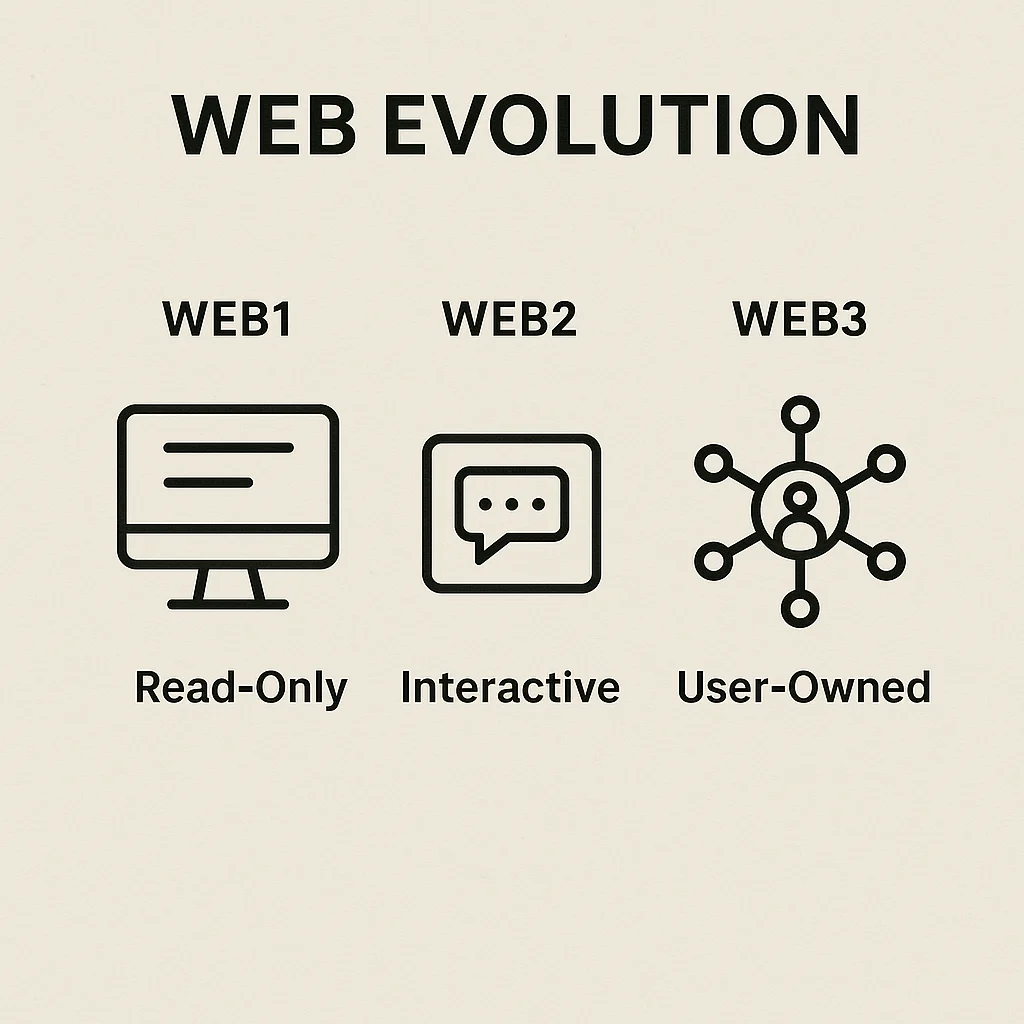
Infographic comparing Web1, Web2, and Web3 with icons and descriptions: read-only, interactive, and user-owned

Real-World Examples

  • ENS domains (.eth addresses) provide decentralized, user-owned website and identity systems
  • IPFS storage offers decentralized file storage resistant to censorship and platform shutdowns
  • DeFi protocols enable financial services without traditional banking intermediaries

Why Beginners Should Care

Web3 adoption remains early-stage with significant user experience challenges compared to polished Web2 applications. Most users aren’t ready to manage private keys for every online interaction.

Decentralization benefits include censorship resistance, platform independence, and user ownership of data and assets created online.

Investment opportunities exist in Web3 infrastructure, but many projects are experimental with uncertain long-term viability and regulatory challenges.

Related Terms: dApp, Decentralization, Self-Sovereign Identity, Token Economy

Back to Crypto Glossary

Similar Posts

  • Impermanent Loss

    Impermanent Loss: The Hidden Cost of Liquidity Providing Impermanent loss is the sneaky tax on liquidity providers. Your tokens can lose value even when the pool is profitable. It’s math, not magic – but it feels like getting robbed. Impermanent loss occurs when the price ratio of tokens in a liquidity pool changes compared to…

  • Chain Reorg (Reorganization)

    Chain Reorg (Reorganization): Blockchain History Changes Chain reorgs occur when a blockchain adopts a different version of transaction history, potentially reversing confirmed transactions. It’s like time travel, but messier and more expensive. A chain reorganization (reorg) happens when a blockchain network adopts an alternative chain of blocks as the canonical history, potentially reversing previously confirmed…

  • Ledger

    Ledger: Hardware Wallet Security Leader Ledger is a leading hardware wallet company that provides secure offline storage for cryptocurrency private keys. They’re like the Fort Knox of crypto storage devices. Ledger is a hardware wallet manufacturer that creates secure devices for storing cryptocurrency private keys offline, protecting them from online threats and hacking attempts. These…

  • Gwei

    Gwei: Ethereum’s Gas Price Unit Gwei is the denomination used for Ethereum gas prices. Understanding gwei helps you avoid overpaying for transactions when the network gets congested. Gwei (gigawei) is a unit of Ethereum’s native currency equal to one billionth of an ETH (10^-9 ETH). It’s the standard unit for expressing gas prices, making it…

  • Play-to-Earn (P2E)

    Play-to-Earn (P2E): Gaming Meets Income Play-to-earn games let players earn cryptocurrency and NFTs through gameplay. It’s turned gaming from entertainment expense into potential income source for millions worldwide. Play-to-earn (P2E) is a gaming model where players earn cryptocurrency tokens, NFTs, or other digital assets with real-world value through gameplay activities. Players own in-game assets that…

  • Quadratic Funding

    Quadratic Funding: Democratic Resource AllocationQuadratic funding uses mathematical formulas to allocate resources based on community preferences while preventing wealthy individuals from dominating funding decisions. It's democracy with math.Quadratic funding is a mechanism for allocating resources that gives more weight to the number of contributors than the amount contributed, using quadratic formulas to prevent wealthy individuals…