
Gwei

Gwei: Ethereum’s Gas Price Unit

Gwei is the denomination used for Ethereum gas prices. Understanding gwei helps you avoid overpaying for transactions when the network gets congested.

Gwei (gigawei) is a unit of Ethereum’s native currency equal to one billionth of an ETH (10^-9 ETH). It’s the standard unit for expressing gas prices, making it easier to work with small fractions than using full ETH amounts.

How Gwei Works

Gas price measurement in gwei determines how much you pay per unit of computational work. Higher gwei prices get faster transaction confirmation during network congestion.

Fee calculation multiplies gas limit by gas price in gwei to determine total transaction cost. A 21,000 gas transfer at 20 gwei costs 420,000 gwei (0.00042 ETH).

Market dynamics drive gwei prices up during high network usage and down during quiet periods, creating variable transaction costs.
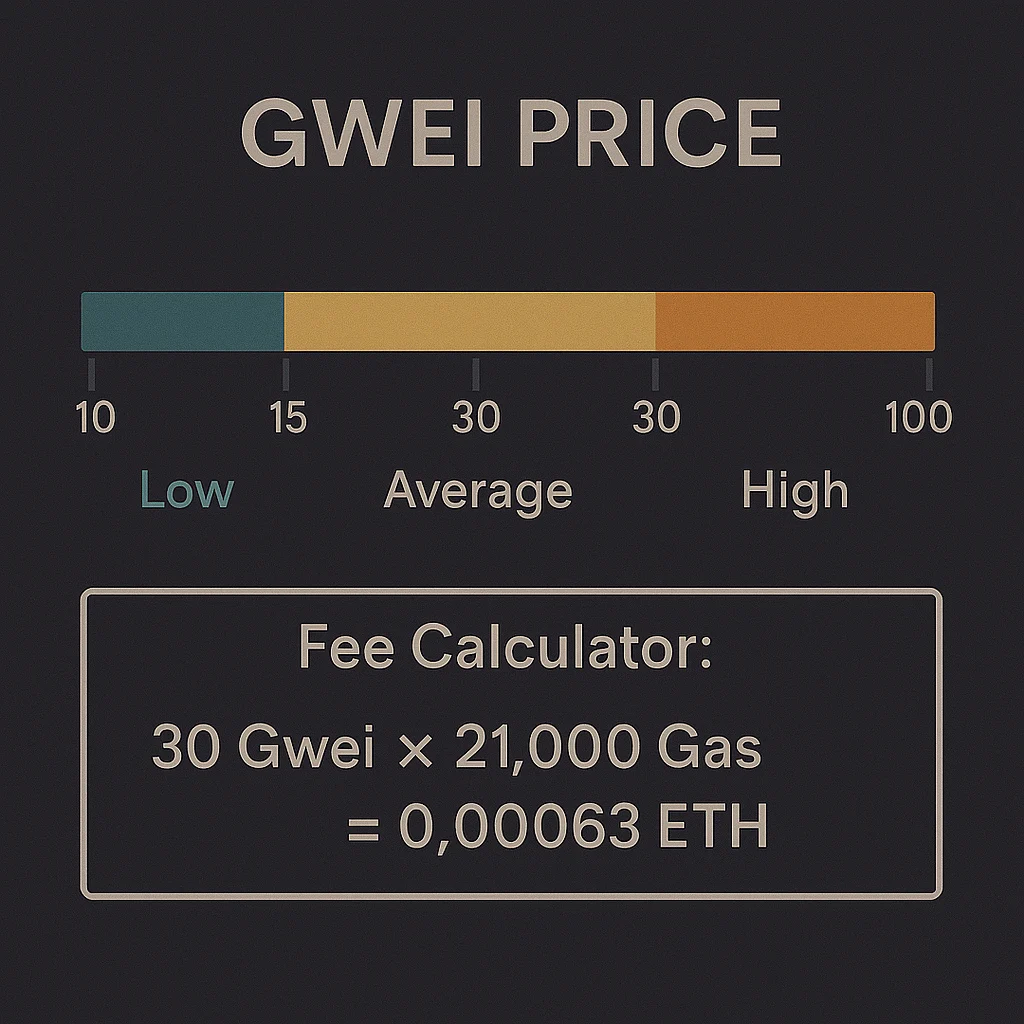
Gwei price chart showing typical low, average, and high ranges during network activity with a sample Ethereum fee calculation.

Real-World Examples

  • Normal periods typically see 15-30 gwei gas prices for standard transaction speed
  • Network congestion can push gas prices to 100-500+ gwei during high demand
  • Overnight hours often offer sub-10 gwei prices for patient users

Why Beginners Should Care

Cost optimization through gwei monitoring can save significant money on transaction fees, especially for frequent DeFi users.

Transaction timing becomes important when gwei prices fluctuate dramatically based on network usage patterns and major events.

Fee estimation tools use gwei prices to predict transaction costs and suggest appropriate gas prices for desired confirmation speeds.

Related Terms: Gas Fees, Gas Price, Gas Limit, Wei

Back to Crypto Glossary

Similar Posts

  • DEX

    DEX: Decentralized ExchangeA DEX is a cryptocurrency exchange that operates without central authority through smart contracts. It's like a marketplace where buyers and sellers trade directly without a middleman.A decentralized exchange (DEX) is a cryptocurrency trading platform that facilitates peer-to-peer trading through smart contracts without requiring a central operator or intermediary. Users maintain control of their…

  • UTXO

    UTXO: Unspent Transaction OutputsUTXOs are like digital coins in your wallet that you haven't spent yet. Bitcoin tracks every unspent "coin" to prevent double-spending and maintain accurate balances.UTXO stands for Unspent Transaction Output – pieces of bitcoin that remain after a transaction and can be used as inputs for future transactions. Think of them as individual…

  • Ring Signatures

    Ring Signatures: Anonymous Signatures in Groups Ring signatures let any member of a group sign a message without revealing which specific member created the signature. It’s like having a family photo where you know someone took it, but can’t tell who. A ring signature is a cryptographic signature scheme where any member of a group…

  • Cryptographic Proof

    Cryptographic Proof: Mathematical VerificationCryptographic proof provides mathematical certainty about the validity of information without revealing sensitive details. It's like proving you know a secret without actually telling anyone what the secret is.Cryptographic proof refers to mathematical techniques that verify the authenticity, integrity, or validity of information using cryptographic methods. These proofs enable trust and verification without…

  • Governance Token

    Governance Token: Voting Rights in Digital Form Governance tokens turn users into stakeholders with voting power over protocol decisions. It’s democracy meets DeFi, with mixed results. A governance token grants holders voting rights on protocol decisions like parameter changes, upgrade proposals, treasury spending, and strategic direction. Token weight typically determines voting power – more tokens…

  • Account Abstraction

    Account Abstraction: Smart Contract Wallets Account abstraction turns wallets into programmable smart contracts with custom logic for transaction validation. It’s like upgrading from a basic calculator to a full computer. Account abstraction allows user accounts to be controlled by smart contract code rather than simple private key signatures. This enables programmable wallets with custom authentication,…