
SocialFi

SocialFi: Social Media Meets Financial Incentives

SocialFi combines social networking with decentralized finance, rewarding users for creating content and engaging with communities. It’s like getting paid to post, but with actual economic models behind it.

SocialFi refers to social finance applications that integrate social media features with DeFi economics, enabling users to monetize social interactions through token rewards, NFT creation, and community governance. Users earn from content creation, curation, and social engagement.

How SocialFi Works

Token incentives reward users for creating valuable content, engaging with others’ posts, and building community participation through measurable contributions.
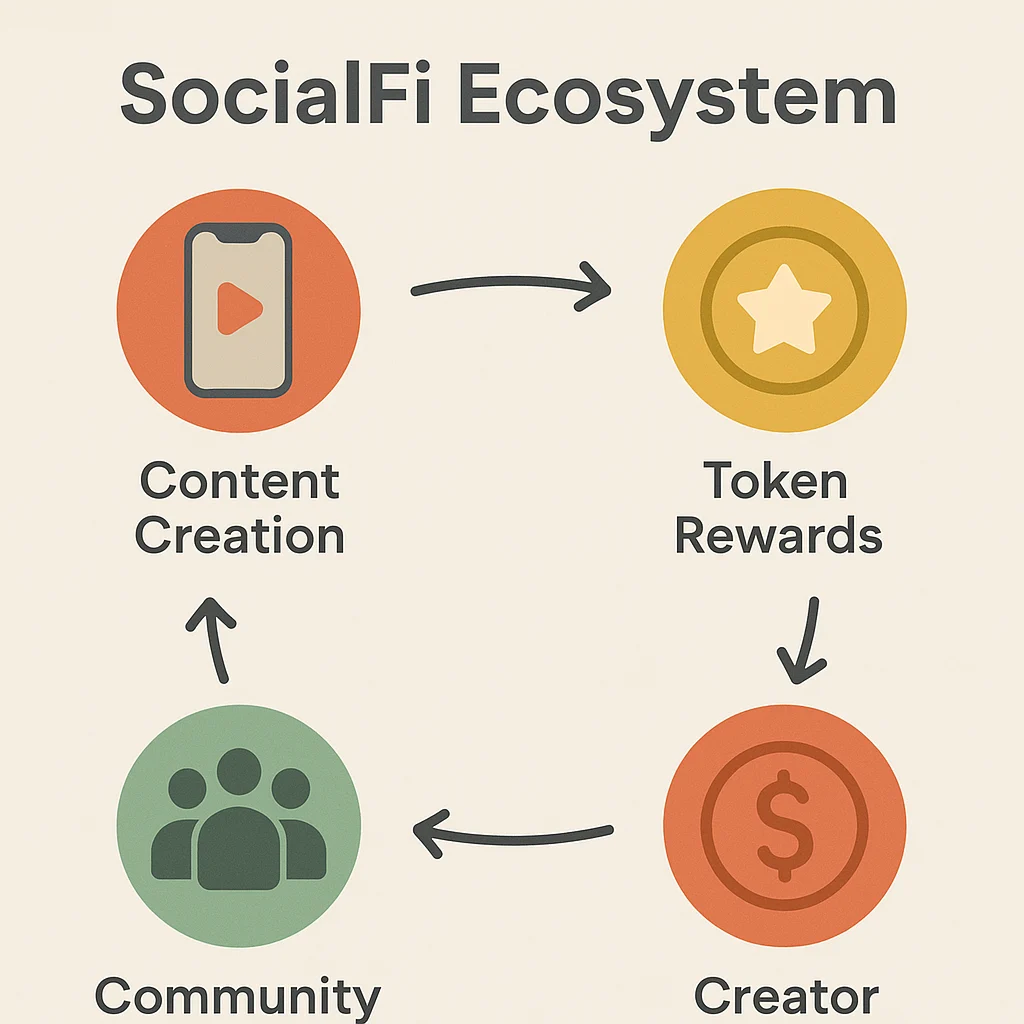
Infographic showing the SocialFi ecosystem with stages: content creation, token rewards, community governance, and creator monetization

Governance participation gives community members voting power over platform rules, feature development, and treasury allocation based on their contributions.

[IMAGE: SocialFi ecosystem showing content creation → token rewards → community governance → creator monetization]

Real-World Examples

  • Friend.tech enables trading shares of social media influencers with price discovery based on popularity
  • Lens Protocol provides decentralized social networking with composable profiles and monetization
  • BitClout (now DeSo) created social tokens tied to individual creators’ influence

Why Beginners Should Care

Direct monetization opportunities for content creators without relying on advertising revenue or platform algorithm changes that affect reach.

Ownership benefits as users control their social graphs, content, and earnings rather than being subject to centralized platform policies.

Speculation risks when social tokens become investment vehicles rather than utility tokens, creating unsustainable economic models.

Related Terms: Social Token, Community Governance, Token Incentives

Back to Crypto Glossary

Similar Posts

  • Token Delisting

    Token Delisting: Removal from Trading PlatformsToken delisting occurs when exchanges remove cryptocurrencies from their trading platforms. It's like a store deciding to stop selling a particular product and removing it from their shelves.Token delisting refers to the removal of cryptocurrency tokens from exchange trading platforms, making them unavailable for purchase or sale on those specific…

  • Over-Collateralization

    Over-Collateralization: Excess Security DepositsOver-collateralization requires borrowers to deposit assets worth more than their loan amount as security against default. It's like putting down a $15,000 deposit to borrow $10,000, ensuring the lender is protected even if asset values decline.Over-collateralization refers to requiring collateral deposits that exceed the value of loans or borrowed assets, providing additional…

  • Minting

    Minting: Creating New Tokens or NFTs Minting is the moment digital assets come into existence. Whether it’s new cryptocurrency tokens or unique NFTs, minting transforms code into valuable digital property. Minting is the process of creating new tokens or NFTs by executing a smart contract function that adds them to a blockchain. It’s like printing…

  • Staking Rewards

    Staking Rewards: Earning from Network Security Staking rewards compensate users for locking up cryptocurrency to help secure proof-of-stake networks. It’s like earning interest for helping guard the bank vault. Staking rewards are cryptocurrency payments earned by users who lock up tokens to participate in proof-of-stake network consensus and security. These rewards incentivize honest participation while…

  • Execution Environment

    Execution Environment: Runtime for Smart ContractsAn execution environment provides the runtime infrastructure where smart contracts and decentralized applications operate. It's like the operating system that runs your computer programs.An execution environment is the runtime infrastructure that executes smart contracts and processes transactions on blockchain networks. This environment defines how code runs, what resources are available, and…

  • Profit Taking

    Profit Taking: Realizing Investment GainsProfit taking involves selling cryptocurrency holdings to lock in gains and convert unrealized profits into actual cash or other assets. It's like cashing out your casino chips while you're ahead.Profit taking refers to the strategic sale of cryptocurrency positions to realize gains and reduce exposure when investments have appreciated in value. This…