
AI Coins

AI Coins: Cryptocurrency Meets Artificial Intelligence

AI coins are cryptocurrencies focused on artificial intelligence applications, data marketplaces, or computational resources for machine learning. They’re betting that AI and crypto will merge into something bigger than both.

AI coins are cryptocurrencies that facilitate artificial intelligence development, deployment, or monetization through decentralized networks. These tokens enable AI model training, data sharing, computational marketplace access, or AI-generated content creation.

How AI Coins Work

Computational marketplaces connect users who need AI processing power with providers who have idle GPU resources, using tokens for payment.

Data monetization enables individuals to sell training data for AI models while maintaining privacy through cryptographic techniques.

Decentralized AI models can be trained and operated across distributed networks, with token incentives for participants who contribute resources.
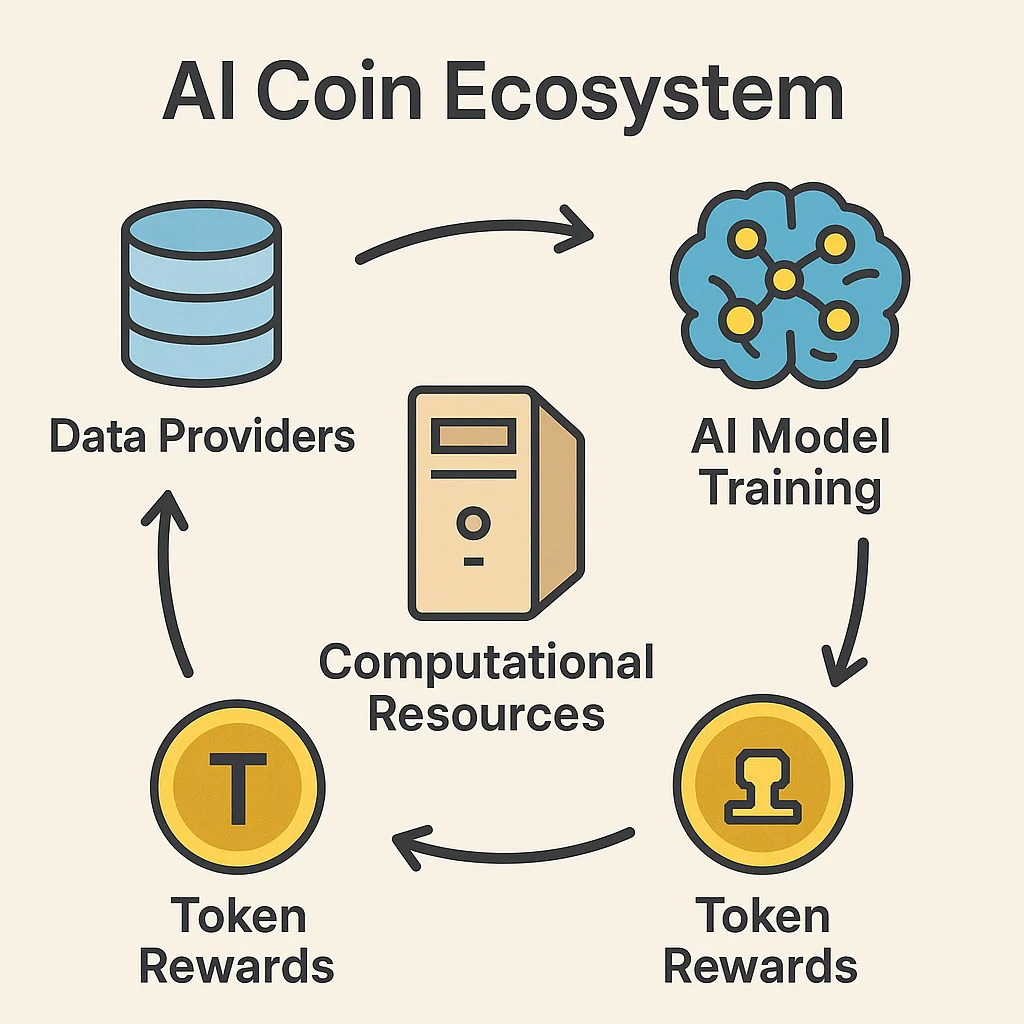
Infographic showing AI coin ecosystem with data providers, computational resources, AI model training, and token rewards flow

Real-World Examples

  • Render Network (RNDR) provides distributed GPU rendering for AI and graphics applications
  • Ocean Protocol creates data marketplaces for AI training while preserving privacy
  • Fetch.ai builds autonomous economic agents that use tokens for AI-driven services

Why Beginners Should Care

Early speculation on AI coin valuations often outpaces actual utility development, creating high volatility and risk for investors.

Real utility potential exists as AI development requires massive computational resources and data that decentralized networks could provide more efficiently.

Regulatory uncertainty around both AI development and cryptocurrency creates additional complexity for projects operating in both spaces.

Related Terms: Utility Token, Data Marketplace, Computational Mining, Decentralized Computing

Back to Crypto Glossary

Similar Posts

  • DeFi Insurance

    DeFi Insurance: Protecting Against Smart Contract Risk DeFi insurance provides coverage against smart contract failures, hacks, and protocol exploits. It’s like buying fire insurance for your digital assets in experimental financial protocols. DeFi insurance offers protection against losses from smart contract bugs, hacks, oracle failures, and other technical risks in decentralized finance protocols. Users pay…

  • NFT (Non-Fungible Token)

    NFT (Non-Fungible Token): Digital Ownership Certificates NFTs transformed JPEGs into million-dollar assets and made digital ownership mainstream. Love them or hate them, they’re reshaping how we think about digital property. A Non-Fungible Token (NFT) is a unique digital certificate stored on a blockchain that proves ownership of a specific digital asset. Unlike cryptocurrencies where each…

  • Smart Contract Risk

    Smart Contract Risk: Code-Based VulnerabilitiesSmart contract risk encompasses all potential vulnerabilities and failures in automated blockchain programs. It's like the risk that the software controlling your digital money might have bugs or be exploited.Smart contract risk refers to potential losses from bugs, vulnerabilities, exploits, or unexpected behavior in smart contract code that controls cryptocurrency assets…

  • Privacy Coin

    Privacy Coin: Digital Cash That Actually Hides Privacy coins use advanced cryptography to hide transaction details like amounts, senders, and receivers. They’re what Bitcoin was supposed to be before everyone realized blockchain transactions are completely transparent. Privacy coins are cryptocurrencies designed to provide anonymous or untraceable transactions through advanced cryptographic techniques. Unlike Bitcoin where all…

  • Whitelisting

    Whitelisting: VIP Access to Token Sales Whitelisting gives select addresses permission to participate in exclusive token sales or access restricted features. It’s crypto’s version of the velvet rope at exclusive clubs. Whitelisting is the process of pre-approving wallet addresses for participation in token sales, exclusive features, or special privileges within crypto projects. Only whitelisted addresses…

  • Dark Web

    Dark Web: Hidden Internet NetworksThe dark web consists of encrypted online networks accessible only through specialized software like Tor. It's where privacy advocates and criminals both hang out, but for very different reasons.The dark web refers to encrypted online content that exists on overlay networks requiring specific software, configurations, or authorization to access. Unlike the regular…