
Market Cap

Market Cap: How to Value Crypto Projects

Market cap tells you how much the entire crypto market values a project. It’s the most important number for comparing different cryptocurrencies.

Market capitalization is the total value of all coins in circulation, calculated by multiplying the current price by the circulating supply. It shows the relative size and importance of different crypto projects.

How Market Cap Works

Simple formula: Current Price × Circulating Supply = Market Cap

A $1 coin with 1 billion circulating supply has the same market cap ($1 billion) as a $1,000 coin with 1 million circulating supply. Price per coin is meaningless without considering supply.

Fully Diluted Market Cap includes all tokens that will ever exist, including those not yet released. This gives a more complete picture of potential future value dilution.
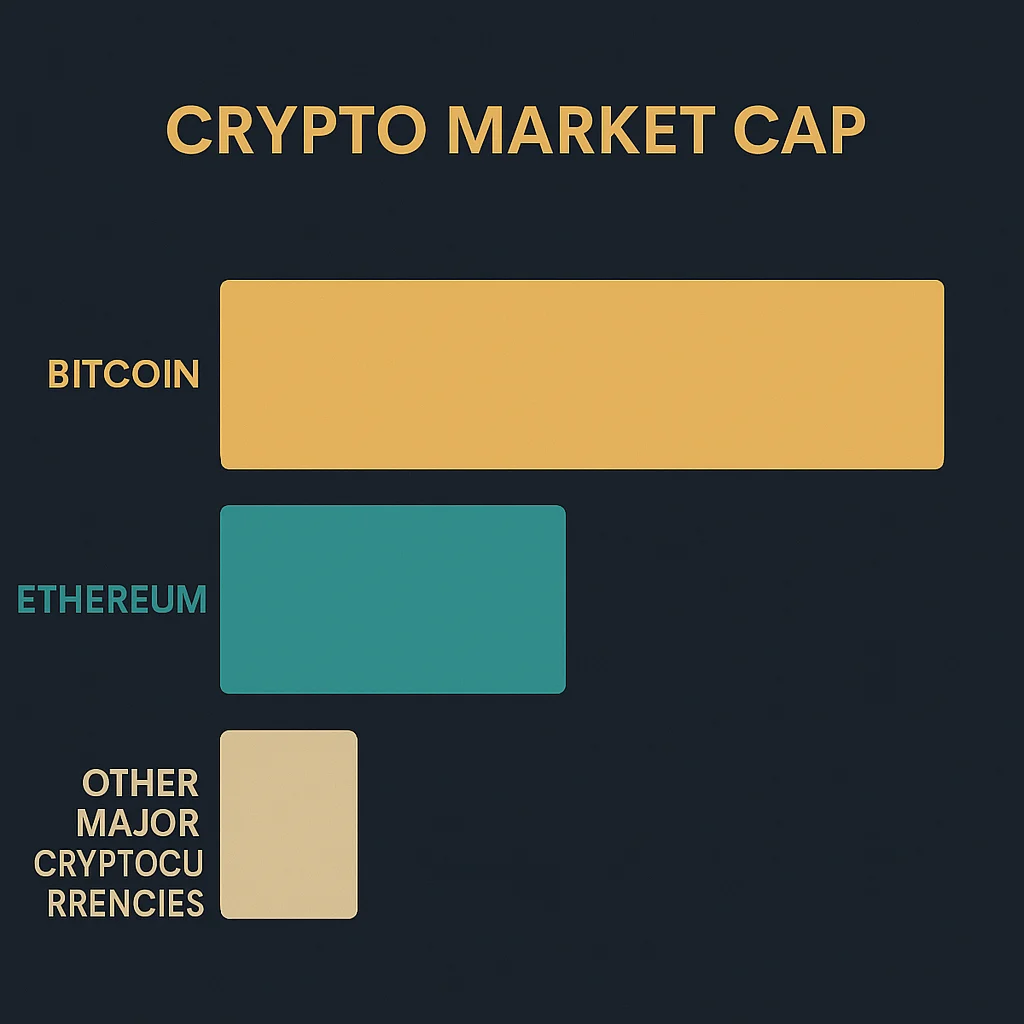
Bar chart comparing market caps of Bitcoin, Ethereum, and other major cryptocurrencies

Real-World Examples

  • Bitcoin – ~$600 billion market cap (19.7M BTC × ~$30K)
  • Ethereum – ~$240 billion market cap (120M ETH × ~$2K)
  • Shiba Inu – $6 billion market cap despite low price due to massive supply

Why Beginners Should Care

Market cap helps you understand realistic price potential. A coin with 100 billion tokens can’t reach $1,000+ per token without exceeding global GDP.

Compare similar projects by market cap, not price. Two DeFi tokens might have different prices, but market cap shows which the market values more highly.

Related Terms: Circulating Supply, Total Supply, Token Economics, Whale

Back to Crypto Glossary

Similar Posts

  • Proof of Burn

    Proof of Burn: Destroying Value for Consensus Proof of Burn requires destroying cryptocurrency to participate in consensus or gain network benefits. It’s like burning money to prove you’re serious about network security. Proof of Burn is a consensus mechanism where participants destroy cryptocurrency by sending it to unrecoverable addresses to gain mining rights or network…

  • Secure Element

    Secure Element: Hardware Security ChipA secure element is a tamper-resistant hardware chip designed to store sensitive information like private keys. It's like having a tiny vault built into your device that's extremely difficult to break into.A secure element is a specialized hardware component designed to provide isolated, tamper-resistant storage and processing for sensitive data such…

  • Circulating Supply

    Circulating Supply: Tokens Available for TradingCirculating supply represents the number of cryptocurrency tokens currently available for public trading and use. It's like counting how much money is actually in circulation versus locked away.Circulating supply refers to the number of cryptocurrency tokens that are publicly available and actively trading in the market. This excludes tokens that are…

  • Public Key

    Public Key: Your Crypto Receiving Address Your public key is like your email address for crypto – you can share it freely without security concerns. A public key is cryptographically derived from your private key and generates your wallet addresses where others can send you cryptocurrency. It’s mathematically linked to your private key but reveals…

  • L2 Sequencer

    L2 Sequencer: Transaction Ordering Engine L2 sequencers determine transaction order on Layer 2 networks, controlling which transactions get included and how they’re arranged. They’re like traffic controllers for blockchain highways. An L2 sequencer is a specialized node that collects, orders, and batches transactions for Layer 2 networks before submitting them to the main blockchain. Sequencers…

  • Tokenization

    Tokenization: Converting Assets into Digital Tokens Tokenization transforms real-world assets into blockchain-based tokens that can be traded, divided, and managed digitally. It’s like turning everything into tradeable game pieces. Tokenization is the process of converting ownership rights to assets into digital tokens on a blockchain. This enables fractional ownership, easier trading, and programmable functionality for…