
Liquidity

Liquidity: How Easily You Can Buy or Sell

Liquidity determines whether you can actually trade your crypto at fair prices. High liquidity means smooth trading. Low liquidity means getting rekt by slippage.

Liquidity refers to how easily an asset can be bought or sold without significantly affecting its price. In crypto markets, liquidity comes from active buyers and sellers providing depth to order books or automated market makers.

How Liquidity Works

Order book depth shows how many buy and sell orders exist at different price levels. Deep order books allow large trades without major price impact.

Market makers provide liquidity by continuously offering to buy and sell at slightly different prices, earning the spread between bid and ask prices.

Liquidity pools in DeFi protocols replace traditional order books with algorithmic market making, allowing trades against pooled assets rather than specific counterparties.
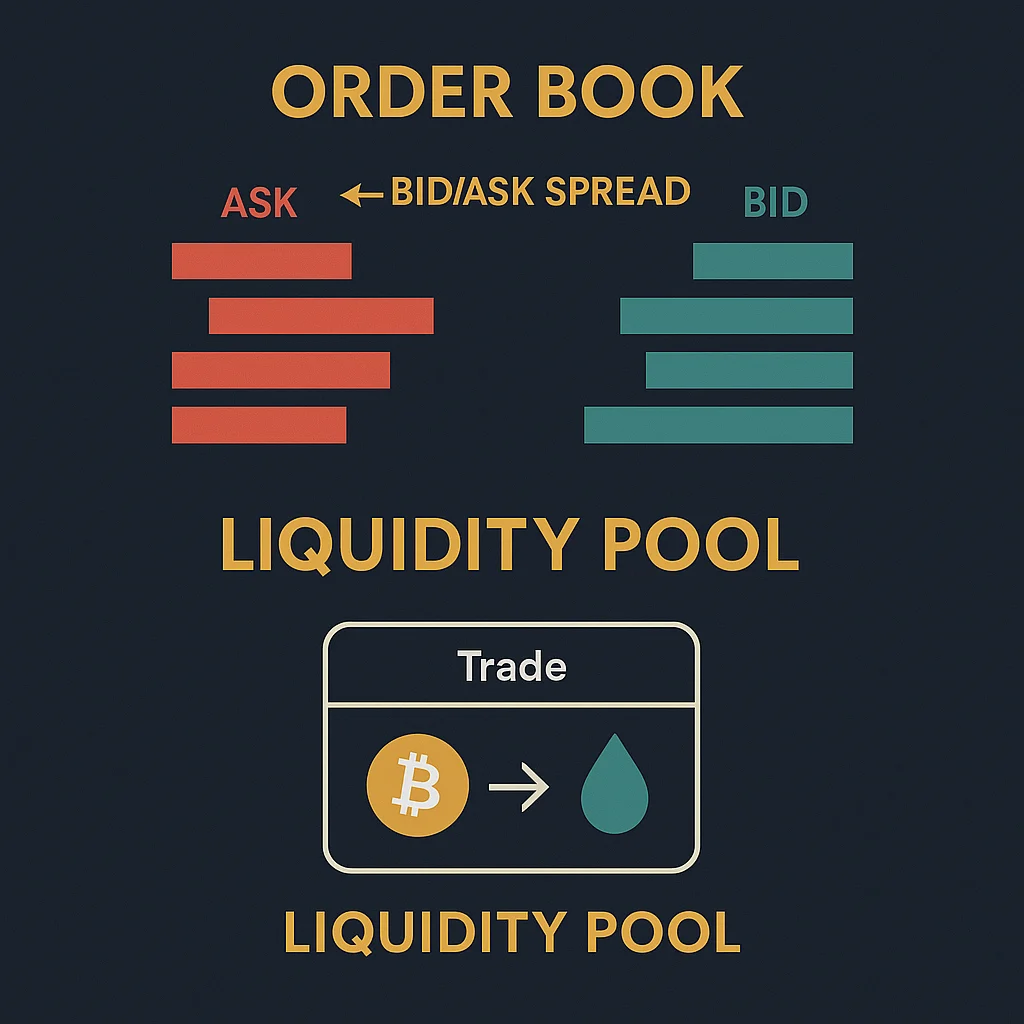
Comparison chart showing order book bid/ask depth and liquidity pool trading interface

Real-World Examples

  • Bitcoin/USD pairs have deep liquidity on major exchanges with tight spreads
  • Small altcoins often have wide spreads and high slippage on trades
  • Uniswap pools provide 24/7 liquidity through automated market makers

Why Beginners Should Care

Poor liquidity means you can’t exit positions quickly without losing money to slippage. A 10% price move might cost you 15% if there’s insufficient liquidity to absorb your trade.

Check spreads before trading smaller coins. Wide bid-ask spreads indicate poor liquidity that will cost you money on every trade.

Major exchanges like Kraken typically offer better liquidity for popular trading pairs than smaller platforms.

Related Terms: Slippage, Market Maker, Order Book, Liquidity Pool

Back to Crypto Glossary

Similar Posts

  • Supply Schedule

    Supply Schedule: Token Issuance TimelineA supply schedule defines when and how many new tokens will be created over time. It's like a release calendar that shows exactly when new cryptocurrency will enter circulation.A supply schedule is a predetermined plan that specifies the timing and quantity of new token issuance over time. This schedule provides transparency about…

  • Metadata

    Metadata: Data About DataMetadata provides information about other data, such as describing what an NFT represents, when it was created, or what properties it has. It's like the label on a file folder that tells you what's inside.Metadata refers to descriptive information about digital assets, transactions, or other data that provides context, properties, and characteristics…

  • Cold Wallet

    Cold Wallet Backup: Securing Your Security Cold wallet backup ensures you can recover your cryptocurrency even if your hardware wallet is lost, stolen, or destroyed. It’s like having spare keys to your safe deposit box. Cold wallet backup refers to secure storage methods for seed phrases and recovery information that enable restoring access to hardware…

  • Conservative Investing

    Conservative Investing: Low-Risk Investment ApproachConservative investing prioritizes capital preservation and steady returns over high-risk, high-reward strategies. It's like choosing the scenic route that takes longer but is much safer than the dangerous mountain pass.Conservative investing refers to investment strategies that prioritize capital preservation and risk reduction over maximum returns, typically focusing on established assets and…

  • Pump and Dump

    Pump and Dump: Coordinated Market Manipulation Pump and dump schemes are crypto’s version of old-school stock manipulation. Coordinated groups artificially inflate prices, then dump on unsuspecting victims. A pump and dump is a form of market manipulation where a group artificially inflates an asset’s price through coordinated buying and false promotion, then sells at peak…

  • Chain Split

    Chain Split: Blockchain Network DivisionA chain split occurs when a blockchain network divides into multiple incompatible chains, often due to disagreements about protocol changes. It's like a road splitting into different paths that can't be merged back together.A chain split refers to the division of a blockchain network into two or more incompatible chains, typically…