
Pump and Dump

Pump and Dump: Coordinated Market Manipulation

Pump and dump schemes are crypto’s version of old-school stock manipulation. Coordinated groups artificially inflate prices, then dump on unsuspecting victims.

A pump and dump is a form of market manipulation where a group artificially inflates an asset’s price through coordinated buying and false promotion, then sells at peak prices while others lose money. It’s illegal in traditional markets but common in unregulated crypto spaces.

How Pump and Dumps Work

Coordination happens through private Telegram groups, Discord servers, or social media. Organizers choose low-cap tokens that are easy to manipulate with relatively small amounts of capital.

The pump phase involves simultaneous buying to rapidly increase price while spreading hype through social media. FOMO kicks in as external buyers see the rapid price increase.

The dump phase sees coordinated selling by insiders while continuing to promote the token publicly. Late buyers are left holding worthless tokens as organizers cash out.
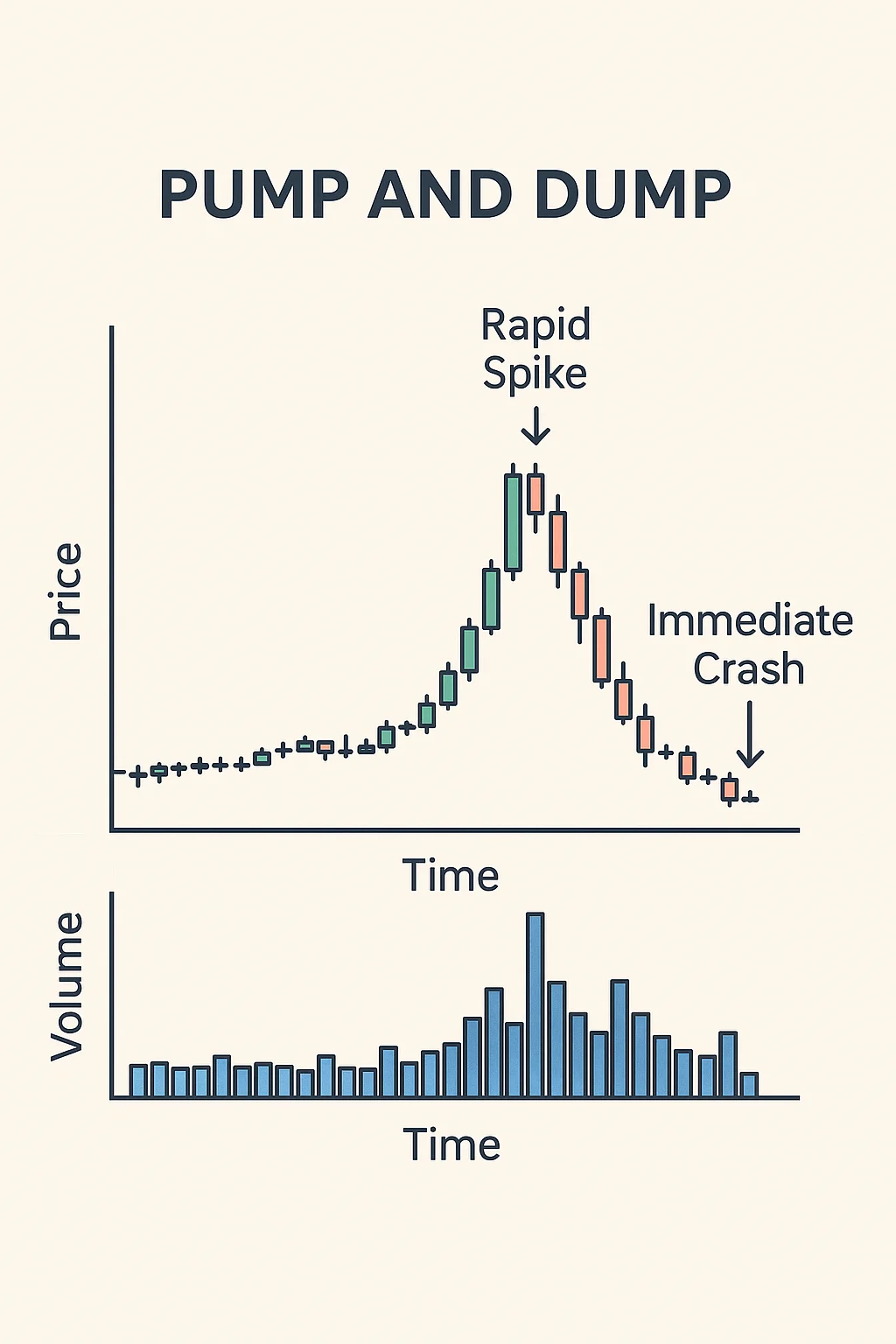
Price chart showing pump and dump pattern with rapid spike, immediate crash, and volume bars

Real-World Examples

  • Telegram pump groups targeting small-cap altcoins with coordinated buy signals
  • Celebrity endorsements of meme coins followed by immediate selling
  • Social media campaigns using bots to create artificial buzz around chosen tokens

Why Beginners Should Care

Pump and dumps prey on FOMO and inexperienced traders. If you see sudden 500%+ price increases with no fundamental news, it’s likely manipulation.

Red flags include anonymous teams, no real utility, sudden social media buzz, and promises of guaranteed returns. Legitimate projects build value gradually through development and adoption.

Never chase parabolic price movements or join groups promising coordinated buying. You’re more likely to be the exit liquidity than the profiteer.

Related Terms: FOMO, Market Manipulation, Whale, Rug Pull

Back to Crypto Glossary

Similar Posts

  • L2 Sequencer

    L2 Sequencer: Transaction Ordering Engine L2 sequencers determine transaction order on Layer 2 networks, controlling which transactions get included and how they’re arranged. They’re like traffic controllers for blockchain highways. An L2 sequencer is a specialized node that collects, orders, and batches transactions for Layer 2 networks before submitting them to the main blockchain. Sequencers…

  • Self-Custody

    Self-Custody: Direct Asset ControlSelf-custody means personally controlling your cryptocurrency private keys rather than trusting third parties to hold your assets. It's like keeping cash in your own safe instead of depositing it in someone else's bank account.Self-custody refers to the practice of personally maintaining control over cryptocurrency private keys and digital assets without relying on…

  • dApp Browser

    dApp Browser: Gateway to Decentralized Apps dApp browsers enable easy access to decentralized applications through integrated wallet functionality and Web3 connectivity. They’re like having a web browser that speaks cryptocurrency natively. A dApp browser is a specialized web browser or application that integrates cryptocurrency wallet functionality to seamlessly interact with decentralized applications. These browsers handle…

  • Risk Management

    Risk Management: Protecting Your InvestmentsRisk management involves identifying, assessing, and controlling potential losses in cryptocurrency investments and activities. It's like wearing a seatbelt while driving through volatile markets.Risk management encompasses strategies and practices used to minimize potential losses and protect capital while participating in cryptocurrency markets. Effective risk management balances potential returns with acceptable loss levels.How…

  • Difficulty

    Difficulty: Mining Competition AdjustmentDifficulty refers to how hard it is to mine new blocks in proof-of-work cryptocurrencies, automatically adjusting to maintain consistent block times. It's like a video game that gets harder when you're doing too well and easier when you're struggling.Difficulty describes the measure of how computationally challenging it is to find valid proof-of-work…

  • Dispute Resolution

    Dispute Resolution: Solving Blockchain ConflictsDispute resolution mechanisms help resolve conflicts that arise in decentralized systems where no central authority can make binding decisions. It's like having a digital court system.Dispute resolution in blockchain systems refers to mechanisms for resolving conflicts between parties in decentralized environments where traditional legal systems may be inadequate or unavailable. These systems…