
Hot Wallet

Hot Wallet: Convenience Over Security

Hot wallets are your everyday crypto spending accounts. They’re connected to the internet for easy access, but that convenience comes with security trade-offs.

A hot wallet is a cryptocurrency wallet that maintains an active internet connection, allowing for quick and easy transactions. Think of it as your crypto checking account – convenient for daily use but not where you store your life savings.

How Hot Wallets Work

Software wallets on your phone or computer are the most common hot wallets. Apps like MetaMask, Trust Wallet, and Coinbase Wallet connect to the internet for seamless DeFi interactions.

Exchange wallets are also hot wallets, though you don’t control the private keys. The exchange manages the wallet infrastructure while you access funds through their interface.

Browser extensions like MetaMask inject wallet functionality into websites, enabling one-click connections to DeFi protocols and NFT marketplaces.
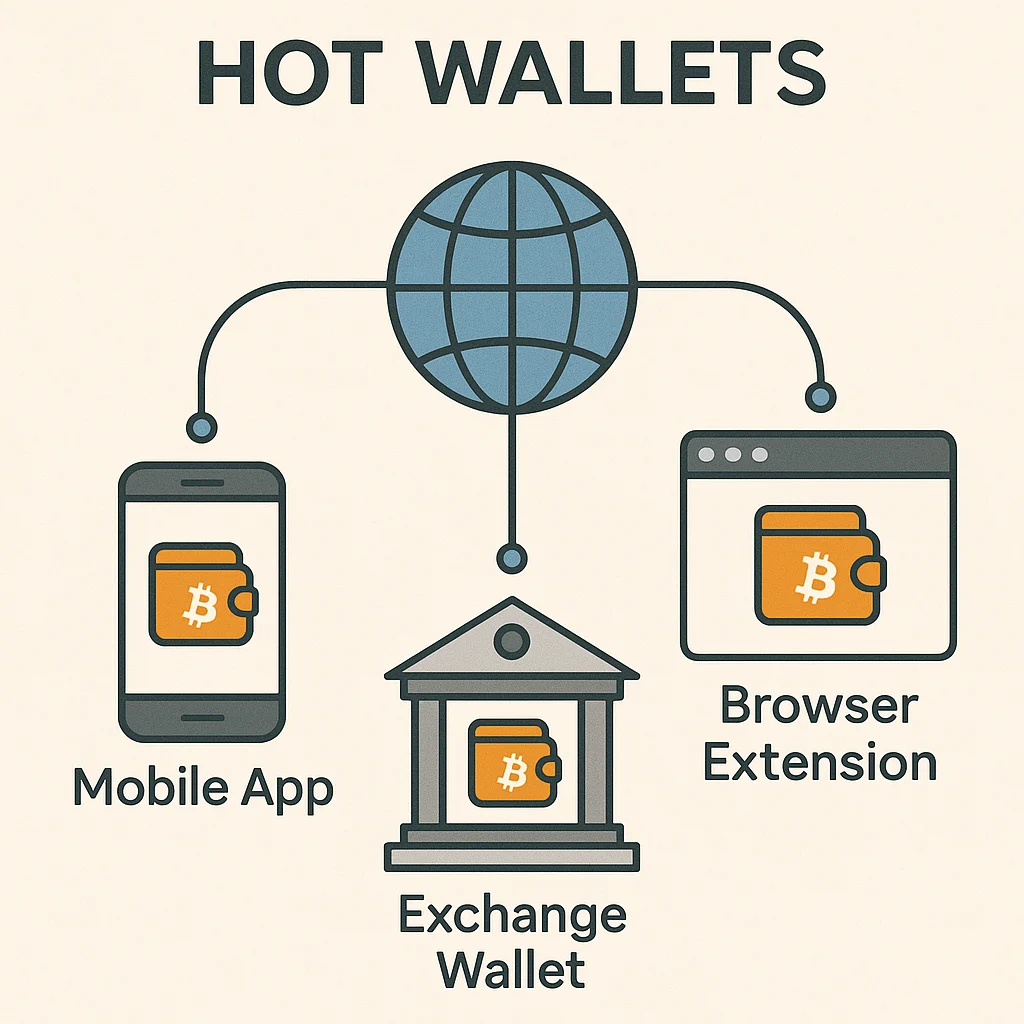
Diagram showing hot wallets like mobile apps, browser extensions, and exchange wallets connected to the internet

Real-World Examples

  • MetaMask – Most popular browser extension wallet for Ethereum DeFi
  • Trust Wallet – Mobile-first wallet supporting multiple blockchains
  • Phantom – Leading Solana ecosystem hot wallet

Why Beginners Should Care

Hot wallets make crypto usable for daily transactions and DeFi interactions. Without them, every transaction would require connecting hardware wallets – tedious for active trading.

Security trade-offs are real. Hot wallets are vulnerable to malware, phishing attacks, and device theft. Never store large amounts in hot wallets long-term.

Best practice: Use hot wallets for small amounts and active trading, cold storage for long-term holdings. It’s like carrying spending money in your physical wallet while keeping savings in the bank.

Related Terms: Cold Wallet, MetaMask, Private Key, DeFi

Back to Crypto Glossary

Similar Posts

  • Counterparty Risk

    Counterparty Risk: Trusting Others with Your MoneyCounterparty risk is the chance that the other party in a financial transaction won't fulfill their obligations. In crypto, it's the difference between self-custody and hoping someone else doesn't lose your money.Counterparty risk refers to the probability that the other party in a financial transaction will default on their…

  • Scalability

    Scalability: Handling Growing Network DemandScalability refers to a blockchain network's ability to handle increasing transaction volumes without degrading performance or significantly increasing costs. It's like building highways that don't get congested as more cars use them.Scalability describes how well blockchain networks can accommodate growing user bases and transaction volumes while maintaining reasonable fees and confirmation…

  • Spam

    Spam: Unwanted Blockchain TransactionsSpam in cryptocurrency refers to unwanted or low-value transactions that clog networks and waste resources. It's like junk mail but for blockchain networks.Spam consists of unwanted transactions, messages, or data that consume network resources without providing legitimate value. These activities can degrade network performance and increase costs for legitimate users.How Crypto Spam WorksNetwork…

  • Altcoin

    Altcoin: Every Cryptocurrency That Isn’t Bitcoin “Altcoin” literally means “alternative to Bitcoin.” Some are innovative improvements, others are marketing experiments, and many are outright scams. An altcoin is any cryptocurrency other than Bitcoin. The term covers everything from Ethereum’s smart contract platform to obscure meme coins with dog themes. How Altcoins Work Each altcoin attempts…

  • Exchange

    Exchange: Where Crypto Gets Bought and Sold Crypto exchanges are the on-ramps to digital money. But not all exchanges are created equal – some prioritize security, others prioritize profits. A cryptocurrency exchange is a platform where you can buy, sell, and trade cryptocurrencies using traditional money or other digital assets. Think of it as a…

  • SegWit

    SegWit: Bitcoin's Transaction Efficiency UpgradeSegregated Witness (SegWit) is a Bitcoin protocol upgrade that increased transaction capacity by separating signature data from transaction data. It's like reorganizing luggage to fit more in the same space.SegWit (Segregated Witness) is a Bitcoin protocol upgrade that moves signature data outside the main transaction block, effectively increasing block capacity and…