
Private Key

Private Key: Your Crypto’s Secret Password

Your private key is the most important thing you’ll ever own in crypto. Lose it, and your money’s gone forever. No customer service number to call.

A private key is a secret code that proves you own your cryptocurrency and allows you to spend it. It’s like the combination to a safe – except this safe holds digital money and there’s no locksmith if you forget the combination.

How Private Keys Work

Think of your private key as a super-long password – typically 256 characters of random letters and numbers. This key mathematically generates your wallet address (where people send you crypto) and creates digital signatures to authorize transactions.

Your private key never leaves your device when done right. It signs transactions locally, then broadcasts the signed transaction to the network.
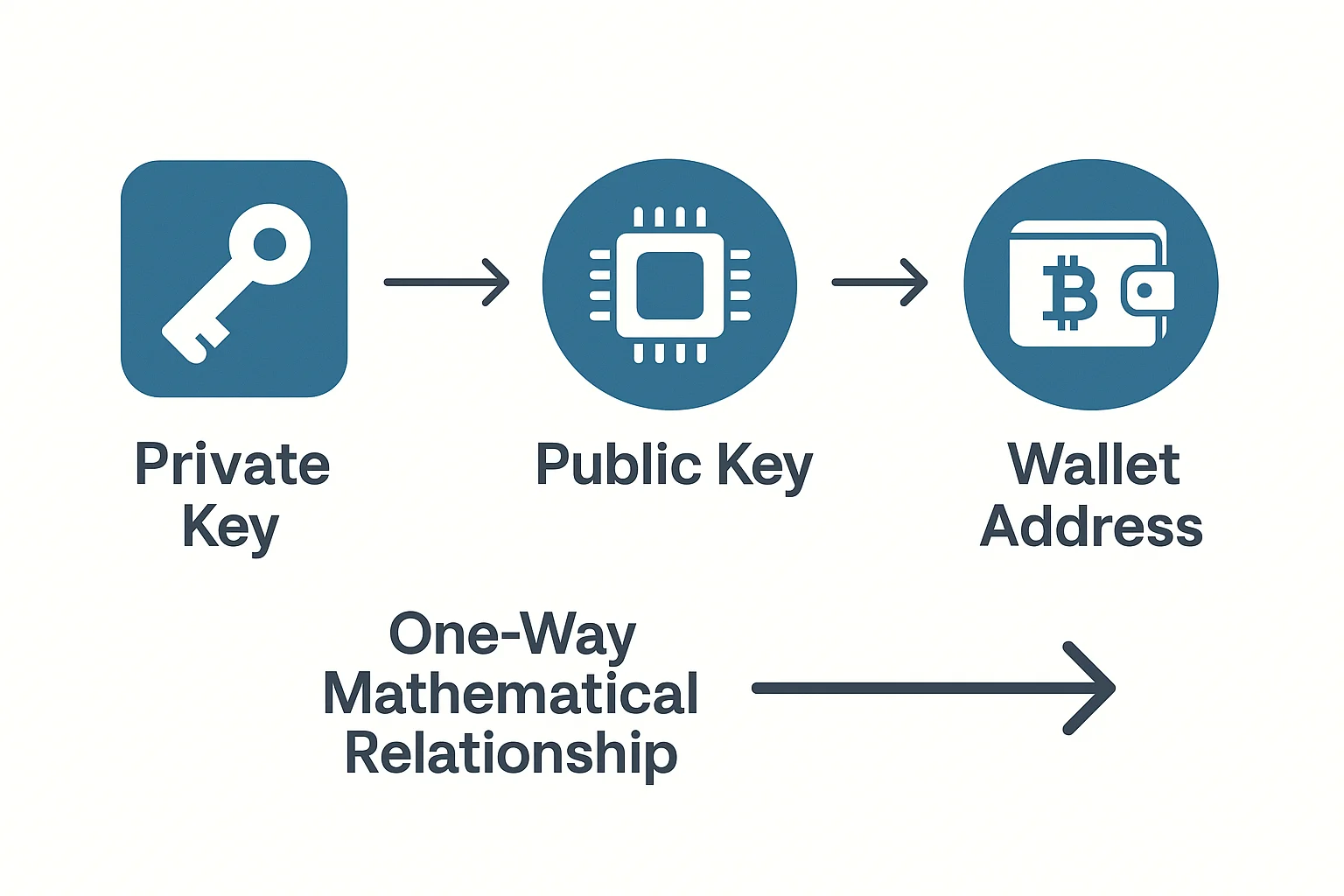
Diagram showing how a private key generates a public key and wallet address in a one-way relationship

Real-World Examples

  • Hardware wallets like Ledger store your private keys offline in secure chips
  • Paper wallets have private keys printed as QR codes
  • Software wallets encrypt your private keys with passwords

Why Beginners Should Care

“Not your keys, not your crypto” – this phrase exists because exchanges and online wallets hold your private keys for you. If they get hacked, go bankrupt, or freeze your account, you’re out of luck.

Smart crypto users graduate from exchanges to self-custody. Hardware wallets like the Ledger Nano series keep your private keys secure and offline, giving you true ownership of your funds.

Related Terms: Public Key, Seed Phrase, Hardware Wallet, Cold Storage

Back to Crypto Glossary

Similar Posts

  • Token Allocation

    Token Allocation: Distributing Digital AssetsToken allocation determines how cryptocurrency tokens are distributed among different stakeholders like teams, investors, and communities. It's the blueprint for who gets what in crypto projects.Token allocation refers to the distribution plan for cryptocurrency tokens among various stakeholder groups including development teams, early investors, community members, and ecosystem development funds. This distribution…

  • Dark Web

    Dark Web: Hidden Internet NetworksThe dark web consists of encrypted online networks accessible only through specialized software like Tor. It's where privacy advocates and criminals both hang out, but for very different reasons.The dark web refers to encrypted online content that exists on overlay networks requiring specific software, configurations, or authorization to access. Unlike the regular…

  • Liquid Restaking

    Liquid Restaking: Flexible High-Yield Staking Liquid restaking combines the capital efficiency of liquid staking with additional yield from securing multiple networks. It’s like having your cake and eating it too, but with slashing risks. Liquid restaking allows staked assets to secure additional protocols while remaining liquid through tokenized representations. Users can earn enhanced yields from…

  • Wei

    Wei: Ethereum's Smallest UnitWei is the smallest denomination of Ethereum, similar to how cents are the smallest unit of dollars. It's like measuring distances in millimeters when you need precision, even though we usually think in meters or kilometers.Wei represents the smallest possible unit of Ethereum (ETH), with one ETH equal to 1,000,000,000,000,000,000 (10^18) wei. This…

  • Community

    Community: Decentralized Project StakeholdersCommunity refers to the users, developers, investors, and supporters who participate in and contribute to cryptocurrency projects. They're like the citizens of a digital nation working toward common goals.Community encompasses all stakeholders who participate in cryptocurrency projects including users, developers, investors, validators, and supporters who collectively contribute to project success. Strong communities drive…

  • Flash Mint

    Flash Mint: Temporary Token Creation Flash mints create tokens temporarily within single transactions that must be returned or burned before the transaction completes. It’s like borrowing inventory that must be returned instantly. Flash minting allows creating large amounts of tokens temporarily within a single transaction, provided they are burned or properly backed before the transaction…