
Public Ledger

Public Ledger: Transparent Transaction Records

Public ledgers record all transactions transparently where anyone can verify the complete history of asset movements. It’s like having a bank statement that everyone can read but no one can forge.

A public ledger is a distributed database that records all transactions transparently, allowing anyone to verify and audit the complete history of asset transfers without requiring trust in central authorities. Blockchain networks maintain these ledgers through consensus mechanisms.

How Public Ledgers Work

Transparent recording makes all transactions visible to anyone who wants to examine the network’s transaction history and current state.

Immutable history prevents alteration of past records through cryptographic hashing and consensus mechanisms that make tampering detectable.

Verification capability enables anyone to independently confirm transaction validity and account balances without trusting intermediaries.
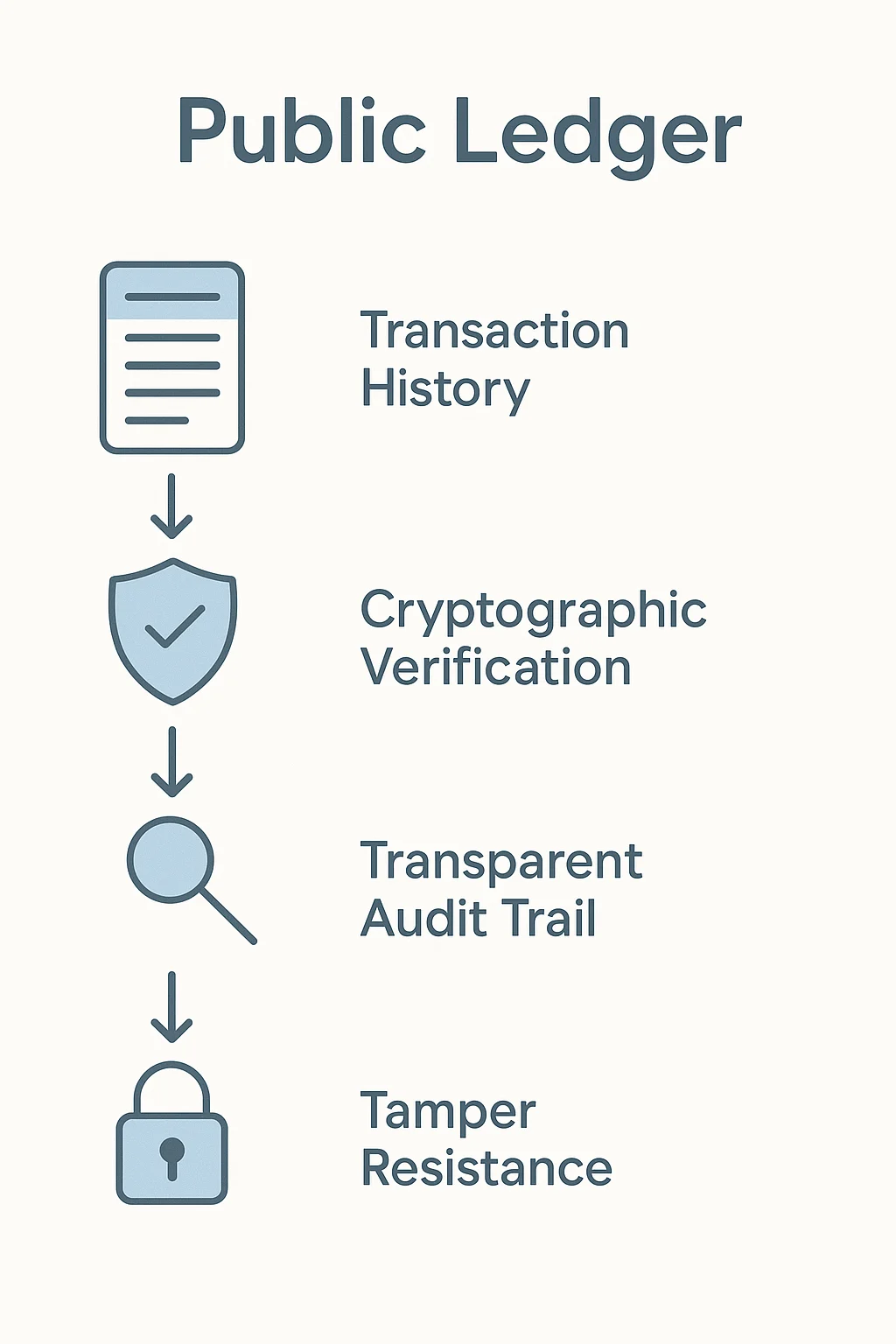
Infographic showing public ledger steps: transaction history, cryptographic verification, audit trail, tamper resistance

Real-World Examples

  • Bitcoin blockchain records every transaction since the genesis block in 2009
  • Ethereum ledger tracks all ETH transfers and smart contract interactions publicly
  • Block explorers like Etherscan provide user-friendly interfaces for examining public ledger data

Why Beginners Should Care

Trust elimination through transparency means you don’t need to trust banks or institutions to verify account balances and transaction history.

Privacy considerations since public ledgers reveal transaction patterns and balances, though personal identities may remain pseudonymous.

Audit capabilities enable independent verification of cryptocurrency supply, distribution, and transaction validity by anyone with internet access.

Related Terms: Blockchain, Transparency, Immutability, Verification

Back to Crypto Glossary

Similar Posts

  • Scalability

    Scalability: Handling Growing Network DemandScalability refers to a blockchain network's ability to handle increasing transaction volumes without degrading performance or significantly increasing costs. It's like building highways that don't get congested as more cars use them.Scalability describes how well blockchain networks can accommodate growing user bases and transaction volumes while maintaining reasonable fees and confirmation…

  • |

    Bridgeless Interop

    Bridgeless Interop: Direct Cross-Chain Communication Bridgeless interoperability enables direct communication between blockchains without traditional bridge infrastructure. It’s like having chains that can talk directly to each other instead of using translators. Bridgeless interoperability refers to cross-chain communication methods that don’t rely on traditional bridge protocols, instead using native blockchain features or specialized infrastructure for direct…

  • Node

    Node: The Network’s Backbone Nodes are individual computers that maintain copies of the blockchain and enforce network rules. They’re the distributed infrastructure that makes cryptocurrency possible. A node is a computer that participates in a blockchain network by maintaining a copy of the distributed ledger and relaying transactions. Nodes validate transactions, store blockchain history, and…

  • Validator Set Rotation

    Validator Set Rotation: Dynamic Network Security Validator set rotation periodically changes which nodes validate transactions, preventing long-term centralization and maintaining network security through diversity. It’s like jury rotation for blockchain consensus. Validator set rotation is a mechanism that periodically changes which validators are active in securing a blockchain network. This prevents permanent centralization and ensures…

  • Protocol Security

    Protocol Security: Protecting Blockchain InfrastructureProtocol security involves designing and maintaining blockchain networks to resist attacks, prevent exploits, and ensure reliable operation. It's like building a fortress with multiple defensive layers.Protocol security encompasses all measures taken to protect blockchain networks from technical attacks, economic manipulation, and operational failures. This includes consensus security, smart contract auditing, and network…

  • Governance Attack

    Governance Attack: Exploiting Democratic Decision SystemsA governance attack involves manipulating blockchain governance mechanisms to make malicious changes to protocols. It's like rigging an election to pass laws that benefit you at everyone else's expense.A governance attack refers to exploiting voting or decision-making mechanisms in blockchain protocols to implement changes that benefit attackers while harming other…