
Peer-to-Peer (P2P)

Peer-to-Peer (P2P): Direct Network Communication

Peer-to-peer networks enable direct communication between participants without central intermediaries. It’s like having a telephone system where everyone connects directly instead of going through switchboard operators.

Peer-to-peer (P2P) refers to network architectures where participants communicate directly with each other rather than through centralized servers or intermediaries. This creates decentralized systems that are more resistant to censorship and single points of failure.

How P2P Networks Work

Direct connections enable participants to communicate, share data, and transact directly without requiring permission from central authorities.

Distributed architecture spreads network functions across many participants rather than concentrating them in centralized infrastructure.

Redundancy benefits ensure network operation continues even if some participants go offline, creating robust and resilient systems.
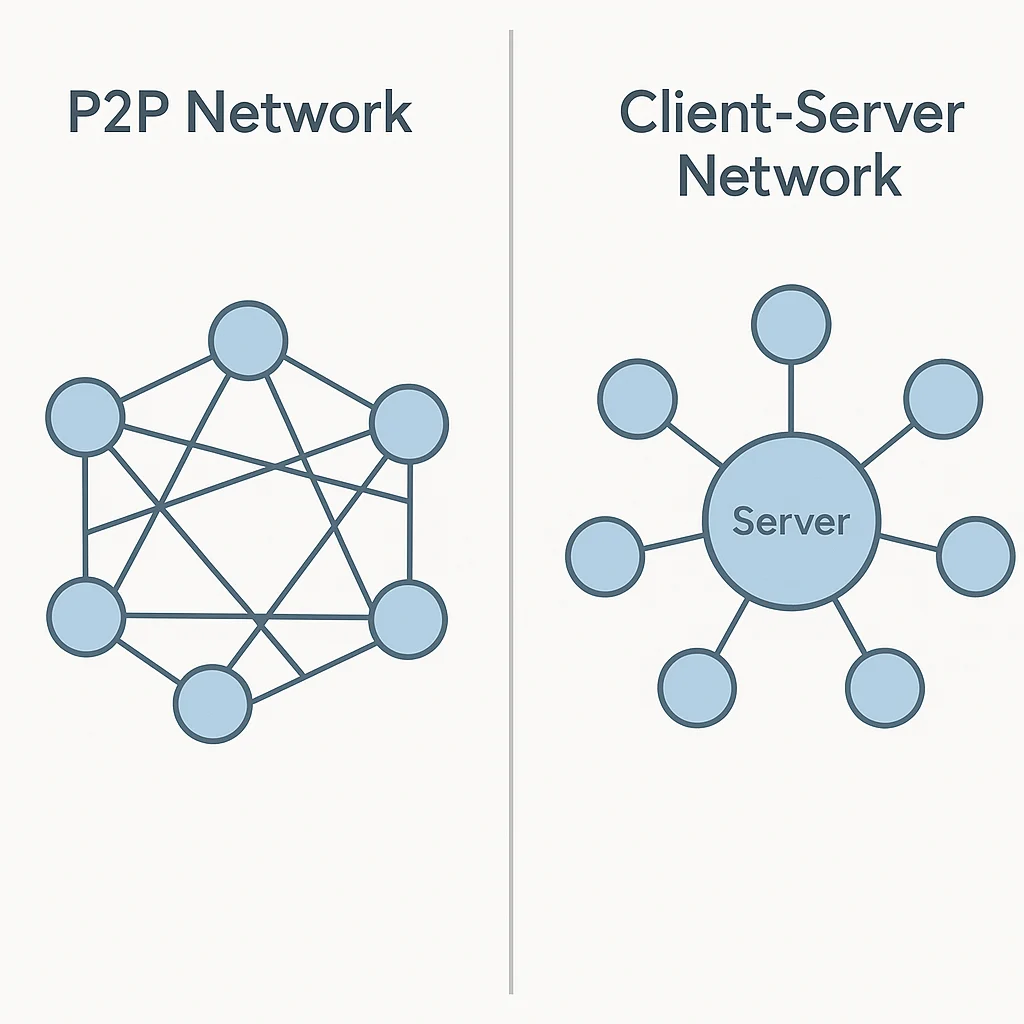
Side-by-side diagram comparing peer-to-peer network and centralized client-server model

Real-World Examples

  • Bitcoin network uses P2P architecture for transaction broadcasting and block propagation
  • BitTorrent enables file sharing through direct connections between users
  • Lightning Network creates P2P payment channels for instant Bitcoin transactions

Why Beginners Should Care

Censorship resistance as P2P networks can operate without central authorities that could block or restrict access.

Reduced dependencies on centralized infrastructure that could fail, be shut down, or impose restrictions on users.

Privacy benefits from direct communication that doesn’t require revealing activity to central monitoring systems.

Related Terms: Decentralization, Node,

Back to Crypto Glossary

Similar Posts

  • |

    Bridgeless Interop

    Bridgeless Interop: Direct Cross-Chain Communication Bridgeless interoperability enables direct communication between blockchains without traditional bridge infrastructure. It’s like having chains that can talk directly to each other instead of using translators. Bridgeless interoperability refers to cross-chain communication methods that don’t rely on traditional bridge protocols, instead using native blockchain features or specialized infrastructure for direct…

  • Private Mempool

    Private Mempool: Protected Transaction PoolsPrivate mempools keep pending transactions hidden from public view until they're included in blocks, preventing front-running and MEV extraction. It's like having a VIP lane that bots can't see.A private mempool is a non-public pool of pending transactions that are not visible to other network participants until they are included in…

  • Block Building

    Block Building: Transaction Assembly ProcessBlock building is the process of selecting and organizing transactions into blocks that will be added to the blockchain. It's like a chef choosing ingredients and assembling them into a complete meal that satisfies both taste and nutritional requirements.Block building refers to the process where miners or validators select, order, and…

  • Validator

    Validator: Proof-of-Stake Network Guardians Validators are the security backbone of proof-of-stake networks. They propose blocks, verify transactions, and earn rewards for honest behavior. A validator is a network participant in proof-of-stake blockchains who validates transactions, proposes new blocks, and maintains network consensus in exchange for staking rewards. Validators replace miners in PoS systems. How Validators…

  • Message Relay

    Message Relay: Cross-Chain Communication HubMessage relay systems transport data and instructions between different blockchain networks. They're like postal services for blockchain messages, ensuring information gets delivered across network boundaries.Message relay refers to infrastructure that enables communication between different blockchain networks by transporting data, transaction proofs, and execution instructions across chain boundaries. These systems enable cross-chain applications…

  • Deflationary

    Deflationary: Decreasing Token Supply Over TimeDeflationary cryptocurrencies have mechanisms that reduce total token supply over time, potentially increasing value through artificial scarcity. It's like having money that becomes rarer automatically.Deflationary refers to cryptocurrency tokenomics designed to decrease total token supply over time through burning, buybacks, or other reduction mechanisms. This creates scarcity pressure that can support…