
AML (Anti-Money Laundering)

AML (Anti-Money Laundering): Fighting Financial Crime

AML regulations force crypto businesses to monitor and report suspicious activities. It’s the government’s attempt to prevent crypto from becoming a money laundering paradise.

Anti-Money Laundering (AML) refers to laws, regulations, and procedures designed to prevent criminals from disguising illegally obtained funds as legitimate income. Crypto exchanges and businesses must implement AML compliance to operate legally.

How AML Works in Crypto

Transaction monitoring systems flag unusual patterns like rapid large deposits, immediate withdrawals, or transactions with known high-risk addresses.

Suspicious Activity Reports (SARs) must be filed with government agencies when exchanges detect potential money laundering. This creates permanent records tied to user identities.

Chain analysis tools track crypto movements across addresses, making it harder to obscure transaction histories compared to traditional cash-based money laundering.
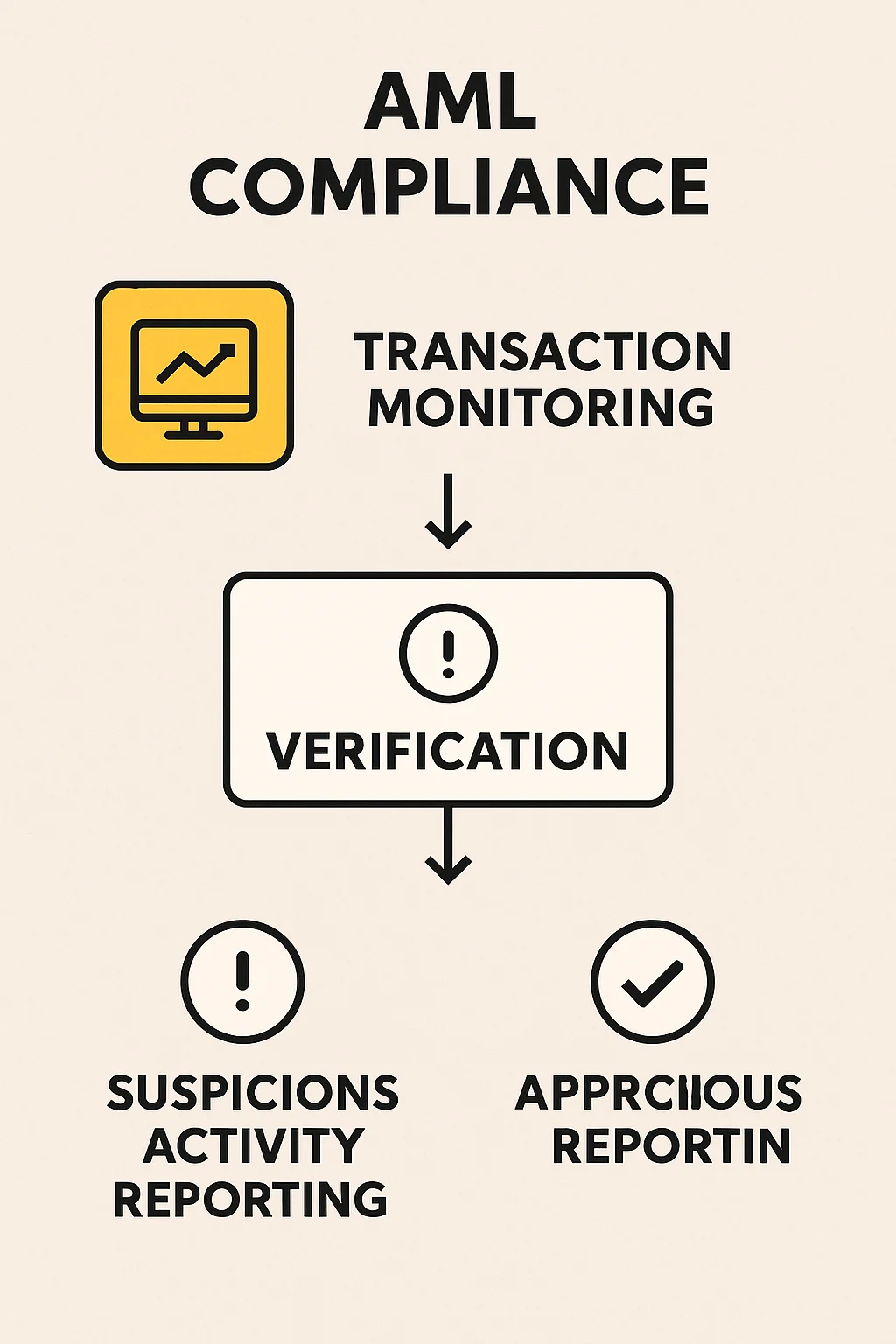
Flowchart showing AML compliance steps: transaction monitoring, risk verification, and suspicious activity reporting

Real-World Examples

  • Binance paid $4.3 billion in fines for AML violations and inadequate compliance
  • Tornado Cash sanctions highlighted tensions between privacy tools and AML enforcement
  • Exchange delistings of privacy coins like Monero due to AML compliance challenges

Why Beginners Should Care

AML compliance affects your crypto experience through identity verification requirements, transaction limits, and account monitoring that can trigger investigations.

Privacy expectations should be adjusted – regulated exchanges share transaction data with governments upon request. True privacy requires decentralized tools with their own risks.

Choose exchanges with strong compliance records like Kraken that balance regulatory requirements with user protection and transparent policies.

Related Terms: KYC, Exchange, Privacy Coin, Regulation

Back to Crypto Glossary

Similar Posts

  • Timelock

    Timelock: Time-Based Access ControlTimelock mechanisms prevent access to funds or functions until predetermined time conditions are met. It's like having a safe that only opens at specific times.A timelock is a smart contract feature that restricts access to funds, functions, or actions until a specified time period has elapsed. These mechanisms provide security through delayed execution…

  • Finality

    Finality: Transaction IrreversibilityFinality refers to the point when blockchain transactions become irreversible and permanently confirmed. It's like when ink dries on a signed contract – the deal is done and can't be changed.Finality is the property of blockchain transactions that ensures they cannot be reversed, modified, or cancelled once confirmed. Different blockchain networks achieve finality through…

  • Transparency

    Transparency: Open Information AccessTransparency in cryptocurrency refers to the open, verifiable nature of blockchain data that allows anyone to inspect transactions and network operations. It's like having buildings made entirely of glass where you can see exactly what's happening inside every room.Transparency describes the property of blockchain systems that makes transaction data, network operations, and…

  • Cross Chain Communication

    Cross Chain Communication: Blockchain Network MessagingCross-chain communication enables different blockchain networks to exchange information and coordinate actions. It's like having universal translators that help different blockchain languages understand each other.Cross-chain communication refers to protocols and technologies that enable different blockchain networks to exchange data, verify states, and coordinate actions across network boundaries. This enables interoperability and…

  • Flash Loan

    Flash Loan: Borrowing Millions Without Collateral Flash loans let you borrow millions of dollars without putting up collateral, but you must pay it back in the same transaction. It’s DeFi’s most mind-bending innovation. A flash loan is an uncollateralized loan that must be borrowed and repaid within a single blockchain transaction. If you can’t repay…

  • Liquidity

    Liquidity: How Easily You Can Buy or Sell Liquidity determines whether you can actually trade your crypto at fair prices. High liquidity means smooth trading. Low liquidity means getting rekt by slippage. Liquidity refers to how easily an asset can be bought or sold without significantly affecting its price. In crypto markets, liquidity comes from…