
Two-Factor Authentication (2FA)

Two-Factor Authentication (2FA): Your Crypto’s Second Lock

2FA is the minimum security standard for any crypto account worth protecting. If you’re not using it, you’re basically leaving your front door unlocked.

Two-factor authentication (2FA) requires two different verification methods to access your account – typically something you know (password) plus something you have (phone or hardware token). It dramatically reduces the risk of account takeovers even if your password is compromised.

How 2FA Works

SMS 2FA sends codes to your phone, but this method is vulnerable to SIM swapping attacks where scammers take control of your phone number.

Authenticator apps like Google Authenticator or Authy generate time-based codes that change every 30 seconds. These are much more secure than SMS since they don’t rely on phone networks.

Hardware tokens like YubiKey provide the highest security by requiring physical possession of the device to generate authentication codes.
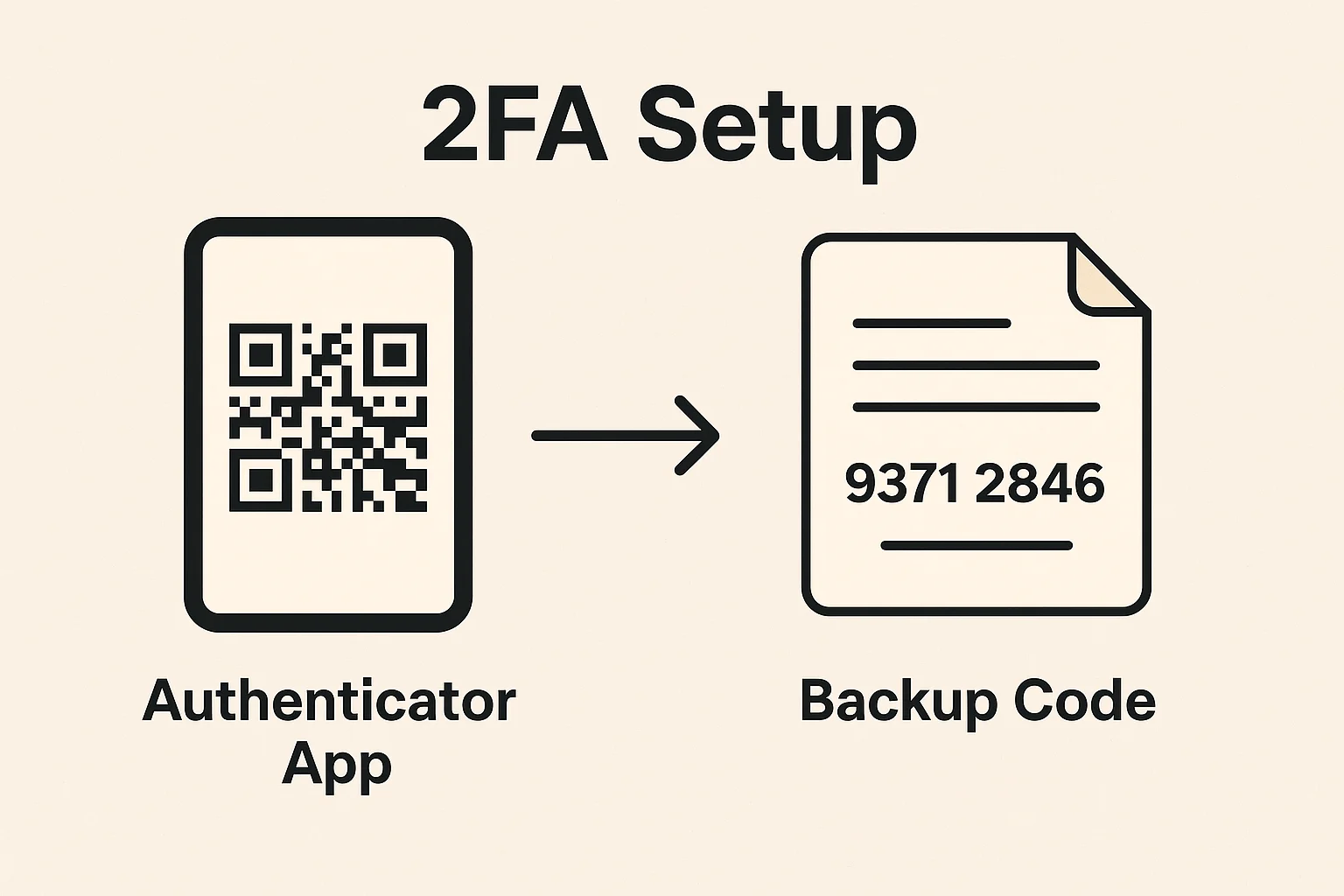
Infographic showing the 2FA setup process with a QR code scanned by an authenticator app and generation of a backup code

Real-World Examples

  • Exchange accounts – Kraken, Coinbase, and Binance all support multiple 2FA methods
  • Wallet apps – MetaMask and other wallets offer 2FA for additional protection
  • DeFi platforms – Some protocols now support 2FA for administrative functions

Why Beginners Should Care

Password breaches happen constantly. If your exchange password gets leaked and you don’t have 2FA enabled, scammers can drain your account in minutes.

Use authenticator apps instead of SMS whenever possible. For high-value accounts, consider hardware keys like YubiKey for maximum security.

Always save your 2FA backup codes in a secure location – if you lose your phone without backups, you could be permanently locked out of your accounts.

Related Terms: Phishing Attack, Hardware Wallet, Exchange, Security

Back to Crypto Glossary

Similar Posts

  • Crypto Vesting Schedule

    Crypto Vesting Schedule: Gradual Token Release Vesting schedules control when team members, investors, or community members can access their allocated tokens. It’s like having a time-locked savings account that prevents dumping. A crypto vesting schedule defines when and how allocated tokens become available for use, typically spreading releases over months or years to prevent market…

  • FUD (Fear, Uncertainty, Doubt)

    FUD: Fear, Uncertainty, and Doubt FUD is FOMO’s evil twin. While FOMO makes you buy at peaks, FUD makes you sell at bottoms. Understanding FUD helps you think clearly when markets panic. FUD stands for Fear, Uncertainty, and Doubt – negative sentiment spread to influence crypto prices downward. Sometimes it’s legitimate concerns, often it’s manufactured…

  • Verifiable Randomness

    Verifiable Randomness: Provably Fair Random NumbersVerifiable randomness provides cryptographically secure random numbers that can be independently verified for fairness. It's like having dice that everyone can mathematically confirm are not loaded.Verifiable randomness refers to random number generation systems that produce unpredictable outputs while providing cryptographic proofs that the randomness is fair and unbiased. This enables trustless…

  • Atomic Swap

    Atomic Swap: Trustless Cross-Chain Trading Atomic swaps enable direct trading between different cryptocurrencies without exchanges or intermediaries. Either both trades complete successfully, or neither happens – no middle ground. An atomic swap is a smart contract technology that enables the exchange of cryptocurrencies from different blockchains without requiring a trusted third party. The swap either…

  • Atomic Transaction

    Atomic Transaction: All-or-Nothing OperationsAn atomic transaction either completes entirely or fails completely, with no partial execution possible. It's like a package deal where you get everything or nothing at all.An atomic transaction is an operation that either succeeds completely or fails entirely, ensuring that all components of a complex transaction execute together or none execute…

  • Liquidity Lock

    Liquidity Lock: Securing Trading LiquidityLiquidity lock prevents withdrawal of trading liquidity for specified time periods to ensure market stability and prevent rug pulls. It's like putting trading funds in a time-locked safe that can't be opened early.Liquidity lock refers to mechanisms that prevent withdrawal of liquidity provider tokens or trading pair liquidity for predetermined time…