
Crypto Vesting Schedule

Crypto Vesting Schedule: Gradual Token Release

Vesting schedules control when team members, investors, or community members can access their allocated tokens. It’s like having a time-locked savings account that prevents dumping.

A crypto vesting schedule defines when and how allocated tokens become available for use, typically spreading releases over months or years to prevent market dumping. Different stakeholders usually have different vesting terms based on their role and contribution timing.

How Vesting Schedules Work

Time-based releases unlock predetermined percentages of tokens at regular intervals, such as monthly or quarterly distributions over 2-4 years.

Cliff periods require waiting a minimum time before any tokens become available, ensuring initial commitment before any rewards are accessible.

Performance milestones may trigger additional unlocks based on project achievements, user adoption, or revenue targets rather than pure time passage.
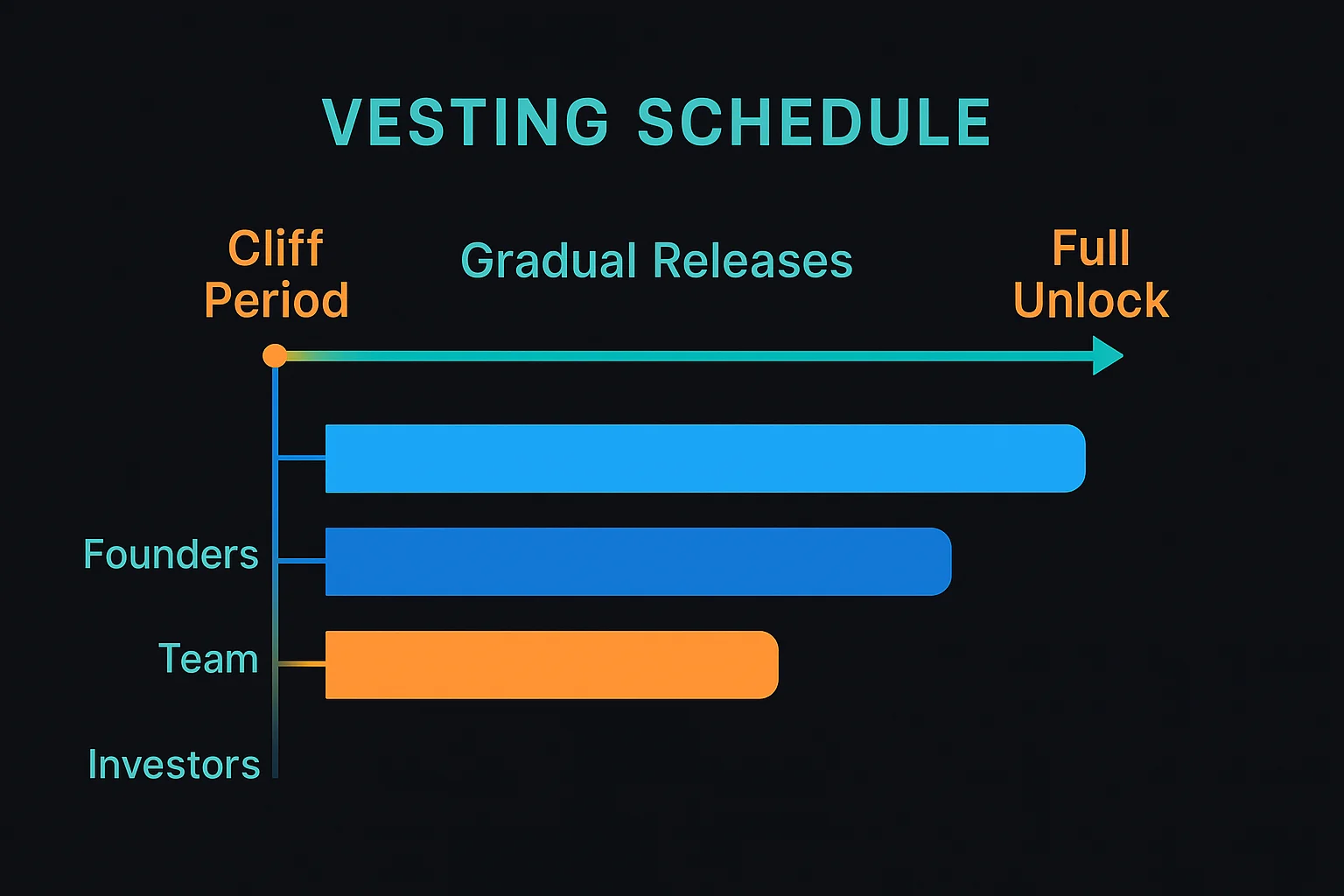
Vesting schedule timeline showing cliff period, gradual token releases, and full unlock across founders, team, and investors

Real-World Examples

  • Team allocations often have 1-year cliffs with 4-year total vesting to ensure long-term commitment
  • Investor tokens may have shorter 6-month cliffs with 2-year vesting periods
  • Community rewards sometimes have no cliffs but longer overall vesting to encourage participation

Why Beginners Should Care

Market pressure understanding helps predict potential selling pressure as large token allocations become available for trading.

Team incentives alignment through long vesting periods suggests teams are committed to long-term project success rather than quick exits.

Investment timing considerations around major vesting events that could significantly impact token prices through increased supply.

Related Terms: Token Allocation, Lock-up Period, Team Incentives, Supply Schedule

Back to Crypto Glossary

Similar Posts

  • Self-Sovereign Identity

    Self-Sovereign Identity: You Own Your Digital SelfSelf-sovereign identity puts you in complete control of your personal data and digital credentials. It's like having a passport that you issue and manage yourself, without needing government approval.Self-sovereign identity (SSI) is a digital identity model where individuals have complete control over their personal data, credentials, and identity verification…

  • 51% Attack

    51% Attack: When Consensus Gets Hijacked A 51% attack occurs when a single entity controls the majority of a network’s mining power or stake, allowing them to manipulate transactions and double-spend coins. A 51% attack is when an individual or group controls more than half of a blockchain network’s mining hash rate or staking power,…

  • Liquidity Sniping

    Liquidity Sniping: Front-Running New Pools Liquidity sniping involves immediately buying tokens when new liquidity pools are created, often using bots to front-run regular users. It’s like cutting in line at the grand opening sale. Liquidity sniping is the practice of using automated systems to immediately purchase tokens as soon as new liquidity pools go live,…

  • Anti-Sybil Mechanism

    Anti-Sybil Mechanism: Preventing Fake Identity Attacks Anti-Sybil mechanisms prevent individuals from creating multiple fake identities to gain unfair advantages in voting, airdrops, or governance systems. They’re like requiring photo ID to prevent ballot stuffing. Anti-Sybil mechanisms are systems designed to prevent or detect when single entities create multiple fake identities to manipulate voting, governance, or…

  • Wallet Address

    Wallet Address: Your Cryptocurrency Bank Account NumberA wallet address is a unique identifier that enables receiving cryptocurrency payments. It's like a bank account number that others can send money to, but it's generated from your private keys.A wallet address is a unique alphanumeric string that serves as a destination for cryptocurrency transactions. These addresses are derived…

  • Public Key

    Public Key: Your Crypto Receiving Address Your public key is like your email address for crypto – you can share it freely without security concerns. A public key is cryptographically derived from your private key and generates your wallet addresses where others can send you cryptocurrency. It’s mathematically linked to your private key but reveals…