
Phishing Attack

Phishing Attack: How Scammers Steal Your Crypto

Phishing attacks are the #1 way people lose crypto. Scammers create fake websites that look identical to real ones, then steal your login credentials and private keys.

A phishing attack is a fraudulent attempt to obtain sensitive information by impersonating a trustworthy entity through fake websites, emails, or messages. In crypto, this usually means fake exchange login pages or wallet connection prompts that steal your credentials.

How Phishing Attacks Work

Fake websites that look identical to popular exchanges or DeFi platforms trick users into entering their passwords or connecting their wallets. The scammer captures this information and drains accounts immediately.

Social engineering often precedes the technical attack. Scammers send urgent emails about “account verification” or “security breaches” to create panic and rush victims into clicking malicious links.

Browser extensions and mobile apps can also be phishing tools, designed to capture wallet interactions and steal private keys when users think they’re using legitimate software.
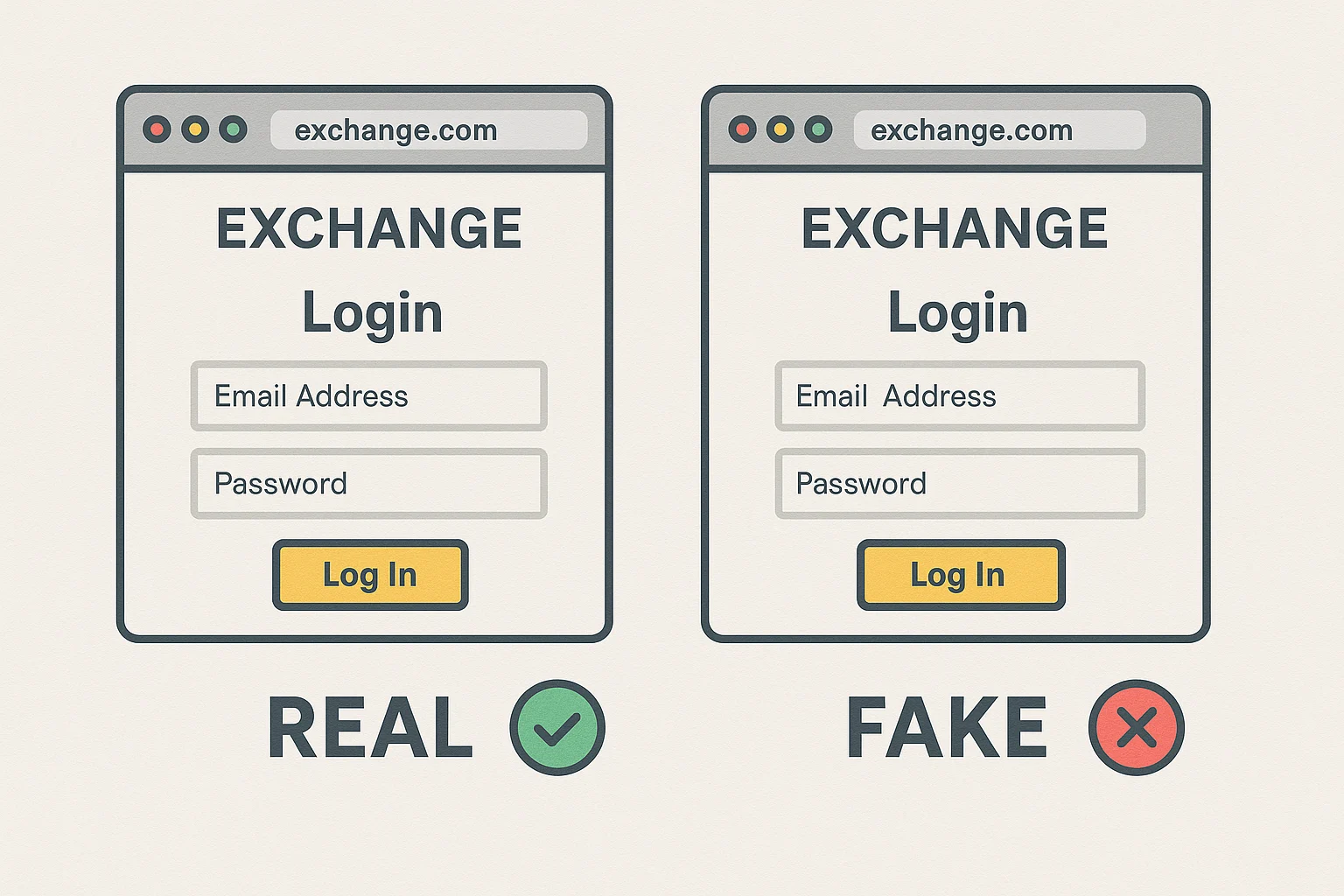
Side-by-side comparison of real and fake cryptocurrency exchange login pages, highlighting subtle URL differences

Real-World Examples

  • Fake MetaMask extensions in browser stores that steal wallet seeds
  • Impersonator emails claiming to be from Coinbase requiring “immediate action”
  • Fake DeFi platforms offering impossible yields to lure in victims

Why Beginners Should Care

Crypto transactions are irreversible. Once scammers have your private keys or drain your accounts, there’s no customer service to call, no bank to reverse charges.

Always verify URLs carefully – scammers use similar domains like “craken.com” instead of “kraken.com”. Bookmark legitimate sites and use those bookmarks instead of clicking email links.

Enable two-factor authentication and use hardware wallets to add extra security layers that make phishing attacks much harder to execute successfully.

Related Terms: Two-Factor Authentication, Hardware Wallet, Private Key, Rug Pull

Back to Crypto Glossary

Similar Posts

  • Stablecoin

    Stablecoin: Price-Stable Digital CurrencyA stablecoin is a cryptocurrency designed to maintain stable value relative to reference assets like the US dollar. It combines the benefits of digital currency with price stability for practical use.A stablecoin is a cryptocurrency designed to maintain a stable value relative to a reference asset, typically fiat currencies like the US…

  • Session Keys

    Session Keys: Temporary Wallet Permissions Session keys provide temporary, limited permissions for applications to perform specific actions without exposing main wallet private keys. It’s like giving valet keys instead of your full car keys. Session keys are temporary cryptographic keys that grant limited permissions to applications for specific time periods or transaction types. They enable…

  • Sustainable Yield

    Sustainable Yield: Long-Term Return GenerationSustainable yield refers to returns that can be maintained long-term without depleting the underlying value source. It's like earning interest that doesn't eventually destroy the principal.Sustainable yield represents returns generated from real economic activity and value creation rather than unsustainable token emissions or Ponzi-like mechanisms. These yields can theoretically continue indefinitely.How Sustainable…

  • Token Sale

    Token Sale: Cryptocurrency Fundraising EventA token sale is an event where new cryptocurrency projects sell tokens to raise funds for development and operations. It's like a crowdfunding campaign but with digital tokens instead of traditional rewards.A token sale is a fundraising mechanism where cryptocurrency projects offer tokens to investors in exchange for capital to fund…

  • Liquidity

    Liquidity: How Easily You Can Buy or Sell Liquidity determines whether you can actually trade your crypto at fair prices. High liquidity means smooth trading. Low liquidity means getting rekt by slippage. Liquidity refers to how easily an asset can be bought or sold without significantly affecting its price. In crypto markets, liquidity comes from…

  • Persistence

    Persistence: Maintaining Data Across TimePersistence refers to data storage that survives system restarts, crashes, or power failures. In blockchain, it ensures transaction history remains permanently accessible and unalterable.Persistence describes the characteristic of data storage systems that maintain information across system interruptions, ensuring data survives restarts, failures, or other disruptions. Blockchain networks achieve persistence through distributed storage…