
Rug Pull

Rug Pull: When Projects Disappear With Your Money

Rug pulls are crypto’s version of old-fashioned exit scams. Developers build hype, collect investor money, then vanish into the digital night.

A rug pull is when cryptocurrency project developers abandon the project and steal investor funds. The term comes from “pulling the rug out” from under investors who trusted the project.

How Rug Pulls Work

Soft rug pulls involve developers gradually selling their tokens while hyping the project, slowly draining liquidity without obvious theft. The project eventually dies from lack of development.

Hard rug pulls are more dramatic – developers remove all liquidity from trading pools, making tokens worthless overnight. Investors wake up to find their tokens can’t be sold.

Smart contract backdoors allow developers to mint unlimited tokens or drain funds directly from the contract, even after launch. The code looks legitimate but contains hidden functions.
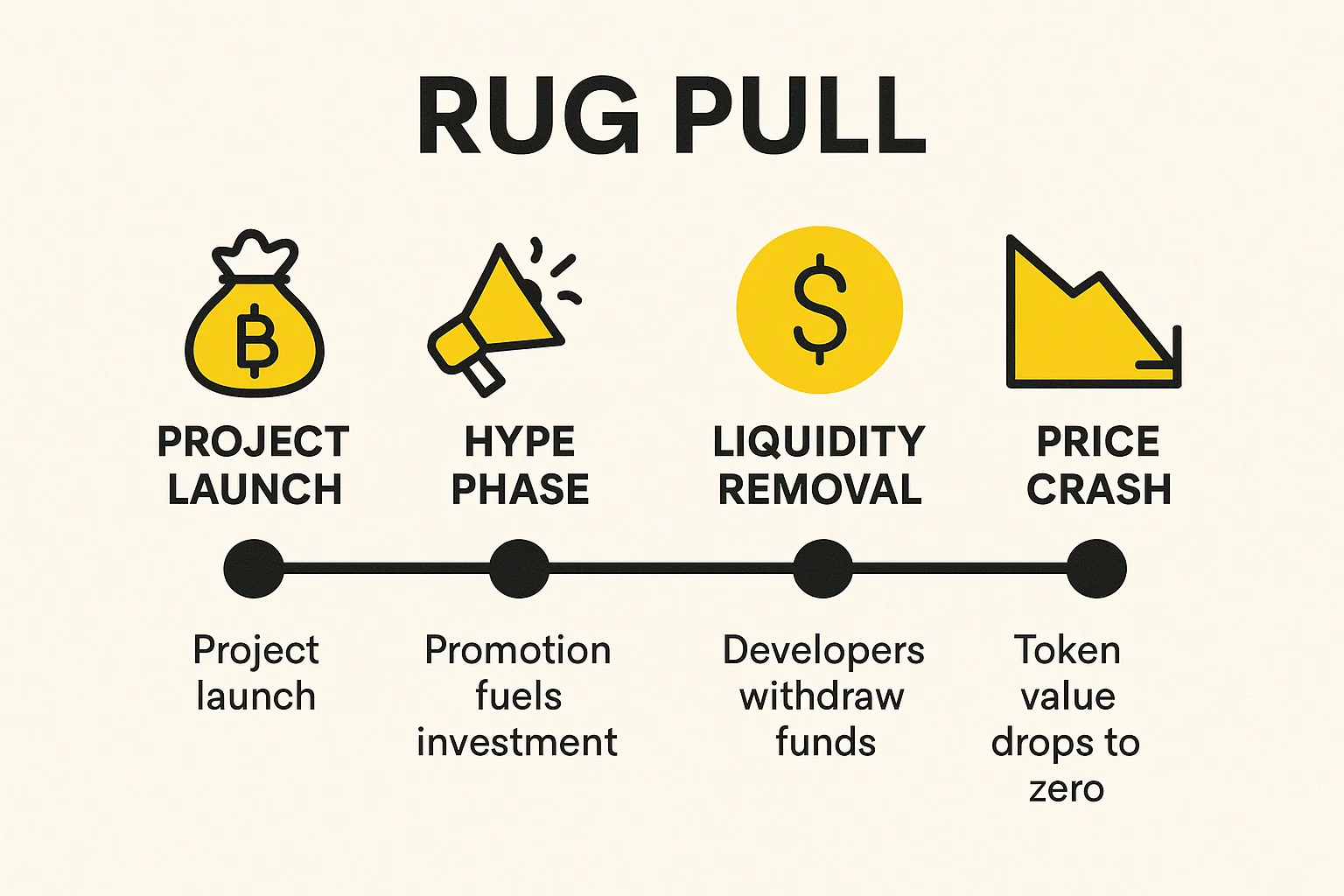
Infographic timeline showing a rug pull process: project launch, hype phase, sudden liquidity removal, and price crash to zero

Real-World Examples

  • Squid Game Token – Gained 2,300% then crashed 99% when developers pulled liquidity
  • AnubisDAO – Raised $60 million then disappeared within 20 hours
  • Meerkat Finance – $31 million “hack” that looked suspiciously like an inside job

Why Beginners Should Care

New DeFi projects launch daily, many created specifically to rug pull investors. If returns seem too good to be true, they probably are.

Research thoroughly before investing in new projects. Check if tokens are locked, if the team is doxxed (publicly known), and if the smart contract has been audited by reputable firms.

Never invest more than you can afford to lose in experimental DeFi projects, especially those promising unrealistic returns.

Related Terms: Smart Contract, Liquidity Pool, Token Lock, Phishing Attack

Back to Crypto Glossary

Similar Posts

  • KYC (Know Your Customer)

    KYC (Know Your Customer): The Identity Check KYC is crypto’s concession to traditional finance. Exchanges collect your personal information to comply with government regulations and prevent money laundering. Know Your Customer (KYC) is the process of verifying customer identities through government-issued documents and personal information. Most regulated cryptocurrency exchanges require KYC before allowing significant trading…

  • Transaction Privacy

    Transaction Privacy: Protecting Financial InformationTransaction privacy keeps cryptocurrency transaction details confidential while maintaining network security. It's like having private bank accounts in a transparent financial system.Transaction privacy refers to techniques that conceal cryptocurrency transaction information such as sender addresses, recipient addresses, and transaction amounts from public observation. This enables financial privacy while maintaining blockchain functionality.How Transaction…

  • Transaction

    Transaction: Moving Value on the BlockchainA cryptocurrency transaction transfers value from one address to another on a blockchain network. It's like writing a check, but with mathematical guarantees instead of trust.A transaction is a digitally signed transfer of cryptocurrency from one wallet address to another, recorded permanently on the blockchain. Every transaction includes sender information, recipient…

  • Message Passing

    Message Passing: Cross-System CommunicationMessage passing enables different blockchain networks or applications to communicate by transmitting information across system boundaries. It's like having a universal postal service that can deliver letters between different countries with different languages and customs.Message passing refers to communication protocols that enable different blockchain networks, smart contracts, or applications to exchange information…

  • Lockup Period

    Lockup Period: Temporary Access RestrictionsLockup periods prevent token holders from selling or transferring their holdings for specified time frames. It's like having a certificate of deposit that you can't cash out early.A lockup period is a predetermined time frame during which cryptocurrency holders cannot sell, transfer, or access their tokens. These restrictions are typically enforced through…

  • Trading Pairs

    Trading Pairs: Currency Exchange MarketsTrading pairs represent the exchange rate between two different cryptocurrencies or assets. They're like forex pairs but for digital currencies.A trading pair consists of two assets that can be traded against each other, showing the exchange rate between them. Trading pairs enable price discovery and liquidity for cryptocurrency markets.How Trading Pairs WorkBase…