
Smart Contract

Smart Contract: Code That Enforces Agreements

Smart contracts are why crypto is bigger than just digital money. They’re agreements that execute themselves automatically when conditions are met.

A smart contract is computer code that automatically executes agreement terms when predetermined conditions are satisfied. No lawyers, no courts, no arguing – just math and code enforcing the deal.

How Smart Contracts Work

Think of a vending machine. You insert money, select a product, and the machine automatically gives you your snack. Smart contracts work similarly – they hold funds and release them when specific conditions are met.

These contracts run on blockchain networks like Ethereum. Once deployed, they can’t be changed or stopped, ensuring all parties get exactly what was programmed.

The code is public and auditable. Everyone can verify exactly how the contract works before interacting with it.
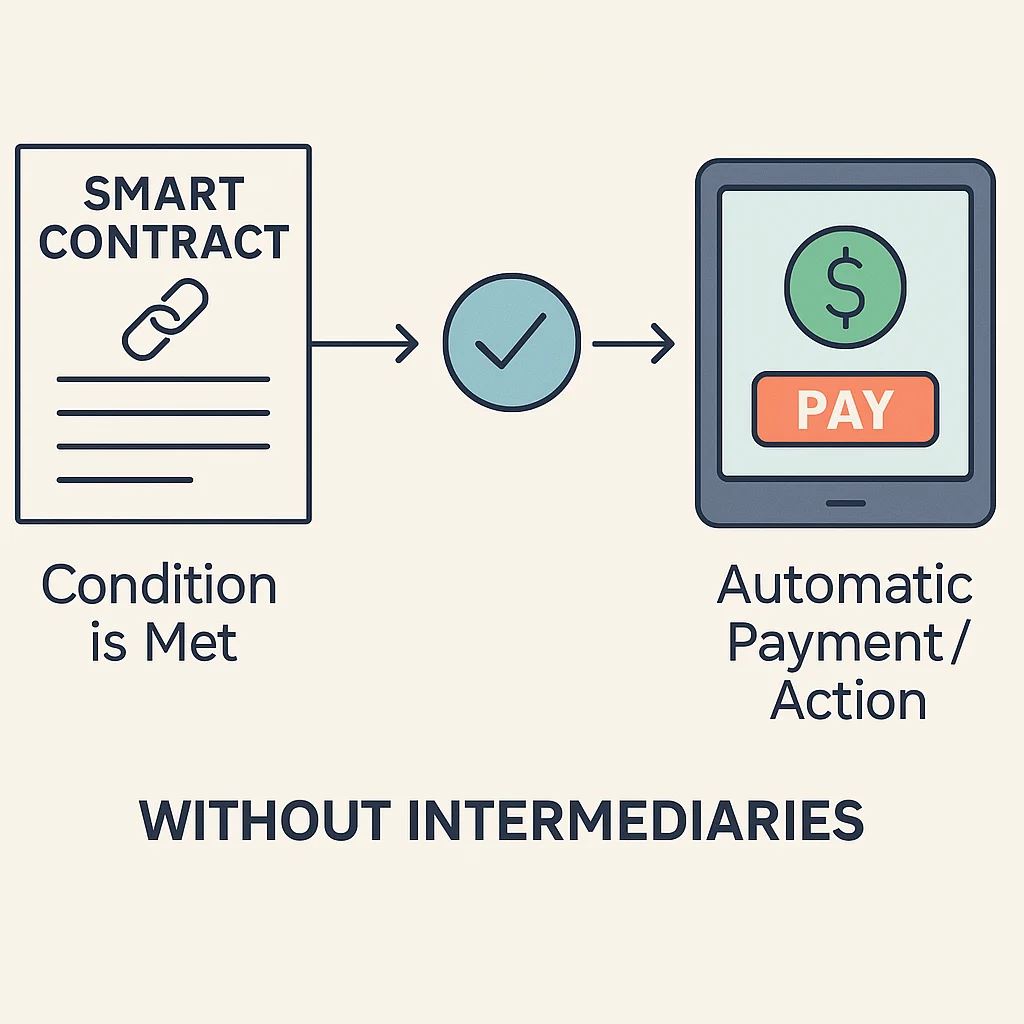
Flowchart showing smart contract triggering automatic payment/action when condition is met, without intermediaries

Real-World Examples

  • DeFi lending – Deposit collateral, automatically receive a loan
  • Insurance payouts – Flight delayed? Smart contract pays you automatically
  • NFT marketplaces – Buy NFT, payment and ownership transfer happen instantly

Why Beginners Should Care

Smart contracts eliminate middlemen who take fees and add delays. They create trustless systems where you don’t need to trust the other party – you trust the code.

This powers decentralized finance (DeFi), where you can lend, borrow, and trade without traditional banks. No credit checks, no paperwork, just code executing agreements fairly.

Related Terms: Ethereum, DeFi, Gas Fees, dApp

Back to Crypto Glossary

Similar Posts

  • Risk Assessment

    Risk Assessment: Evaluating Investment DangersRisk assessment involves systematically analyzing potential losses and their probabilities before making investment decisions. It's like checking the weather and road conditions before planning a trip.Risk assessment is the process of identifying, analyzing, and evaluating potential risks associated with cryptocurrency investments or activities to make informed decisions. This includes technical, market, regulatory,…

  • Fractional Ownership

    Fractional Ownership: Shared Asset OwnershipFractional ownership enables multiple people to own portions of expensive assets that would be difficult to purchase individually. It's like buying a slice of expensive real estate instead of the whole property.Fractional ownership refers to dividing ownership of assets into smaller portions that can be owned by multiple parties, typically enabled…

  • Interoperability

    Interoperability: Blockchain Networks Working TogetherInteroperability enables different blockchain networks to communicate and share information seamlessly. It's like having universal translators for blockchain languages.Interoperability refers to the ability of different blockchain networks to communicate, share data, and interact with each other without requiring centralized intermediaries. This enables cross-chain applications and unified user experiences.How Blockchain Interoperability WorksCross-chain protocols enable…

  • Slashing Conditions

    Slashing Conditions: Validator Penalty Rules Slashing conditions define specific behaviors that result in validators losing staked funds as punishment for malicious or negligent actions. They’re the rules of engagement for network security. Slashing conditions are predetermined criteria that trigger automatic penalties for validators who violate network consensus rules or behave maliciously. These penalties involve destroying…

  • Wrapped Token

    Wrapped Token: Bringing Assets Cross-Chain Wrapped tokens let you use Bitcoin on Ethereum, Ethereum on Solana, and any asset on any blockchain. They’re the universal adapters of crypto. A wrapped token is a cryptocurrency that represents another asset on a different blockchain, maintaining a 1:1 peg through collateralization. The original asset gets locked in a…

  • Market Stability

    Market Stability: Reducing Price VolatilityMarket stability refers to conditions where asset prices experience relatively small fluctuations over time. It's like having calm seas instead of stormy waters for your investments.Market stability describes market conditions characterized by relatively low volatility, predictable price movements, and reduced extreme fluctuations. Stable markets enable better planning and reduce risks for participants.How…