
Bitcoin (BTC)

Bitcoin (BTC): Digital Money That Banks Can’t Control

Bitcoin isn’t just another investment – it’s the financial revolution that started it all. When traditional banks failed us in 2008, Bitcoin emerged as the answer.

Bitcoin is digital money that operates without banks, governments, or middlemen controlling it. Think of it as cash for the internet age, but with a twist – every transaction is recorded on a public ledger that no single entity can manipulate.

How Bitcoin Works

Bitcoin runs on a network of computers worldwide. Each computer keeps a copy of every Bitcoin transaction ever made. When you send Bitcoin, the network validates your transaction and adds it to this permanent record.

No central bank prints more Bitcoin whenever they feel like it. There will only ever be 21 million Bitcoin – period. This scarcity is built into the code.
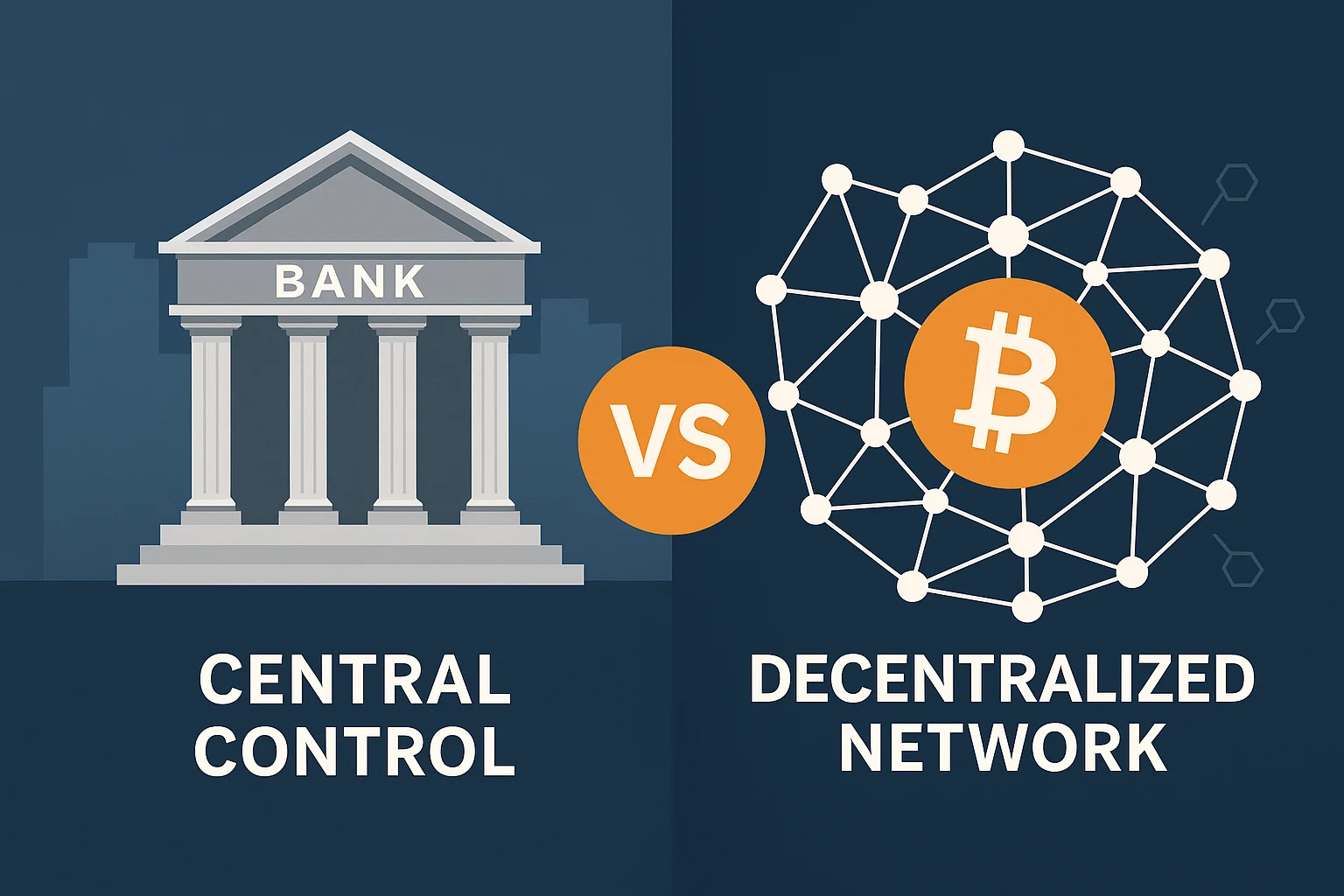
Split-screen comparison of traditional bank with central control and Bitcoin’s decentralized node network

Real-World Examples

  • El Salvador made Bitcoin legal tender in 2021
  • MicroStrategy holds over 190,000 Bitcoin on their balance sheet
  • Lightning Network enables instant Bitcoin payments for coffee or small purchases

Why Beginners Should Care

Bitcoin solved a problem that plagued digital money for decades – the double-spending problem. Before Bitcoin, digital files could be copied infinitely. Bitcoin proved that digital scarcity was possible without a trusted third party.

Whether you buy $10 or $10,000 worth, you’re participating in a monetary system that operates by mathematical rules, not political whims.

Related Terms: Blockchain, Private Key, Mining, Satoshi

Back to Crypto Glossary

Similar Posts

  • Mooning

    Mooning: When Prices Go Parabolic Mooning describes cryptocurrency prices shooting up dramatically and rapidly. It’s what every crypto holder dreams about and what usually signals dangerous market euphoria. Mooning refers to cryptocurrency prices rising dramatically and rapidly, often in parabolic fashion. The term suggests prices going “to the moon” – reaching astronomical levels that seemed…

  • CoinJoin

    CoinJoin: Bitcoin Transaction MixingCoinJoin combines multiple Bitcoin transactions into single transactions to obscure the connection between inputs and outputs. It's like mixing your laundry with other people's to make it harder to tell which clothes belong to whom.CoinJoin is a Bitcoin privacy technique that combines multiple transactions from different users into a single transaction, making…

  • Slippage

    Slippage: The Cost of Market Impact Slippage is the difference between expected and actual trade prices. It’s the tax you pay for moving markets when your trade is large relative to available liquidity. Slippage occurs when the execution price of a trade differs from the expected price due to market movement or insufficient liquidity. Large…

  • Token Emissions

    Token Emissions: New Cryptocurrency CreationToken emissions refer to the creation and distribution of new cryptocurrency tokens over time according to predetermined schedules. It's like a factory that produces new money at controlled rates rather than printing it all at once.Token emissions describe the systematic creation and release of new cryptocurrency tokens into circulation according to…

  • Modular Blockchain

    Modular Blockchain: Specialized Building Blocks Modular blockchains separate core functions like consensus, execution, and data availability into specialized layers. It’s like having a restaurant where different teams handle cooking, serving, and cleaning instead of one person doing everything. Modular blockchain architecture separates blockchain functions into distinct layers that can be optimized independently. This allows specialization…

  • Atomic Transaction

    Atomic Transaction: All-or-Nothing OperationsAn atomic transaction either completes entirely or fails completely, with no partial execution possible. It's like a package deal where you get everything or nothing at all.An atomic transaction is an operation that either succeeds completely or fails entirely, ensuring that all components of a complex transaction execute together or none execute…